
Thank you Charmaine 🇦🇺, Jairo, and many others for tuning into my live video! Join me for my next live video in the app.
I spent twenty years working county patrol. I am a Black veteran and a retired cop, which means I know how quickly one sentence can shape an entire use-of-force case before the public sees the evidence. In Biddeford, Maine, that sentence was that a man had “weaponized his vehicle.”
Those words carry a complete verdict inside them. They give the officer a threat, the shooting a justification, and the dead man a role before investigators have reconstructed the scene. A phrase can be technically possible and still arrive far too early. That is why I slowed the available cellphone footage to half speed and asked the questions any competent investigation should ask.
For anyone who cannot watch the video or processes evidence better on the page, the essential record and six-part tactical timeline are here.
TLDR
An ICE officer fatally shot a man in Biddeford on July 13. Local reporting and national wire coverage place the encounter shortly after 7:20 a.m., followed by an FBI-led response and state involvement. [1] [2]
DHS says the vehicle tried to flee and created a public-safety threat. The department said ICE was watching an address connected to a final removal order when agents attempted to stop a vehicle leaving that location. [3]
The official target story changed during the day. Senator Angus King initially relayed that the man was the subject of the enforcement action, then said Homeland Security Secretary Markwayne Mullin clarified that he was not the target. [4]
The agents apparently had no body-camera footage. King said the officers were not wearing body cameras, leaving civilian video, physical evidence, witness accounts, and any vehicle-mounted or surveillance footage with even greater importance. [2]
The cellphone clip is important but incomplete. It shows a white sedan moving through an intersection while several agents move beside and behind it. It does not show the initial stop, the reported vehicle impacts, the gunfire, or the precise position of the shooter when the trigger was pulled. [1]
If this evidence-first work matters to you, Restack this article, share it, and send it to one person who needs the full record. The first way to keep XVOA working is to become a paid subscriber.
If a subscription is not the right fit today, Buy Me a Coffee is the backstop.
Video Chapters
0:00 · Retired Cop Speaks Out
0:43 · What Happened in Biddeford, Maine
1:43 · How “Weaponized Vehicle” Frames the Story
3:22 · Four Confirmed Facts
3:58 · The NBC News Account
4:34 · Breaking Down the Witness Statement
7:06 · Immigration Status and Deadly Force
8:27 · Cellphone Video: Frame-by-Frame Analysis
13:04 · Reading the Aftermath Footage
15:25 · Maine Wire Reports From the Scene
18:00 · Six-Step Tactical Timeline
20:38 · The Silence of Other Retired Cops
23:34 · What the Video Proves
24:48 · What the FBI Must Release
26:21 · Closing VerdictFour Facts Before the Argument
The first fact is the hardest and simplest: a federal immigration officer shot and killed a man during an enforcement encounter in Biddeford. Advocacy organizations described him as a 26-year-old man from Colombia with work authorization and a Social Security number. [2]
The second fact is that the purpose of the operation and the identity of its intended target became confused in public. DHS said agents were surveilling the last known address of a person with a final removal order. Later reporting said the man who was killed was not the person agents had set out to arrest. [3] [4]
The third fact is that the investigation crosses institutional lines. Governor Janet Mills said Maine State Police were supporting the attorney general, chief medical examiner, and federal officials. [5] The FBI responded, while Biddeford police limited their role to scene security.
The fourth fact is that the public record is still missing the decisive seconds. Initial information attributed to the Maine attorney general’s office said the man attempted to flee “in the direction of the officer” and was fatally shot. The officer was placed on administrative leave under standard procedure. [6] That account matters, but it remains an initial account. Direction, distance, speed, angle, cover, escape routes, and officer-created positioning will determine what those words mean.
What “Weaponized His Vehicle” Does
A vehicle can absolutely be used as a deadly weapon. I have stood in roads, approached occupied cars, and watched drivers make decisions that could kill somebody in a heartbeat. Any analysis that pretends otherwise is unserious.
The professional question begins one step later: Was this particular vehicle creating an imminent threat of death or serious bodily injury at the instant deadly force was used? That requires more than a label. It requires geometry.
Where was the officer? Which direction were his feet and body facing? Was the car accelerating, turning, braking, or boxed in? Did the officer have a safe avenue of movement? Had federal vehicles created the path the sedan followed? How many shots were fired, from what positions, and through which parts of the car?
“Weaponized” compresses all of those questions into one emotionally loaded word. It moves the audience from investigation to conclusion before the collision reconstruction, ballistics, and complete video have arrived. The government gets to make its claim. It does not get to skip the proof.
The Witness Account Is Evidence, Not a Verdict
NBC relayed an account from a nearby witness who said he heard sounds like firecrackers around 7:30 a.m. and looked outside. According to that account, a larger vehicle rammed a smaller one more than once. He then saw officers remove a bleeding man from the car and heard the wounded man say, “I tried to stop.” Reuters later identified a witness, Daniel Boucher, who gave a substantially similar account. [2]
That testimony deserves attention because it speaks to events before the circulating clip. It also has limits. A witness looking from a building has one angle and may enter the event after it begins. “I tried to stop” is haunting, but it cannot independently establish what happened seconds earlier.
Investigators can map his position, recreate his sight line, and compare the reported ramming with vehicle damage, tire marks, debris, and surveillance footage. A credible witness gives investigators a road to the evidence. He does not replace the road.
Frame by Frame: What the Cellphone Video Shows
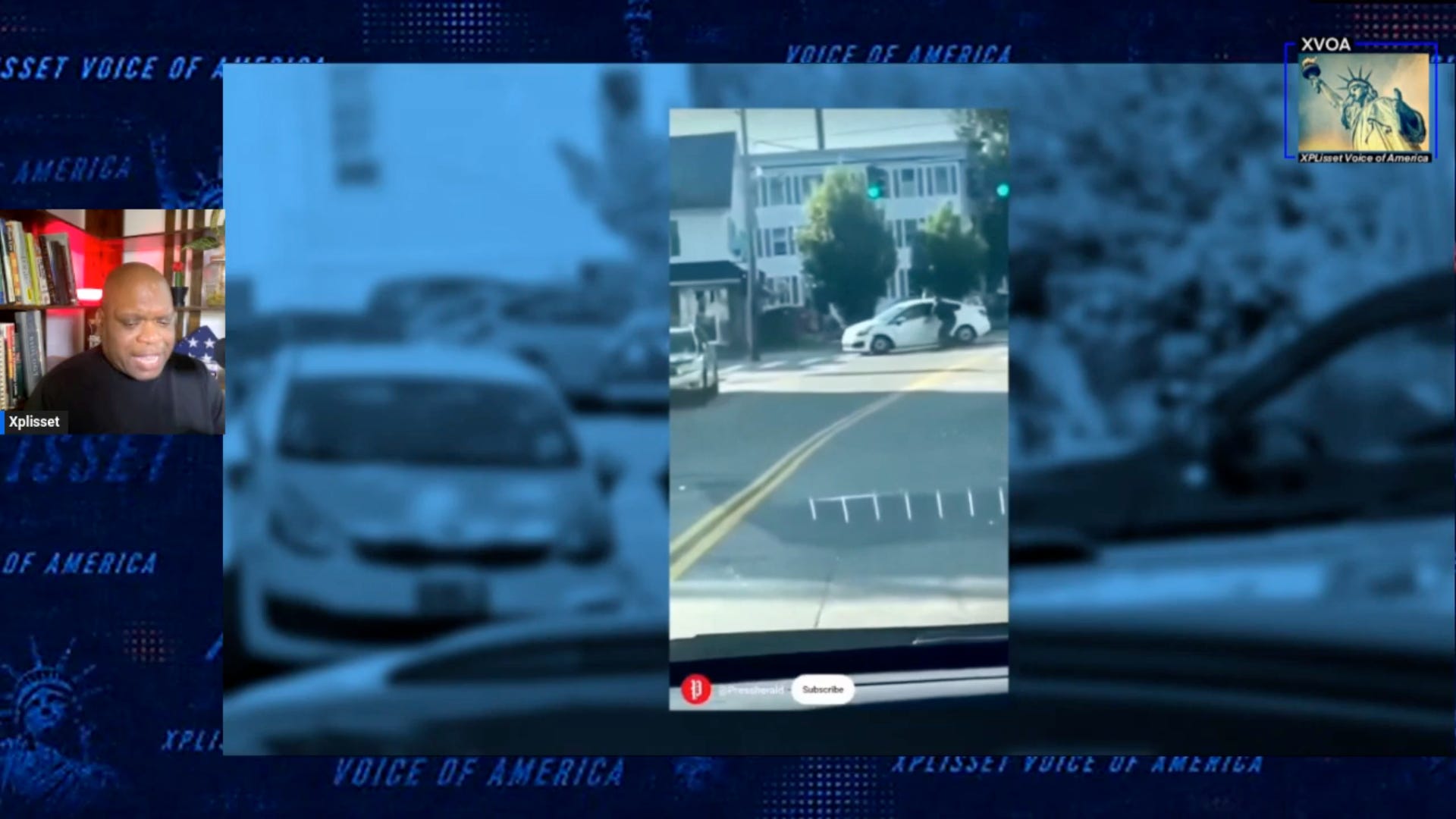
The vertical cellphone clip lasts several seconds before replaying the same movement in a tighter crop. It depicts one short action twice, first wide and then enlarged.
In the visible sequence, a small white sedan travels through an intersection. Several agents move alongside or behind it, and at least one appears close enough to reach toward the vehicle. The clip gives us relative motion and officer placement during that slice of time.
At half speed, the central question becomes sharper: who was trapped in the sedan’s unavoidable path during the visible sequence? The clip supplies no clean answer because the officers remain mobile and the camera obscures depth and distance.
The clip also begins too late to resolve the shooting. We do not see the first attempted stop, the commands, the reported impacts, or the driver’s initial response. We do not see muzzle flashes or the shooter’s body position at the instant of fire. We cannot use later officer movement to manufacture certainty about an earlier trigger decision.
The video can confirm or challenge a future official timeline by establishing locations, direction of travel, and agent movement. It raises questions strong enough to demand the complete record, while remaining too narrow to carry a final verdict by itself.
What the Aftermath Adds
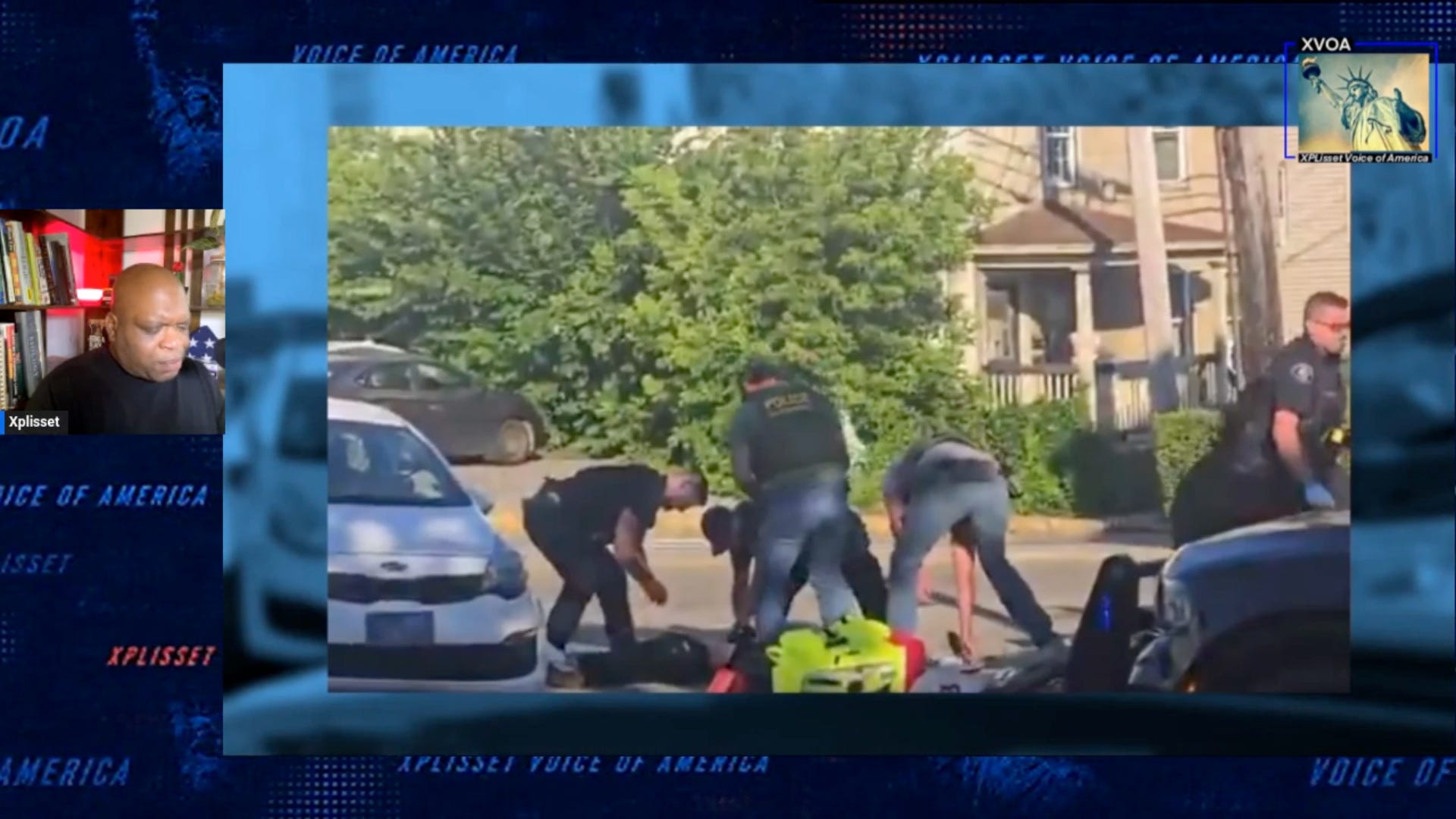
The aftermath footage shows the white sedan near the intersection and a man on the pavement as officers cluster around him. Medical equipment is visible, while federal vehicles obstruct much of the response.
The footage establishes that aid activity occurred. Timing, treatment, and restraint questions require synchronized dispatch records, radio traffic, medical reports, and witness recordings.
The Maine Wire field report later showed a forensic tent and described FBI personnel moving through the scene while local police handled preservation and traffic duties. That is what should happen after a fatal federal shooting: secure the location, separate witnesses, preserve vehicles, document every cartridge casing, and prevent the first narrative from hardening into the only narrative.
The Six-Step Tactical Timeline
A serious review must rebuild the entire encounter. DHS policy limits deadly force to an imminent threat of death or serious bodily injury and directs scrutiny toward reasonable alternatives when vehicles are involved. [7] ICE’s directive supplies the agency-level framework for comparing policy with conduct. [8]
Operational purpose and target identity. Who were agents assigned to locate, what legal authority did they possess, and when did they realize the driver was not the intended target?
Identification and commands. What marked vehicles, lights, clothing, verbal commands, or signals told the driver that federal officers were ordering him to stop? Were commands audible and consistent?
Vehicle contact. Which vehicle made the first contact? How many impacts occurred, at what speeds, and what damage patterns support each account?
Officer placement. Where did each agent position himself before the sedan moved? Did anyone step into or remain in a travel path that had a reasonable avenue of escape?
The trigger moment. Who fired, how many rounds were discharged, and what did each shooter face at that instant? Bullet trajectories through the windshield, doors, or side glass can help establish relative positions.
Post-shooting conduct. How quickly did officers call for medical aid, remove the driver, begin treatment, apply restraints, and preserve the scene?
The Supreme Court’s 2025 decision in Barnes v. Felix rejected examining only a frozen “moment of threat” while ignoring relevant preceding events. Reasonableness requires the totality of the circumstances. [9]
Every tactical mistake does not make a later shot unlawful. It does mean planning, positioning, escalation, and the actual threat belong in the same reconstruction.
Retirement Was Supposed to Free Our Tongues
I digress for a moment because this part burns me. I keep waiting for more retired officers to speak plainly when official language runs ahead of public evidence. We took the same classes, worked the same roads, wrote the same reports, and learned how one loaded phrase can quietly decide what the audience believes.
Retirement should free a cop’s conscience. Nobody is threatening your shift assignment. Nobody is holding your promotion. Nobody can stick you on permanent midnight patrol because you questioned a federal agency’s first account.
Yet too many people leave the job and carry the blue wall home with them like a piece of department property. If our experience only serves power after we retire, then it was never public service. It was membership. I will not declare this shooting unjustified on incomplete evidence, and I will not bless it with the same incomplete evidence. The obligation is to ask the professional questions out loud.
What the FBI Must Release
The FBI and every cooperating agency should publish a synchronized timeline built from dispatch audio, radio traffic, 911 calls, civilian recordings, surveillance cameras, vehicle data, and any federal video that exists. The public needs a diagram showing every vehicle and officer at each critical point. Investigators should identify when the surveillance team shifted into a vehicle stop and what information agents had about the driver.
The physical evidence must answer the geometry. Release vehicle damage, bullet trajectories, cartridge locations, tire marks, and final positions when doing so will no longer compromise the case. Explain how each trajectory aligns with the officers’ accounts.
The agencies must explain the absence of body cameras, including when equipment was ordered and what interim recording rules applied. A federal operation with the power to stop, seize, and kill cannot treat documentation as optional.
Finally, release the operational plan and the legal basis for the attempted stop, with necessary personal information redacted. The public record now indicates the man killed was not the intended target. That makes the transition from surveillance to confrontation a central part of the case rather than background noise.
Closing Argument
Here is where the evidence stands. An ICE officer shot and killed a man during an enforcement operation. The government says the vehicle attempted to flee and moved in a direction that endangered an officer or the public. A witness described federal vehicles ramming the smaller car, and the available cellphone video shows agents moving around a sedan but omits the shooting itself.
The footage proves movement, proximity, and a chaotic pursuit, but it cannot establish the exact threat facing the shooter. Changing official information, absent body cameras, and missing decisive seconds deepen the need for disclosure.
My verdict is therefore disciplined rather than comfortable: the public evidence cannot yet sustain a final judgment on whether the shooting was legally justified, but it more than sustains a demand for skepticism, preservation, and full disclosure. “Weaponized his vehicle” is a claim. The investigation must show its work.
The standard remains the same for a citizen, an immigrant with work authorization, or the subject of a removal order. Immigration status does not lower the threshold for deadly force. The badge does not raise a claim above examination.
Support XVOA
If you want a retired cop willing to examine the evidence without carrying water for an agency or a political tribe, become a paid XVOA subscriber.
Paid subscriptions are the first ask because they keep this work independent, consistent, and available to readers who cannot afford to pay. Thank you to every current paid supporter already holding up this desk.
If a subscription is not the right fit, Buy Me a Coffee supports the daily operating floor. Fifty dollars a day keeps the pain away. Like the video, comment with the exact evidence that shaped your view, share this article, and Restack it so the public record travels farther than the first official phrase.
Sources
Portland Press Herald: Live updates on the fatal ICE-involved shooting in Biddeford
Local reporting, witness accounts, scene developments, and the circulating cellphone video.Reuters: One person killed in encounter with U.S. immigration agents in Maine
Reporting on the fatal encounter, Daniel Boucher’s witness account, the FBI response, and the reported lack of body cameras.Associated Press: ICE shot and killed a motorist in Maine
Reporting on DHS’s public account, the surveillance operation, the man described by advocates, and the investigations.The Guardian: Man killed by ICE was not the target of the operation
Updated reporting on Senator Angus King’s correction and DHS’s description of the attempted stop.Governor Janet Mills: Statement on the fatal shooting in Biddeford
The governor’s official account of state, medical examiner, attorney general, and federal cooperation.The Wall Street Journal: Federal immigration agents involved in fatal shooting in Maine
Reporting on the initial account attributed to the Maine attorney general’s office and the officer’s administrative leave.Department of Homeland Security: Policy on the Use of Force
Department-wide standards governing deadly force and force directed at moving vehicles.U.S. Immigration and Customs Enforcement: Use of Force Policy
ICE’s agency-level directive governing authorized force, reporting, and review.Supreme Court of the United States: Barnes v. Felix
The Court’s 2025 decision requiring excessive-force reasonableness to be evaluated under the totality of the circumstances.