

I am a publisher. The Washington Post is a publisher. I read the Post every morning to see what they put in the headline and what they leave for you to find near the bottom. Somebody has to keep an eye on these people.
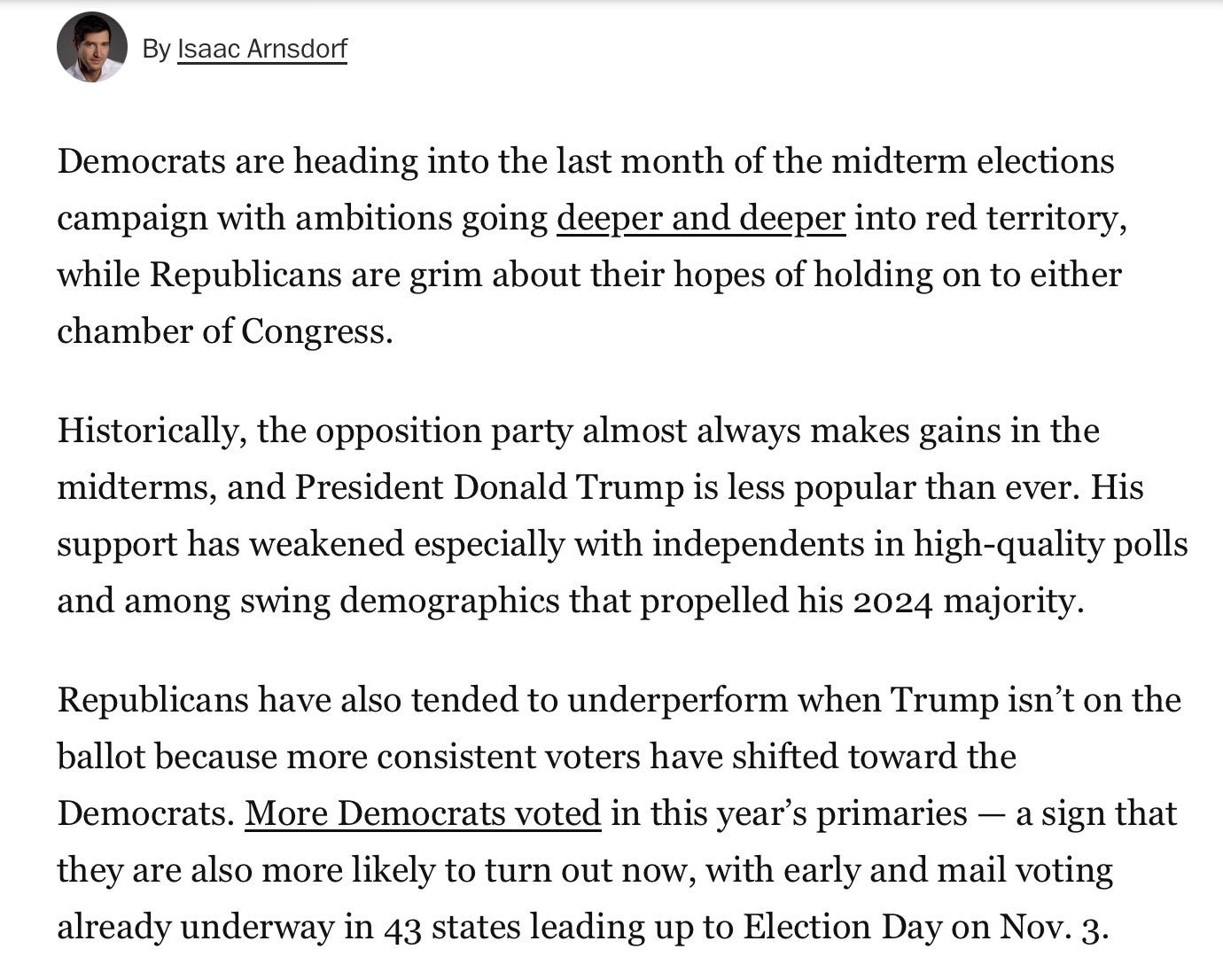
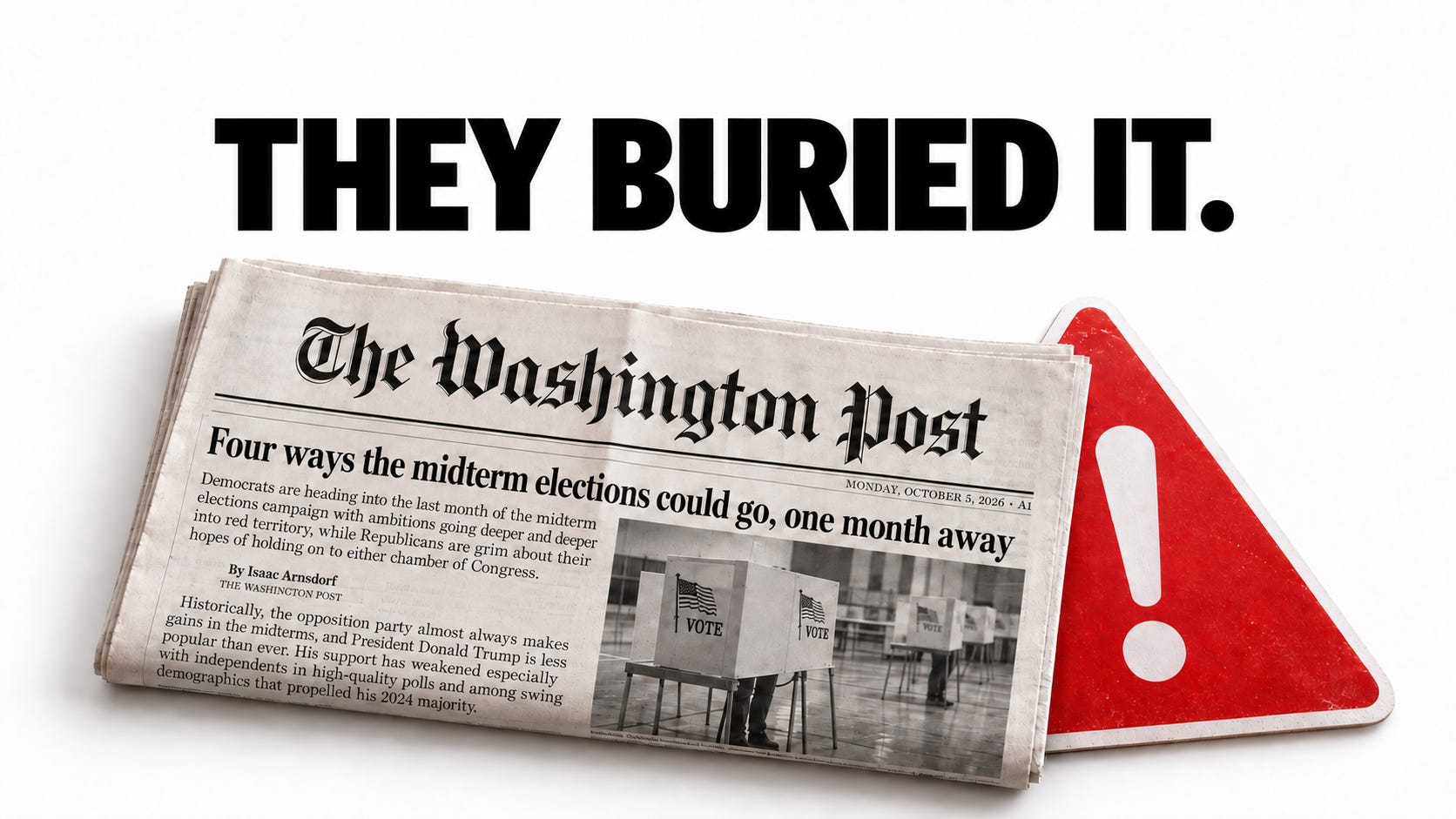
The Post had an article that caught my eye: “Four ways the midterm elections could go, one month away.” In its last section, “A constitutional crisis,” it tells us: “This year, election administrators are especially concerned about interference from the federal government.” [1]
Before we get there, the piece walks us through the Democrats’ strong poll numbers, the Republicans’ funding edge, candidates, district maps and ads. It paints a picture of what could happen as the result of a blue wave, a blue ripple or a possible Republican upset.
Hold up. Wait a second. Your opening was about who’s ahead in the polls and who has the money. But the people managing the election are worried the federal government could interfere? Put that at the very top of the article for someone skimming the news before they get on the subway to work. Tell us what they’re ready for and why. Then you can get to talking about who spent more on ads.
I’m a retired police officer. I see it as my calling to shine a light on what gets buried. Thanks to a few generous readers, I have the time to look into these articles full time and ask more questions.
What happens after we vote?
What concerns me is that Democrats might win control of Congress and then face an effort to overturn those results. That is the danger I see in what the Post is reporting. I want readers to know about this before they start popping champagne corks over these polls.
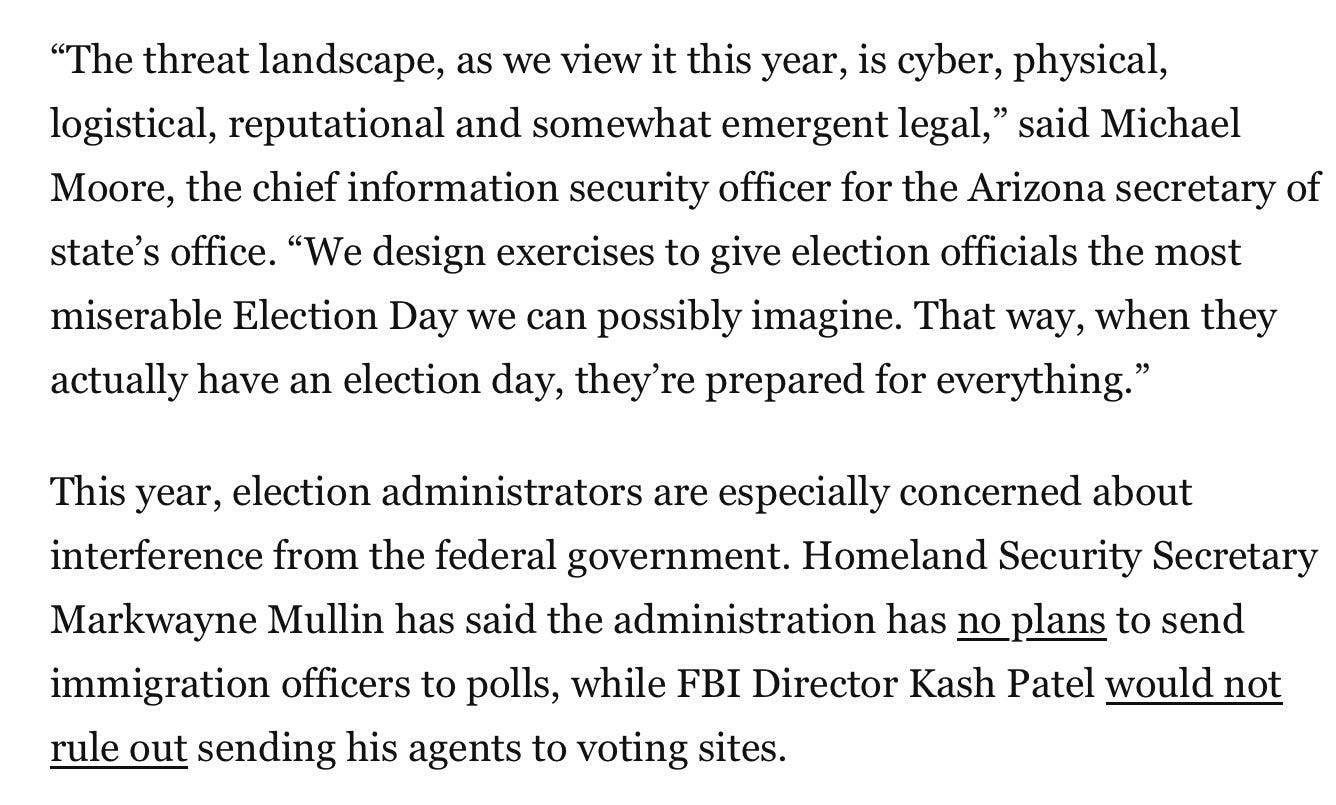
Isaac Arnsdorf reports that election officials are concerned about federal interference. He also reports that right-wing activists have called for the president to claim emergency powers over elections. Officials are preparing for possible disruptions. [1] These details leave me with questions that deserve an article of their own. Who might interfere? What could they actually do? Who has the power, and the inclination, to stop them?
This is where I start thinking about January 6. A mob attacked the Capitol while Congress was counting the presidential electoral votes. That count was interrupted. [2] This year’s congressional elections are run differently, but I fear there will be another effort to overturn an election result. This time, the fight could be over control of Congress. That’s why the Post’s four scenarios irritate the hell outta me.
A blue wave and a constitutional crisis could happen in the same election. The Democrats could win enough seats to take control, then face attempts to subvert the outcome. Winning the election and taking power could become two separate fights. Putting those possibilities in separate sections leaves their connection unexplained.
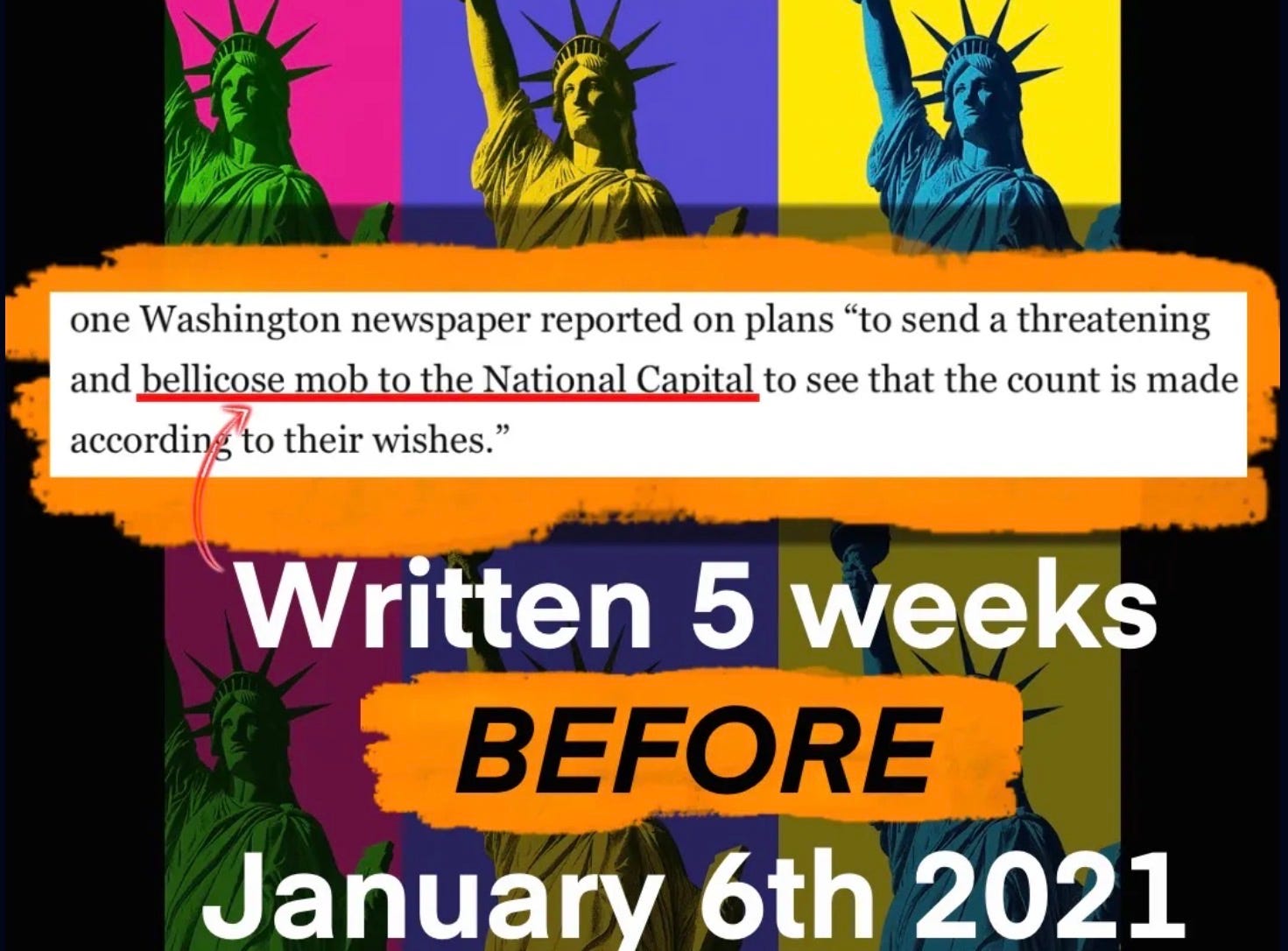
Earlier this year, I wrote “The Washington Post Predicted January 6.” I examined a Post history article published on November 24, 2020, about the disputed election of 1876. [3] Ronald G. Shafer quoted a newspaper reporting plans for “a threatening and bellicose mob” that might attack the capital building in order to pressure the electoral count. [4]
That sentence struck me because of its ominous foreshadowing and for the approach it laid out that I know we have repeated since: Put pressure on those doing the vote counting to get the result you desire. The question here is: How do we respond to election officials warning of interference, and what do we need to see coming into the election?
That January 6 comparison is my interpretation of the threat. The Post reports the officials’ fears. The Post considered those fears serious enough to have a subhead saying “A constitutional crisis.” I wonder why that possibility was not part of the headline or lead. Readers should get that heads-up.
What Trump has alreadyr said
Voting rights lawyer Marc Elias raises the question I wanted the Post to put near the top: What happens after we cast our ballots?
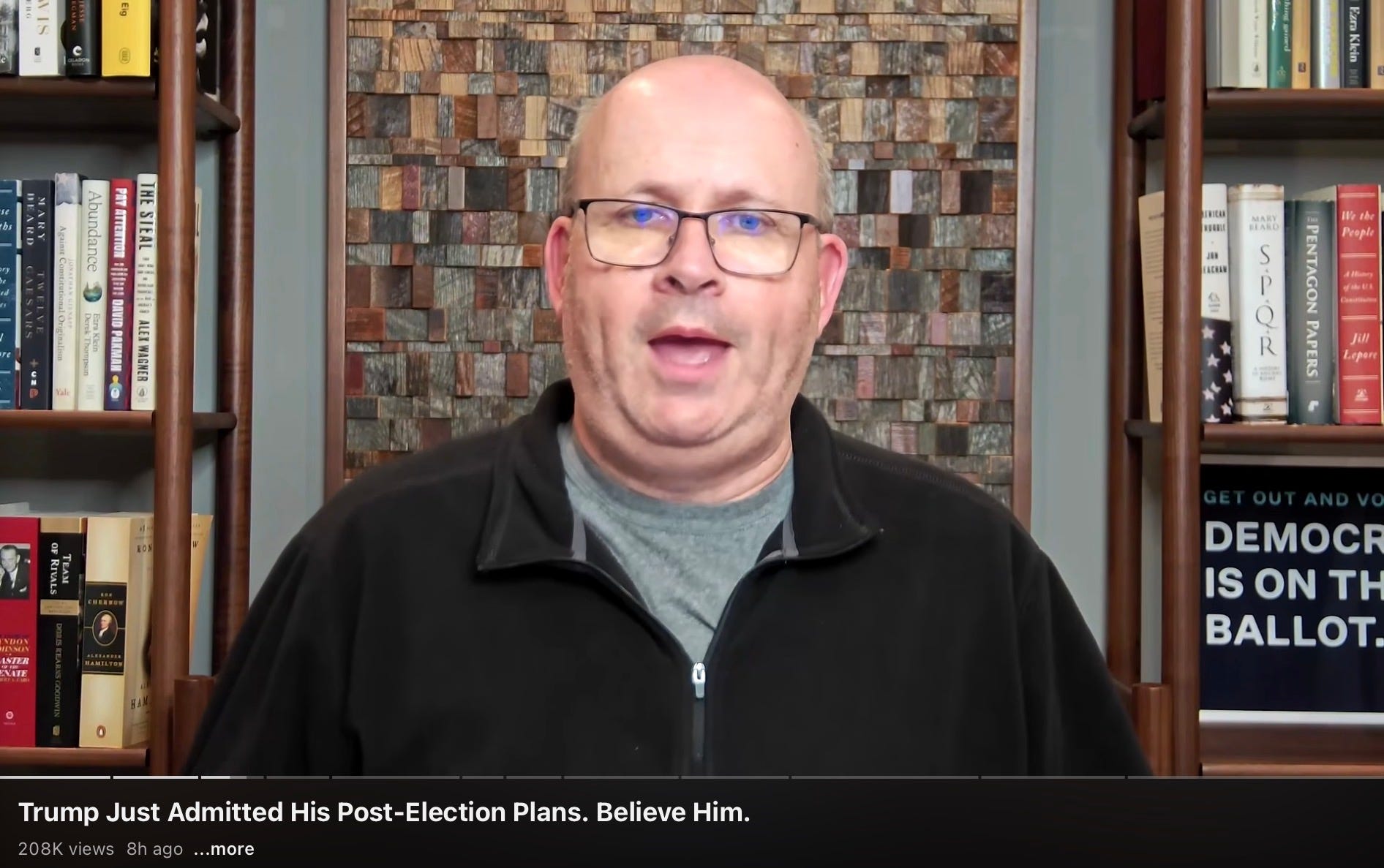
In his video, “Trump Just Admitted His Post-Election Plans. Believe Him,” Elias warns that the greatest danger could come during the counting of ballots and certification of results. Certification is the official confirmation of those results. That process still has to happen after we leave the voting booth. [5]
This gives us something specific to examine. In an August 18, 2025 post, Trump claimed that states were agents of the federal government when counting votes and had to follow the president’s instructions. [6]
Read that again. The president whose party could lose control of Congress claimed authority over the people counting the votes.
Under the Constitution, the state legislatures set the rules for federal congressional elections, while Congress has the authority to enact laws that may alter them. It does not put the president in charge of the count. [7]
But an unlawful order can still be attempted. Someone will need to push back. Someone may need to take him to court. This is why, after explaining what Trump can’t legally do, there should be one more question: What if he tries to do it anyway?
Elias also points to Trump’s January interview with The New York Times. Asked about his failure to use the National Guard to seize “election boxes” after the 2020 election, Trump answered, “Well, I should have.” [8]
That answer gives me a reason to worry about what comes next. I want reporting on who could be ordered to interfere, what election officials are preparing for, and how the ballots and results would be protected.
Elias says he did not foresee the violent attack on January 6. He did expect Trump to keep escalating. [5] That distinction matters. We can recognize a danger before we know every detail of how it might unfold.
Put the warning where we can see it
By the time the Post gets to federal interference, I’ve been told about the polls, the money, the maps, the candidates. That warning comes at the end, which, for me, feels like yet another wrinkle in a typical race. If officials are worried about federal interference, that changes how I read the rest.
“Our contingencies have contingencies,” Cook County clerk Monica Gordon told the Post. [1] So, talk us through one. What triggers a contingency? Who is responsible for responding? How does it help keep voters safe and their votes intact?
I want these questions to be asked when there is still time for answers to help us prepare. And I want follow-ups that include what we know, what we don’t, and what election officials will and won’t say about efforts to protect the votes.
That should be where the Post’s reporting begins. As one publisher to another: When I see a warning like this, it’s my job to tell readers what it means and what we still need to find out. I hold the Post to the same standard. Put it at the top. Then tell us who bought more damn commercials.
That’s also the work you’re paying for when you support this publication. That gives me time to read past the headline, find the old article, see the quote, make the connection. Thanks to all of you who are already making contributions through subscriptions and coffees. If you’d like to help me continue to do this, please consider becoming a paid subscriber.
If a subscription doesn’t fit right now, a one-time contribution through Buy Me a Coffee helps too. I’ve got another newspaper to read in the morning.
Sources
[1] Isaac Arnsdorf, “Four ways the midterm elections could go, one month away,” The Washington Post, October 5, 2026.
[2] U.S. House of Representatives, Joint Meetings, Joint Sessions, and Inaugurations, January 6, 2021 entry and footnote 34.
[3] Xplisset, “The Washington Post Predicted January 6,” January 7, 2026.
[4] Ronald G. Shafer, “The ugliest presidential election in history: Fraud, voter intimidation and a backroom deal,” The Washington Post, November 24, 2020.
[5] Marc Elias, “Trump Just Admitted His Post-Election Plans. Believe Him,” Democracy Docket, October 5, 2026.
[6] Donald Trump, August 18, 2025 Truth Social post, archived by Trump’s Truth.
[7] U.S. Constitution, Article I, Section 4, National Archives.
[8] Donald Trump, January 7, 2026 interview with The New York Times, transcript archived by the American Presidency Project.
"I see it as my calling to shine a light on what gets buried."
Thanks X for answering your calling! We can all help by voting early if that's an option, and even volunteer as a poll watcher to observe the rules are followed
Wise words: “If officials are worried about federal interference, that changes how I read the rest.”