


Thank you Francine Fein, Melody, Susan Ferry, and many others for tuning into my live video! Join me for my next live video in the app.

For readers who want the argument without watching the whole livestream, this is the XVOA broadcast in written form, with video sources included for the sections you may want to watch directly.
Some of you hate video on Substack. Fair.
You do not want to scrub through a livestream, chase timestamps, or watch a grown man pause clips every three minutes like he is prosecuting the evening news in traffic court.
So here is the written version.
The show was called The Paperwork Was the Weapon because that is what the evidence kept saying. Not the tweet. Not the press conference. Not the viral clip. Not the celebrity argument. The paperwork.
A search warrant application. A grand jury fight. A subscriber list request. A congressional map. A nondisclosure agreement. A speech restriction. A commercial driver’s license. A SNAP clock. A clinic budget. A ballot repair process. An arbitration clause. A comedy roast format.
That is where power hid.
Power wanted the public looking at personalities. Don Lemon said this. Monique Pressley warned that. Kevin Hart responded. A panel argued about Texas 18. A pundit got mad. A court moved a case. A board sent replacement ballots.
That is the surface.
XVOA reads the operating system.
Because America does not always need the old costume to do the old work. Sometimes the weapon comes as a form number, a filing deadline, a district line, a work requirement, a warrant application, a venue clause, or a little sentence that says you signed away your right to speak before you even understood what you saw.
Black people know this country’s paperwork history.
Slave schedules were paperwork. Fugitive slave notices were paperwork. Redlining maps were paperwork. Poll tax receipts were paperwork. Literacy tests were paperwork. Deeds that excluded us were paperwork. School district lines were paperwork.
So when they tell you this is just process, Don’t Do It.
That is usually where the body is buried.
TLDR
Don Lemon’s press-freedom case put the thesis in plain language: the process is the punishment. Lemon says the government sought subscriber information and that a judge denied the warrants for lack of probable cause [1].
Status Coup’s Jordan Chariton described ICE detention conditions and protest suppression that mainstream coverage often misses, which is why pressure on independent media is pressure on the witness [2].
Monique Pressley’s redistricting warning and the Texas 18 result show two sides of Black political power: the state trying to redraw power from the outside, and Black voters making hard choices from the inside [3][4][19].
Alabama’s blocked map, proposed federal worker NDAs, immigration judge speech restrictions, and immigrant trucker license rules all reveal the same machinery: power moving through process, category, timing, and paperwork [5][9][11][12][14].
Kevin Hart’s roast backlash closed the show because culture has its own paperwork. Sometimes the format itself becomes the permission slip [8].
Restack this and send it to one person who keeps asking why everything feels rigged. Paid subscriptions keep this desk working:
For one time donations as little as $5 buy me coffee below.
The Process Is the Punishment
Don Lemon’s press-freedom case was the right place to begin because it gave the entire show its diagnostic line: the process is the punishment [1].
That is not just a legal complaint. It is a description of how power behaves when it has time, money, lawyers, motions, warrants, delays, seized property, and enough procedural machinery to grind people down before any final ruling arrives.
You do not have to beat someone in court if you can drain them before trial.
You do not have to win the final argument if you can make the cost of reaching the final argument unbearable.
Lemon described months of legal pressure after being charged for doing journalism inside a church where he says the news was happening. He says judges had already found no probable cause before an indictment appeared. He says his attorneys are still seeking grand jury materials. Those are his claims about his own case, so they should be treated with that attribution. But the larger point is not hard to see.
The state can say it is just process.
The person inside the process feels punishment.
The most chilling part of the segment was not just Lemon saying the process was punishment. It was his claim that the government sought information connected to his YouTube channel, including a list of subscribers, names, and information [1].
He says the judge denied all five warrants and found no probable cause. That matters. The argument is not that the government got the list. Lemon says it did not.
The argument is that it asked.
That is the paperwork weapon. Even when the request fails, the request sends a message. It tells journalists, platforms, subscribers, and supporters that the state may try to reach past the reporter and toward the audience.
That is not a small thing. That is the chill.
Lemon framed the issue as a First Amendment fight, specifically not just for “the comfortable press” [1]. That line matters because press freedom does not mean much if it only protects the press that stays polite, predictable, and harmless.
The First Amendment matters most when power does not want the camera there. When the story is ugly. When the protest is inconvenient. When the state would rather the public see the statement and not the scene.
That is why independent media matters. Not because independent media is perfect. It is not. But because the corporate press can be pressured, licensed, funded, frozen out, and trained to look away.
When Lemon said they are coming for independent journalists, the point was bigger than one host, one show, or one case [1]. Independent journalism is not a vibe. It is infrastructure.
If corporate media is timid, captured, distracted, or just too slow, independent media becomes the witness.
And when the witness is pressured, the public gets less truth.
ICE Never Went Away
The next clip showed why that matters.
Don Lemon brought on Jordan Chariton, CEO and reporter for Status Coup, to discuss ICE protests, detention conditions, and what Chariton described as a lack of sustained media attention [2].
Chariton said the public does not know enough about what is happening because there is little, if any, media attention being paid to it [2]. That is how a blackout works. Not because nothing is happening, but because too few people with microphones decide it matters.
The official language says immigration enforcement.
The ground-level story says detention conditions, hunger strikes, protest suppression, private prison money, and journalists trying to keep the camera on.
Chariton said GEO Group, the for-profit prison operator, received a $1 billion contract to operate the New Jersey ICE facility discussed in the segment [2]. That is the money lane. Immigration enforcement is not only ideology. It is a business model.
Detention is not just policy. It is contracts, facilities, staffing, profit, food, medicine, transport, and legal control over human beings.
When there is money attached to suffering, you have to ask who benefits from the machine continuing.
Chariton also described detainees being served maggots in their food and expired food, along with medication deprivation and overcrowding [2]. Those are Status Coup’s reported claims, and any final judgment about the facility belongs with documentation and further reporting. But the reason the footage mattered was obvious: official language is designed to avoid the human texture of detention.
The state says facility.
The contract says operator.
The headline says immigration enforcement.
But people inside experience food, medicine, overcrowding, fear, and whether anyone on the outside can hear them.
That is why the camera matters.
That is why the press matters.
That is why protest matters.
The protesters are not protesting an abstraction. They are responding to what they believe is happening to human beings behind the walls.
The most revealing moment came when Chariton said officers blocked the sidewalk, leaving protesters no choice but to be in the street [2]. That is a physical version of the paperwork weapon.
You block the lawful space.
You force people into danger.
Then the record says the protesters were in the street.
That is how procedure can become a trap.
The clip also included someone saying, “They’re spraying press” [2]. That brought the whole thing back to the opening.
Whether it is a warrant application, a seized phone, a subscriber-list request, or pepper spray at a protest, the pattern is pressure on the witness.
If the camera cannot safely watch power, then the public gets the edited version of power.
And the edited version is almost always cleaner than the truth.
This written version does not include the live on-the-ground Status Coup commentary section from the original broadcast planning. That section was edited out. What remains here is the structured argument from the recorded segment and the show transcript.
Black Voters Saw the Bridge Being Pulled Up
After the press and protest lane, the show moved into the map lane.
Redistricting coverage often sounds dead on arrival. Maps. Districts. Panels. Appeals. Injunctions. That language can put people to sleep while somebody is moving their political power out the back door.
That is why the Don Lemon and Monique Pressley clip worked. Pressley did not talk about redistricting like a classroom exercise. She spoke like somebody who understood that the legal fight, the voting line, and Black community survival instincts are all part of the same story [3].
When Pressley talked about legal organizations fighting redistricting battles, the point was not abstract civic gratitude. It was machinery. Black voters do not get protected because the system wakes up generous. Somebody has to drag the machinery into court and make it answer questions under fluorescent lights.
That is why legal organizations matter.
That is why briefs matter.
That is why boring procedural steps matter.
The other side is not just trying to win an argument. It is trying to control the map before the voter ever touches a ballot.
The sharpest line in that segment came when Pressley described voters trying to vote before officials could do “the illegal part” where they “try to get rid of our vote” [3].
That is political memory.
Black voters are not paranoid. They are experienced.
There is a difference.
This country has a long habit of telling Black people the game is fair while somebody is moving the goalpost, changing the field, removing the referee, and calling the whole thing procedure.
The law may come later.
The people often hear the machinery first.
Texas 18 and the Voters Who Moved the Baton
The Texas 18 segment complicated the redistricting story in a useful way.
It would be easy to talk about Black voters only as targets. And yes, Black political power is under attack. But Black voters are not only victims in the story. They are also decision-makers.
FOX 26 Houston’s election coverage discussed the Texas 18 race after AP called it for Christian Menefee over Al Green [4]. The panel described the result as a generational baton pass, and that phrase opened a deeper question.
Black political power is not only about protecting seats from outside attack. It is also about what happens inside the community when voters decide a seat needs a different kind of energy.
Seniority matters.
Institutional memory matters.
But voters also ask whether the person in the seat speaks to their present crisis.
That is not betrayal. That is politics.
The segment also raised the question of special-interest money from a cryptocurrency-funded PAC. The panel suggested that this issue may not have resonated widely with voters [4]. That is uncomfortable, but useful.
Outside money matters. Crypto money matters. Special-interest money matters.
But the political question is not only whether the money existed. The question is whether voters understood it, prioritized it, and connected it to their daily lives.
If the money story is real but abstract, and the voter’s life is concrete, the concrete may win.
That is not a failure of intelligence. It is a failure of political translation.
Capital B’s reporting on Black voters in the South captured the broader tension: Black voters want leaders who fight, but also deliver [19]. The question is not symbolism versus substance. Black voters know symbolism matters. They also know medicine, food, housing, services, and local presence matter.
The FOX panel’s line about leaders seeming to be “112 years old” carried the pressure-valve humor of a deeper frustration [4]. Respect your elders. But do not turn respect into a political hostage situation.
A lot of voters are asking when leadership becomes stewardship, and when stewardship becomes a traffic jam.
That does not mean every older leader should move out of the way. It means the party cannot keep acting shocked when younger voters and younger candidates start asking for the keys.
Texas 18 showed Black voters making a choice.
Alabama showed the state trying to shape which choices Black voters are allowed to have.
That is the difference.
Alabama: The Court Named the Robbery
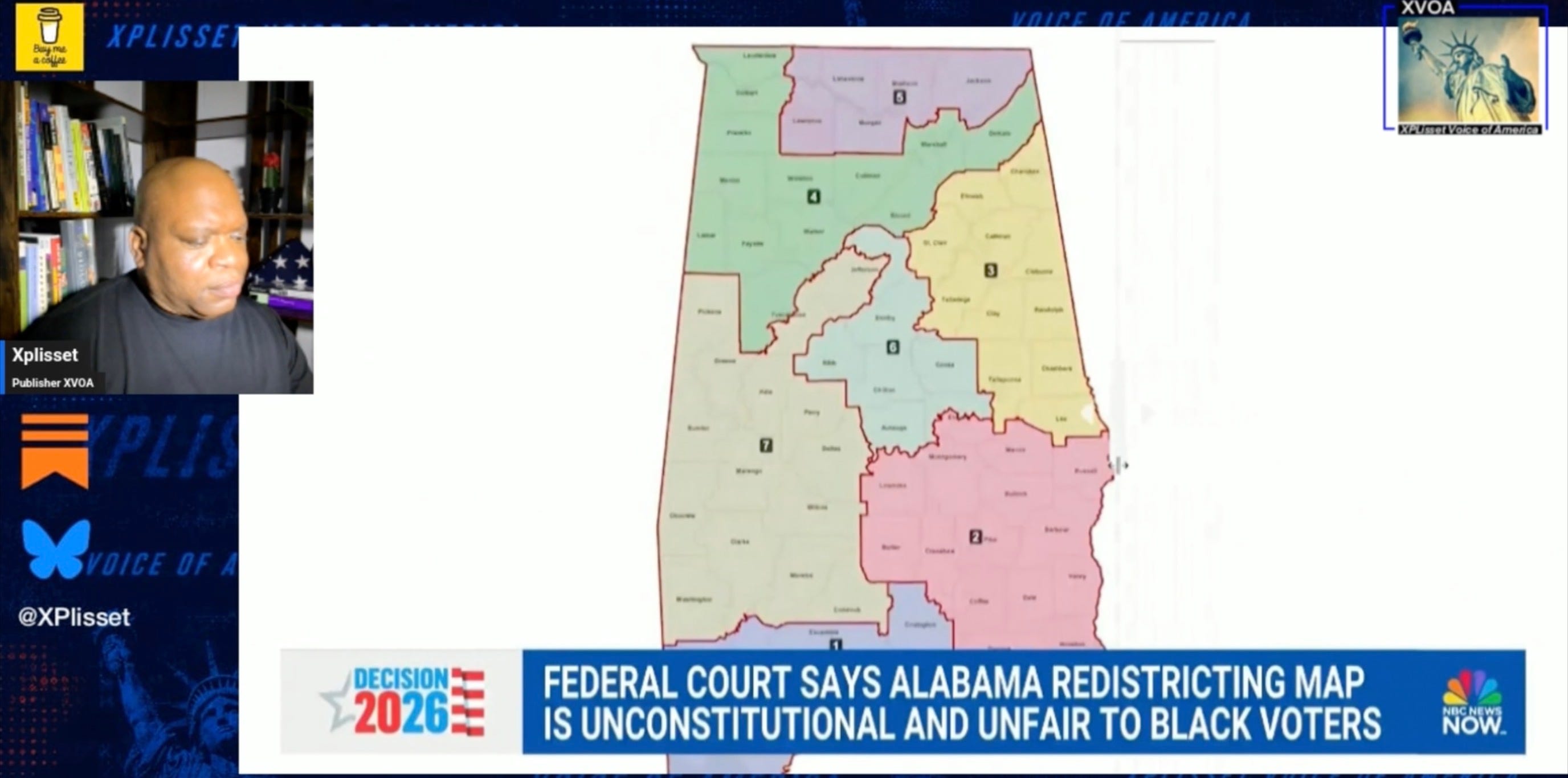
BEFORE
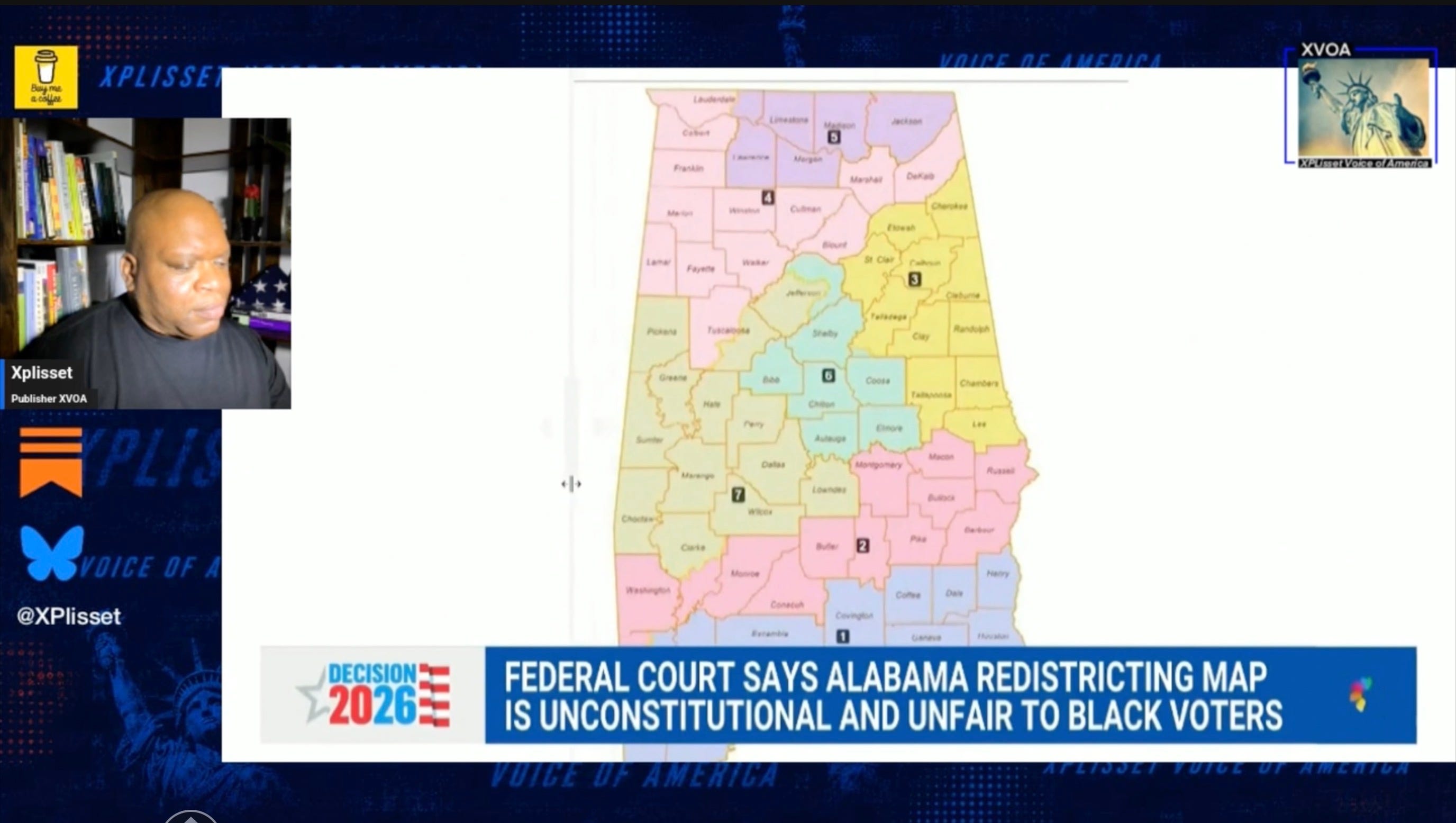
AFTER
Alabama was the legal core of the show.
NBC News reported that a federal panel blocked Alabama from using a new congressional map that would eliminate one of the state’s majority-Black districts [5]. AP also reported that the federal court blocked Alabama’s plan for new congressional districts that could have helped Republicans [9].
According to the NBC segment, the panel said the Republican-drawn plan was unconstitutional and intentionally discriminated based on race [5].
That is not pundit language.
That is not somebody online saying everything is racist.
That is legal language entering the room with a flashlight.
The target was not abstract democracy. Not generic partisanship. Not “both sides fighting over maps.” The thing under pressure was Black political power.
A district can be erased without closing a polling place.
A community can be diluted without a sheriff standing at the door.
That is why redistricting belongs inside Black historical memory. America learned a long time ago that direct exclusion creates a visible crime scene. The more polished version of the old machinery moves through lines, population formulas, court timing, emergency appeals, and words that sound neutral enough to survive a Sunday show.
One of the strongest phrases in the NBC transcript was “intentional effort to dilute the African American congressional districts in the state of Alabama” [5].
Dilute sounds polite.
Dilute sounds technical.
Dilute sounds like chemistry.
But in political life, dilution means your vote still exists while its power gets watered down.
Nobody has to say Black people cannot vote. Nobody has to put up a sign. Nobody has to bring back the old costume. The new version says: we changed the lines. We adjusted the population. We followed procedure. We did mapmaking.
But the result is that Black voters become present without being powerful.
That is why the paperwork was the weapon.
The Congressional Black Caucus added another layer by calling on corporations to publicly oppose Republican-led redistricting efforts that threaten majority-Black districts and to disclose political donations tied to those efforts [10]. That matters because redistricting does not happen in a sealed civics classroom.
Political power is financed.
It is protected.
It is normalized.
Corporations donate into political ecosystems and then pretend they are spectators when those ecosystems attack Black representation.
So when the CBC presses corporations, that is not symbolism. That is a demand to stop hiding behind clean branding while dirty maps move through the states.
The vote theft moves from the courthouse to the boardroom because money helps decide whose map gets defended and whose district becomes expendable.
Before the Witness Speaks, Make Them Sign
From maps, the show moved to mouths.
Once power starts moving through paperwork, the next question is obvious: who gets to tell the public what the paperwork is doing?
That is why the proposed federal worker NDA story belonged in the broadcast. AP reported that the Trump administration wanted current and future federal employees to sign nondisclosure agreements as part of a crackdown on leaks to the media [11].
The government’s stated position is that federal workers already have obligations to protect non-public, confidential, or proprietary information. The form reportedly claims to preserve lawful disclosures [11]. Fine. That is the official posture.
But XVOA reads the pressure point.
The issue is not only what the form technically permits. The issue is what the form communicates.
It tells the worker: watch yourself.
Watch your email.
Watch your hallway conversations.
Watch who you talk to.
Watch whether your conscience is worth your pension, your clearance, your job, your future.
A bureaucracy does not have to silence everybody to change behavior. It only has to make enough people afraid that the harm gets a head start.
That matters especially inside agencies where the public often learns what happened only because somebody inside the machine spoke. Immigration. Public health. Environmental enforcement. Labor. Education. Civil rights. Benefits. Veterans services.
The people most harmed by government silence are usually the people with the least power to investigate the government themselves.
The immigration judge speech case sits beside it. The New York Times reported that the Supreme Court reversed a lower-court ruling in a case involving immigration judges’ challenge to speech restrictions, but the decision was procedural [12]. The Court did not issue some sweeping final ruling saying every speech restriction on immigration judges is perfectly fine forever. The fight goes back into the process.
But procedure can be narrow and still useful to power.
Immigration judges sit inside a system that turns asylum, detention, deportation, fear, family separation, and due process into docket numbers. When people inside that system face restrictions on how they explain their work to the public, the public sees less of the machine.
And when the case gets sent back into another procedural channel, the public hears: nothing final happened.
The person inside the system hears something else.
Be careful.
Speak carefully.
Get approval.
Stay inside the lane.
Do not make trouble.
That is witness control.
It does not always need a muzzle.
Sometimes it just needs a maze.
Immigration by License
The immigrant trucker story showed what happens when paperwork does not just silence someone. It takes their livelihood.
PBS NewsHour reported on immigrants losing commercial driver’s licenses under Trump administration restrictions that affect some groups with temporary status, including DACA recipients, refugees, and asylum seekers [14]. The PBS report said around 200,000 immigrants began losing their commercial driver’s licenses in March [14].
Two hundred thousand is not a paperwork hiccup.
That is rent. Groceries. Medical bills. Car notes. Child support. A family budget. A mortgage. A business loan. A person’s entire work identity.
When a license expires and cannot be renewed, the state does not have to drag you off the job site. It just makes the paper stop working.
The license becomes the border.
One affected worker said, “They use the word safety. You’re using it as a disguise” [14]. That sentence carried the whole segment.
Safety is real. Trucks are dangerous when drivers are badly trained. Roads need standards. Companies need accountability.
But the diagnostic question is always: safety for whom, proven by what data, applied to which people, and why now?
If the problem is bad training, fix training.
If the problem is license mills, go after license mills.
If the problem is weak oversight, tighten oversight.
But if the policy punishes people by immigration category, then say that. Do not hide an immigration agenda inside a traffic-safety costume.
The PBS segment included the line that there is no evidence immigration status directly connects to driver safety [14]. That does not erase tragedy. It does not tell grieving families their pain does not matter. It stops politicians from turning grief into category punishment.
This is one of the oldest moves in American politics.
Find a frightening story.
Attach it to a group.
Move the paperwork.
Then claim you are just protecting the public.
That is how a person’s record gets replaced by their category.
The most human line came near the end, when the worker said paperwork and immigration status were the only things making him look different from everybody else [14].
There it is.
Paperwork.
Not his safety record. Not his years on the road. Not the family depending on him. Not whether he knows the job.
Paperwork.
The form becomes identity. The category becomes fate. The license becomes a border.
And when the state can do that to a worker, it can tell the public nobody was targeted.
It was just compliance.
Don’t Do It.
Local Trapdoors
This is where the national headline gets a street address.
Power does not only live in Washington. It lands as a clinic closure. It lands as a SNAP clock. It lands as an eligibility category. It lands as a ballot repair process that can be turned into conspiracy fuel. It lands as an arbitration clause. It lands as a TV warning label.
That is why XVOA reads the landing zone.
SFGATE reported that San Francisco’s Michael Baxter Youth Clinic is slated to close amid a city budget shortfall tied to federal cuts, affecting a clinic that serves vulnerable youth, including young people experiencing homelessness [15]. That is the local meaning of federal austerity.
A cut in Washington becomes a locked clinic door in San Francisco.
The official language will always sound like management: low volume, reassignment, higher patient demand, virtual care, budget pressure.
But workers inside the clinic give the human translation. Some patients will not simply go somewhere else. They will go nowhere [15].
That is how abandonment works. It does not always announce itself as cruelty. Sometimes it arrives as a budget slide.
The Maryland ballot story showed another kind of trapdoor. WBFF FOX45 reported that Maryland would resend mail-in ballots after some voters received the wrong party’s ballot, and the Maryland State Board of Elections created a replacement ballot information page [7][18]. Election administration errors are serious. They need transparency, repair, and clear instructions.
But a repairable mistake is not automatically fraud.
According to the WBFF segment, voters were to receive marked replacement ballots and a postcard explaining the mistake [7]. The segment also reported there was no risk of duplicate voting because of safeguards like a unique identifier per voter [7].
That does not mean the vendor error was okay. It means the public needed facts before panic.
Black voters, elderly voters, disabled voters, shift workers, and mail-ballot users need accurate ballots and clear instructions. They do not need national misinformation poured over a fixable administrative failure.
The Brian Flores case showed the corporate version of the trapdoor. AP reported that the Supreme Court refused to intervene in the NFL’s attempt to move Flores’s discrimination lawsuit into arbitration, allowing the case to proceed in public court for now [13]. That does not mean Flores won the whole case. It means the case stays in public court for now.
That matters because arbitration is one of corporate America’s favorite trapdoors.
It takes public allegations and moves them into a managed private process. Less daylight. Less pressure. More institutional control.
Flores did not win the whole fight. He won access to daylight.
And sometimes daylight is the first form of power.
D.C.’s SNAP work requirements and Maryland Medicaid changes showed the benefits version of the same machinery. D.C.’s Department of Human Services says its fixed 36-month ABAWD clock runs from June 1, 2026, through May 31, 2029 [16]. Maryland health officials say some federal Medicaid changes will affect eligibility, including changes for some noncitizens beginning in October 2026 [17].
A SNAP clock sounds administrative. A Medicaid eligibility category sounds technical. ABAWD rules sound like policy language.
Hungry people experience it as a paperwork cliff.
In D.C., the SNAP clock matters because instability does not fit neatly into a form. People without housing, veterans, poor workers, people with disabilities that are not properly documented, caregivers, and people moving in and out of crisis can be punished by a system that treats paperwork failure as moral failure.
In Maryland, Medicaid eligibility changes show the same thing. Immigration status becomes health access. Paper category becomes doctor access.
That is where Black diaspora communities can disappear inside the word “noncitizen.” Haitian families. African migrants. Caribbean immigrants. Asylum seekers. Refugees. Mixed-status households.
The form does not ask whether you are sick.
It asks whether you fit the category.
Then came the LGBTQ warning-label story. HRC and PEN America were among more than 40 organizations opposing an FCC inquiry into possible TV content ratings for LGBTQ characters and stories, including transgender and non-binary programming and gender identity themes [20][21].
A warning label teaches the viewer what to fear before the story begins.
State bans attack bodies in schools and clinics. Ratings fights attack presence in the living room.
And Black LGBTQ people are often flattened inside this coverage. The story gets called “content,” when the real issue is visibility, family comprehension, public legitimacy, and whether queer life gets framed as hazard before anybody even speaks.
Again, paperwork.
A category. A label. A rating. A warning.
The form makes presence look dangerous.
Kevin Hart and the Roast Machine
The show ended with culture because culture is where the public gets trained to accept the politics.
HYPE+ covered Kevin Hart’s response to criticism over a George Floyd joke told during his Netflix roast [8]. The point of the segment was not to claim Hart said the joke. He did not. The point was production responsibility and format laundering.
Sometimes the paperwork is not a government form.
Sometimes the paperwork is the format.
The format says roast.
The platform says live production.
The audience says comedy.
The celebrity says I did not say it.
But Black memory hears George Floyd and knows why this does not sit inside a normal joke box.
Hart said the George Floyd joke was not tasteful to “our culture” and “our audience,” then argued that if you watch the roast, you understand why racial humor was on the table [8]. That “but” was doing a lot of labor.
The form says roast, so the harm gets processed as expected behavior.
The question is not whether roasts are supposed to be mean. Of course roasts are mean. The question is whether Black death becomes available material once the room has the right label on it.
That is not the same question.
Hart also said, “It’s my production. We’re live,” then later argued that people should remove him from the issue because he did not say the joke [8]. Accuracy matters. Hart did not say the joke. He did not personally form the sentence with his mouth.
But the backlash was not only about individual authorship.
It was about who hosted the ritual. Who produced the room. Who profited from the spectacle. Who got to be edgy. Who became material. And who gets told afterward that they are overreacting.
Black people know the difference between “I did not swing the hammer” and “I built the stage where the hammer dropped.”
Hart also said they were not in charge of the dialogue from anybody on that stage [8]. That is where the machine hides.
The comic says, I just told the joke.
The producer says, I did not say the joke.
The platform says, it was comedy.
The audience says, it was a roast.
And somehow Black grief is the only thing in the room that gets no protection.
The deeper question was not whether jokes are allowed to offend people at home. The deeper question was: who is the intended target, and who becomes collateral entertainment?
A roast is supposed to hit the person being roasted.
But when George Floyd becomes the punchline, the target is no longer just Kevin Hart.
The target becomes Black grief.
The target becomes Black memory.
The target becomes the public record of a man saying he could not breathe.
You can call that comedy if you want.
But do not ask Black people to pretend they cannot hear the ritual underneath it.
Don’t Do It.
The Evidence Board
So that was the evidence board.
Don Lemon’s case showed us the process.
The subscriber-list request showed us the audience can become part of the pressure.
Status Coup showed us why independent media matters when ICE violence and detention conditions are happening away from the mainstream spotlight.
Monique Pressley showed us the redistricting alarm.
Texas 18 showed us Black voters making choices inside generation, money, seniority, and material need.
Alabama showed us the map.
The federal worker NDA showed us the gag.
The immigration judge case showed us the maze.
The trucker story showed us the license.
San Francisco showed us the clinic door.
D.C. showed us the benefits clock.
Maryland showed us how a repairable election mistake can become conspiracy fuel.
Brian Flores showed us the arbitration trapdoor.
Kevin Hart, whether he meant to or not, showed us the cultural version of the same thing: a format that says the harm is acceptable because the room had a name for it.
That is what XVOA is here to do.
Not just react to the loud thing. Not just chase outrage. Not just clap because somebody said the right sentence on television.
The work is to read the machinery.
Who benefits?
Who gets erased?
Who is protected?
Who pays?
Whose vote counts?
Whose power gets called legitimate?
Who keeps pulling up the bridge after crossing it?
That is why Black historical memory is not nostalgia. It is an instrument panel. It tells us when the country is using new language for an old operation.
Because America has always loved clean paperwork for dirty work.
It wrote people into property.
It mapped families out of neighborhoods.
It tested voters with traps and called it literacy.
It denied loans with charts.
It closed schools with budget logic.
It caged people with categories.
It buried discrimination in arbitration.
It called silence professionalism.
It called hunger noncompliance.
It called protest danger after pushing people into the street.
It called visibility a warning label.
And now it wants to call all of this normal procedure.
Don’t Do It.
Do not let them make the form look innocent.
Do not let them make the map look neutral.
Do not let them make the warrant request look harmless just because a judge said no.
Do not let them make the gag order look like office policy.
Do not let them make the license rule look like road safety if the data does not carry that weight.
Do not let them make the roast format launder Black grief.
The paperwork was the weapon.
And tonight, we read it out loud.
Support XVOA
Paid subscriptions keep this desk working, researching, writing, and refusing to let Black historical memory be treated like background noise.
Coffee is the backstop if you cannot subscribe right now
Sources
[1] Don Lemon, “Lemon LIVE at 5 | BREAKING: Major Updates In Don Lemon’s Freedom of the Press Case” - Video source for Lemon’s account of his press-freedom case, process-as-punishment argument, and subscriber-list claim.
[2] Don Lemon with Jordan Chariton of Status Coup, “Breaking: Major Updates in Don Lemon’s Freedom of The Press Case” - Video source for the Status Coup discussion of ICE protests, detention conditions, and press treatment.
[3] Don Lemon, “Donald Trump’s racist Redistricting plans are failing” - Video source for Monique Pressley’s redistricting comments and Black voter alarm framing.
[4] FOX 26 Houston, “Menefee defeats Green in CD-18 race” - Video source for Texas 18 election-result discussion, generational-change frame, and crypto-money analysis.
[5] NBC News, “Federal court blocks Alabama from using Redistricting map” - Video source for the Alabama map ruling segment.
[6] PBS NewsHour, “Thousands of immigrant truckers lose commercial licenses in Trump administration crackdown” - Video source for the immigrant trucker license segment.
[7] WBFF FOX45 Baltimore, “Maryland to resend mail-in ballots after wrong party ballots sent to some voters” - Video source for the Maryland ballot replacement segment.
[8] HYPE+, “Kevin Hart ‘Angrily Responds’ To ‘George Floyd Joke’ Backlash” - Video source for the Kevin Hart roast backlash segment.
[9] AP News, “Federal court blocks Alabama plan for new congressional districts that could help Republicans” - Reporting source for the federal court’s Alabama congressional map ruling.
[10] AP News, “Congressional Black Caucus presses companies in the US to oppose Republican redistricting push” - Reporting source for the CBC’s corporate-pressure campaign around majority-Black districts.
[11] AP report via PBS NewsHour, “Trump administration proposes non-disclosure agreements for federal employees to stop leaks” - Reporting source for proposed federal worker NDAs and leak crackdown.
[12] The New York Times, “Supreme Court Reverses Ruling in Immigration Judges’ Free Speech Lawsuit” - Reporting source for the Supreme Court’s procedural ruling in the immigration judge speech case.
[13] AP News, “Supreme Court won’t intervene in discrimination suit led by Black ex-head coach Flores against NFL” - Reporting source for Brian Flores’s discrimination lawsuit staying in public court for now.
[14] PBS NewsHour, “Thousands of immigrant truckers lose commercial licenses in Trump administration crackdown” - Full PBS source page for the immigrant trucker report.
[15] SFGATE, “SF youth clinic to close after Trump bill causes $306M cuts from city budget” - Reporting source for Michael Baxter Youth Clinic closure and local-health fallout.
[16] D.C. Department of Human Services, “SNAP Work Requirements” - Official source for D.C.’s SNAP ABAWD work requirement clock.
[17] Maryland Department of Health, “Is My Medicaid Going to Change?” - Official source for Maryland Medicaid eligibility changes.
[18] Maryland State Board of Elections, “Mail-In Ballot Replacement Information” - Official source for Maryland mail-in ballot replacement information.
[19] Capital B, “Black Voters in the South Want Leaders Who Fight but Also Deliver” - Reporting source for Black voter expectations around representation, visibility, and material delivery.
[20] Human Rights Campaign, “More Than 40 Organizations File Comment with the FCC Opposing Content Ratings for LGBTQ Characters and Stories on TV” - Source for coalition opposition to LGBTQ TV content warning-label treatment.
[21] PEN America, “PEN America Joins More Than 40 Organizations in Comment to FCC Opposing Content Ratings For LGBTQ TV Programming” - Source for PEN America’s free-expression framing of the FCC ratings fight.


