


So damn reliable you forget how good it is. Like COOL AC, baby.
Today’s Charge
The day’s charge is selective urgency. Folarin Balogun’s red card became a presidential phone call and an international sports controversy. Nolan Xavier Wells, an 18-year-old Black teen in Mississippi, disappeared after a Fourth of July trip to Horn Island, and his family waited inside grief, rumor, and unanswered questions. A Black commuter on the D.C. Metro sat surrounded by masked Patriot Front members during America’s 250th Independence Day spectacle. The machinery moved at three speeds: fast for national image, slow for Black grief, and patient for organized white nationalist intimidation.
Five Things That Matter Today
A Black commuter on the D.C. Metro became the image America did not want to explain. Reuters documented Patriot Front’s July 4 march through Washington, and a Reuters photograph showed a Black passenger surrounded by masked members of the white nationalist group on public transit. The viral shorthand called it a girl on a bus surrounded by fascists. The verified record says D.C. Metro, Black commuter, masked Patriot Front members, and a public-space intimidation scene the country tried to process as spectacle. [1][2][3]
Nolan Xavier Wells’ family is waiting inside the silence. Wells, an 18-year-old student-athlete from Mississippi, was last seen July 4 on Horn Island after going there with friends. Capital B reported that a body matching his description was found July 6 and that DNA testing was pending. WLOX reported that the family identified the body as Wells, while officials had not yet completed every formal step. [4][5]
Balogun’s red card became a state-power story hiding inside sports. Trump said he contacted FIFA President Gianni Infantino after Folarin Balogun’s red card suspension. FIFA lifted the one-game ban, allowing Balogun to play against Belgium, and UEFA called the decision “unprecedented, incomprehensible and unjustifiable.” [6][7]
The Supreme Court let Texas enforce a digital checkpoint. The Court declined to block Texas’ app-store age-verification law, allowing the state to require age checks and parental consent while First Amendment litigation continues. The public argument is child safety. The machinery underneath is access, surveillance, privacy, and state power over digital life. [8]
The body kept showing up as the evidence. The Black commuter’s body inside public intimidation. Nolan Wells’ body at the center of a family’s grief. Balogun’s body returned to the field when the national spectacle needed him. Haitian TPS workers’ bodies held in paperwork limbo. Black communities’ bodies absorbing heat, housing neglect, tree-cover inequality, utility costs, and public-health failure. [4][6][9][10][11]
Restack This Brief
Restack this brief for the people who still think these stories are separate.
Paid subscriptions sustain the desk.
Coffee can be the backstop for folks who cannot subscribe right now.
$50 a day keeps the pain away. That’s just 10 people each contributing $5
The Hierarchy Audit
National attention knew how to find spectacle today. It could see a World Cup red card. It could see presidential access to FIFA. It could see masked white nationalists marching through the capital on the Fourth of July. It could see the Supreme Court moving digital regulation, voting rules, immigration detention, and LGBTQ rights onto the next legal battlefield.
The buried harm lived closer to the body. A Black family in Mississippi waited for answers after an 18-year-old disappeared from Horn Island. Haitian TPS workers in Massachusetts faced work-permit panic through immigration paperwork. Uninsured patients in Mississippi depended on a free clinic forced into a church after flooding. Black communities carried heat through housing, tree cover, energy costs, and medical risk. Trans children and families faced federal efforts to reach into hospital records.
The loud stories were power talking to power. The buried stories were power landing on people. The hierarchy revealed itself through speed. When national image needed repair, the call got made. When Black grief needed urgency, the wait became part of the injury. When masked white nationalism entered public transit, the country reached for management language before moral language.
Top Breaking National Stories
1. Balogun’s red card got the fast lane.
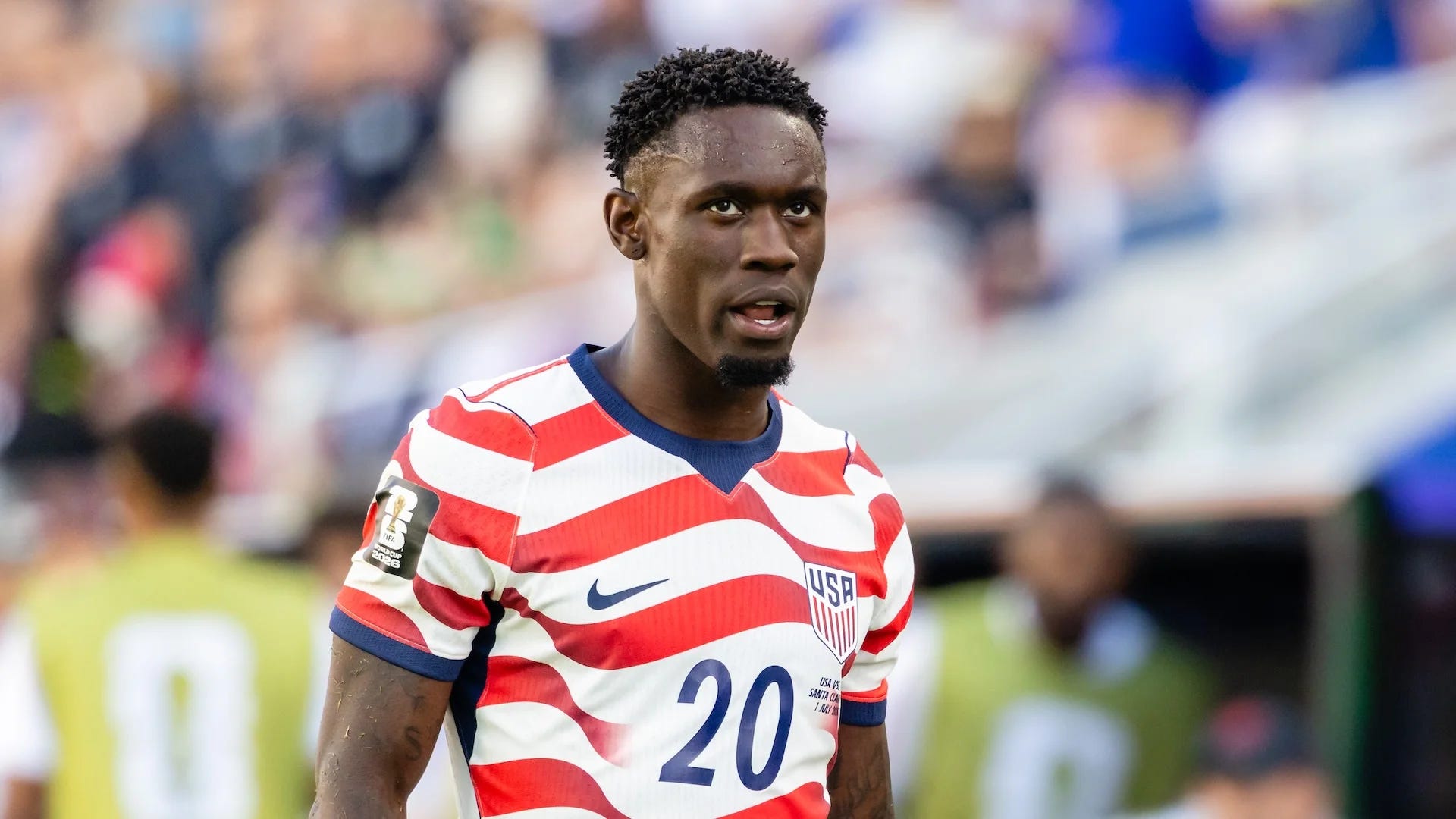
Folarin Balogun’s red card should have been a soccer story. Instead, it became a state-power story. During the World Cup, Balogun received a red card that carried a one-game suspension. Trump said he contacted FIFA President Gianni Infantino and asked for the card to be reviewed. FIFA later suspended Balogun’s ban for a probationary period, clearing him to play against Belgium. The red card stayed on the record, but the punishment no longer kept him off the field. [6][7]
UEFA responded with extraordinary language, calling FIFA’s decision “unprecedented, incomprehensible and unjustifiable.” Belgium objected as well. The controversy is not simply that a U.S. star was available for a major match. The issue is the appearance of institutional process bending after political pressure from the president of the host country. [7]
Why it matters:
Balogun did not create this machinery. His body became the site where it revealed itself. A Black athlete became visible to power because the national spectacle needed him. That does not make him the villain. It makes him the evidence. Power knew how to move when victory, optics, and prestige were on the line. That speed is the story.
2. The Metro photo showed protected intimidation in public space.
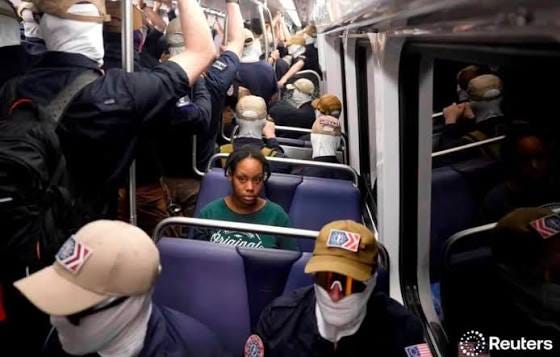
On July 4, masked members of Patriot Front marched through Washington, D.C., during the country’s 250th Independence Day celebrations. Reuters reported that the group marched near major landmarks and later rode the Metro out of the city. A Reuters photo from the Metro showed a Black commuter seated while masked Patriot Front members stood around her. The image spread because people recognized the scene before they had the language for it. [1][2]
Patriot Front is not just a vague extremist group with matching outfits. The Southern Poverty Law Center identifies it as a white nationalist hate group that split from Vanguard America after the deadly 2017 Unite the Right rally in Charlottesville. George Washington University’s Program on Extremism describes Patriot Front as a white nationalist and fascist organization that promotes a white ethnostate. [3][12]
Why it matters:
The commuter did not volunteer to become a symbol. But Black historical memory knows the arrangement: one Black body in public space, surrounded by organized white threat, while the state reaches first for crowd-management language. The mask was not merely hiding identity. The mask was the message. White nationalism got processed as speech. Black fear got processed as reaction.
3. Texas’ app-store law turned child safety into digital gatekeeping.
The Supreme Court declined to block Texas from enforcing an app-store age-verification law while litigation continues. The law requires age verification and parental consent for minors who want to download apps or make in-app purchases. The challengers, including the Computer & Communications Industry Association and Students Engaged in Advancing Texas, argued that the law restricts access to protected speech, including news, education, and other digital content. Texas defended the law as a child-protection measure. [8]
The Court’s action came through an emergency posture, allowing the law to operate while the broader legal fight proceeds. That is how the machinery often moves now: the rule takes effect, the infrastructure gets built, and the constitutional argument catches up later. [8]
Why it matters:
Child safety is a powerful public argument. It can also become the cleanest wrapper for surveillance and gatekeeping. Poor families, queer youth, young organizers, immigrant families, and students who rely on phones for information may feel that gate first. A digital checkpoint does not land evenly when privacy, education, sexuality, immigration, and political speech are already unevenly policed.
4. The EEOC fight showed civil rights enforcement being rewritten from inside.
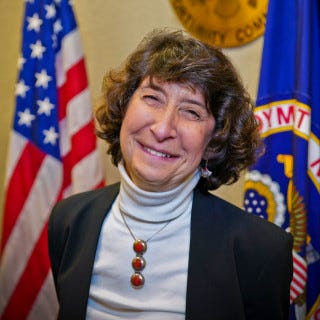
Former EEOC Commissioner Jocelyn Samuels dropped her lawsuit challenging her removal after a Supreme Court ruling expanded presidential control over independent agencies. AP reported that Samuels and another Democratic commissioner had been removed before their terms were complete, an action described as unprecedented in EEOC history. The current EEOC leadership has aligned the agency with Trump administration priorities, including attacks on DEI and proposed changes that critics say would weaken civil rights enforcement. [13]
The agency’s new regulatory direction includes possible shifts around workforce demographic data and civil rights guidance. That matters because discrimination often becomes visible through records, categories, reporting obligations, and enforcement patterns. Remove the measuring tools, and the country gets to pretend the injury got smaller. [13]
Why it matters:
Civil rights enforcement can be hollowed out without a dramatic speech. It can happen through removals, regulatory plans, data changes, guidance reversals, and enforcement priorities. Black workers, women, disabled workers, LGBTQ workers, immigrants, and older workers do not experience that as abstraction. They experience it as fewer institutional doors opening when discrimination shows up at work.
5. The Supreme Court’s next term is already loading the permission slips.
The Supreme Court’s next term is shaping up around guns, voting, immigrant detention, LGBTQ nondiscrimination, and corporate power. Reuters reported that the Court will hear cases involving proof-of-citizenship voting requirements in Arizona, prolonged detention of immigrants without bond hearings, a religious challenge to Colorado’s LGBTQ nondiscrimination rules for preschool funding, assault-style rifle bans, and major corporate disputes. [14]
That docket is not just a legal calendar. It is a map of where power wants permission next. Voting restrictions decide who can enter the electorate. Immigration detention rules decide how long the state can hold people without a bond hearing. LGBTQ nondiscrimination cases decide whether public money can flow through institutions that want exemption from equal-treatment rules. [14]
Why it matters:
The Court is where backlash tries to become durable law. Black voters, Native voters, Latino voters, naturalized citizens, immigrants, LGBTQ families, religious minorities, and poor people will feel these fights long before most national coverage connects the dots. The machinery is asking for future clearance. XVOA is reading the docket as a warning label.
Stories Buried Beneath the National Headlines
6. Nolan Wells’ family is waiting for answers.
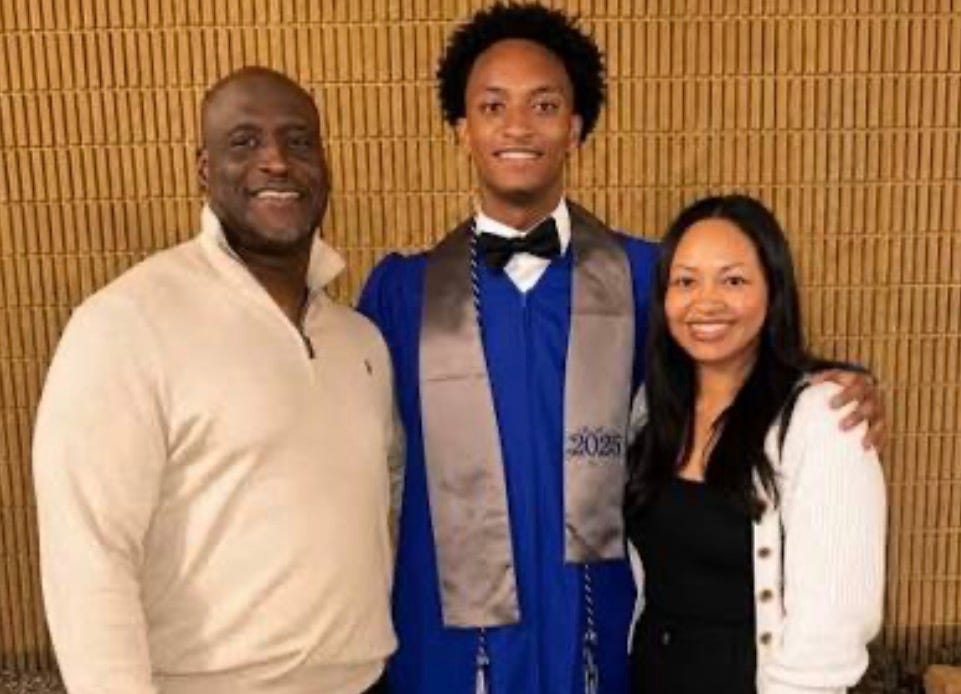
Nolan Xavier Wells was 18. He was a student-athlete from Ocean Springs, Mississippi, and a football player at Southwest Mississippi Community College. He was last seen July 4 on Horn Island, where he had gone with friends. His friends returned. Wells did not. Capital B reported that a body matching his description was found July 6 and that DNA testing was pending. WLOX reported that the family identified the body as Wells, while the cause of death remained unclear. [4][5]
Why it matters:
XVOA is not treating unanswered questions as proof. We are treating the silence around a missing Black teen as part of the story. A Black family should not have to become its own investigative desk, rumor-control office, and grief ministry before the public decides the story is serious.
7. Haitian TPS workers are being pushed into paperwork limbo.
Axios Boston reported that TPS holders in Massachusetts sued the Trump administration over new immigration rules that could leave people unable to work while renewals are pending. Massachusetts has large TPS communities, including Haitian workers who hold up care systems, schools, construction, and service work. The lawsuit challenges rules tied to new fees and restrictions that could hit workers as permits begin expiring. [9]
Why it matters:
This is paperwork as economic threat. Black immigrant labor is wanted inside the hospital, the home-care system, the classroom, the jobsite, and the kitchen. Then the same worker is placed on unstable legal ground by forms, fees, deadlines, and delays. The state gets the labor and keeps the worker breakable.
8. A free clinic in Mississippi had to move into a church after flooding.
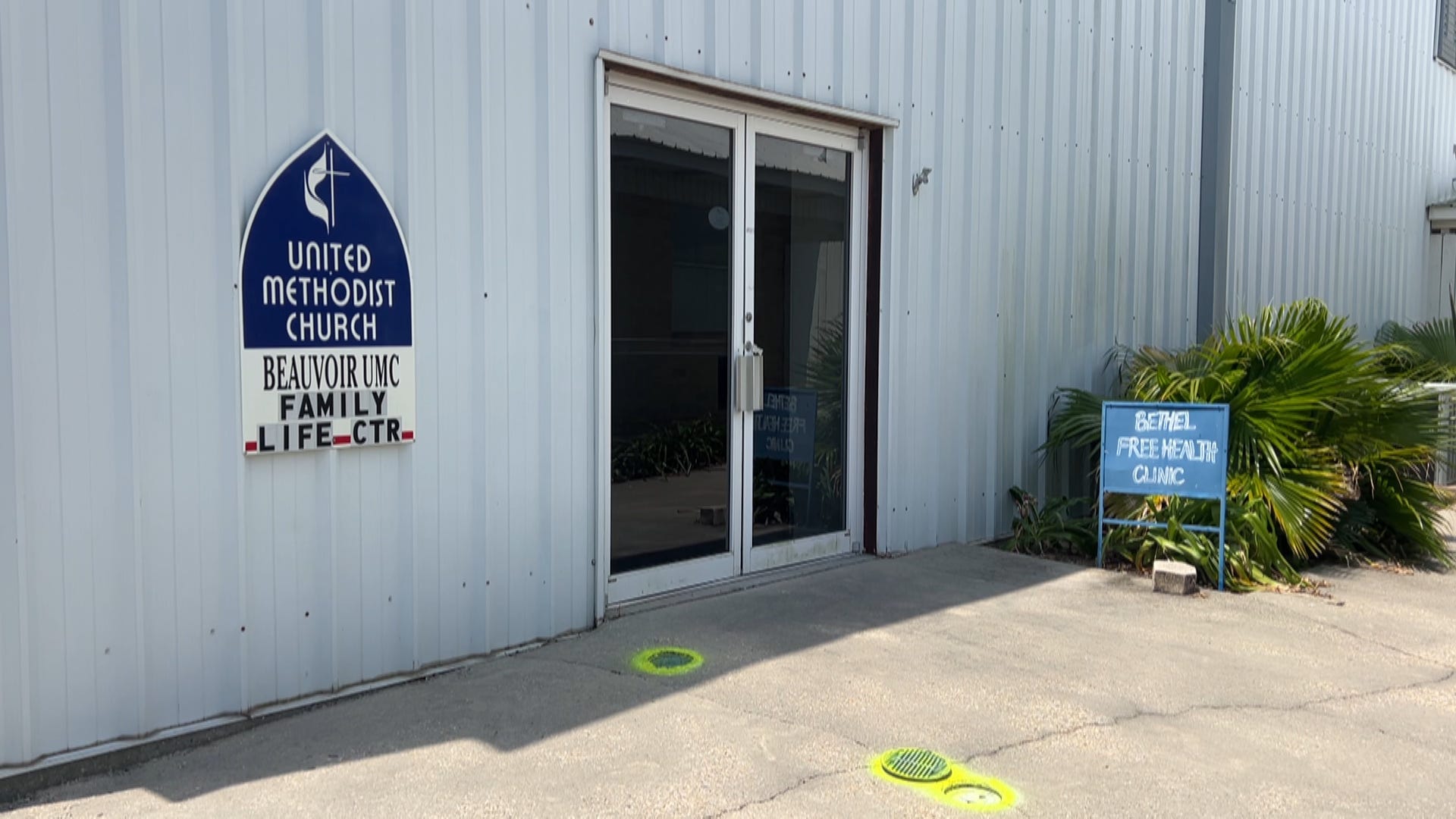
In Biloxi, WLOX reported that Bethel Free Health Clinic set up a temporary location inside Beauvoir United Methodist Church after flood damage to its building. The clinic planned to resume free care for uninsured patients on Tuesdays and Thursdays, with no appointment needed. Staff moved charts, medications, computers, and basic clinical equipment so care could continue. [15]
Why it matters:
This is local public health doing survival work. A storm hits. The clinic floods. Uninsured patients still need medicine, exams, and care. The church becomes infrastructure because the formal system is too thin. That is the buried machinery: poor and uninsured people depend on fragile community institutions that are one flood away from disruption.
9. Heat stayed in the body story, even without a fresh breaking hook.
Capital B reported last week that Black communities face heightened danger from extreme heat because exposure, tree cover, cooling access, housing quality, and public-health infrastructure are unequal. This item is not the day’s freshest breaking headline. It belongs here because today’s frame is the body under policy pressure: the body on the train, the body in the water, the body on the field, the body at work, the body in the clinic, the body trying to stay cool. [10]
Why it matters:
Extreme heat is not just weather when race, class, disability, housing, utility bills, tree cover, and medical vulnerability decide who gets relief. Black communities absorb policy failure through skin, lungs, blood pressure, sleep, and electricity bills. The body becomes the receipt.
10. The jobs report still carried the racial audit.
The Bureau of Labor Statistics reported that nonfarm payroll employment changed little in June, adding 57,000 jobs, while the unemployment rate was 4.2 percent. Employment trended up in professional and business services, social assistance, and health care, while leisure and hospitality lost jobs. Reuters reported that the labor force participation rate fell to 61.5 percent, its lowest level in more than five years. [11][16]
Why it matters:
The headline economy speaks one language. Workers near the margin hear another. Leisure and hospitality losses matter because those jobs are often where Black workers, immigrants, young workers, and working-class families feel the slowdown first. A stable-looking topline can hide a labor market where people simply stop looking.
11. Congo’s Ebola response showed who gets asked to be resilient.
AP reported that Ebola deaths in Congo topped 500 as health workers threatened to strike over unpaid benefits, poor wages, inadequate supplies, and working conditions. The outbreak involves the Bundibugyo strain, for which there is no approved vaccine, and frontline workers warned that the response was outpacing the support they had received. [17]
Why it matters:
Global health loves the word resilience because resilience is cheaper than protection. Frontline workers become the shield. Institutions become the press release. The Black diaspora watches another crisis where workers are expected to stand between the public and death while compensation, equipment, and safety arrive late.
12. Trans medical privacy became another federal battleground.
Reuters reported that a federal judge in California blocked the DOJ from using a grand jury subpoena to obtain records of transgender minors who received gender-affirming care at Lucile Packard Children’s Hospital Stanford. The judge found that the government likely violated patients’ informational privacy rights and described the subpoena fight as part of a broader pressure campaign. [18]
Why it matters:
Once medical care becomes an evidence hunt, patients and families start living under political inspection. Black LGBTQ people and trans youth sit especially close to that danger because race, gender, sexuality, poverty, family vulnerability, and state power rarely arrive one at a time. The clinic becomes the next checkpoint.
13. The voting-rights warning did not stay inside one headline.
The Supreme Court’s next term includes a case involving Arizona proof-of-citizenship voting requirements, while Reuters also reported last week that a federal judge blocked proposed USPS restrictions on mail-in voting tied to Trump’s election rules. That mail-in voting ruling came outside today’s strict 48-hour core, so it belongs here as a watch item rather than a full breaking lead. [14][19]
Why it matters:
Black voters, Native voters, Latino voters, elderly voters, disabled voters, rural voters, students, and naturalized citizens are often the first to feel proof-of-citizenship paperwork and ballot-delivery restrictions. The machinery rarely announces itself as disenfranchisement. It calls itself verification, order, eligibility, integrity, and procedure.
Closing Note on Coverage Gaps
The coverage hierarchy tried to separate stories that belonged together. Sports went in one box. Extremism went in another. A missing Black teen stayed local. Immigration paperwork became policy. Heat became weather. Jobs became a topline number. Trans medical privacy became a legal fight. A flooded free clinic became a local human-interest item.
XVOA reads the pressure map.
The Metro photo is public intimidation. Nolan Wells is the blackout around Black disappearance. Balogun is selective urgency. TPS is paperwork power. Heat is racial infrastructure entering the body. The jobs report is the racial economy speaking through numbers. Trans medical privacy is surveillance entering the clinic.
The gaps matter too. The day needed more local democracy reporting, more Native voting reporting, more Black maternal-health reporting, and more sustained attention to rural public health. Absence is part of the brief when the absence tells us whose harm did not become news.
A red card got a phone call. A Black family got the wait. A Black commuter got surrounded. The country expected those to read as separate stories.
They were the hierarchy.
Support XVOA
XVOA is a Black-led intelligence desk reading American power from the underside of history. This work takes time, receipts, judgment, and the refusal to let the country separate stories that belong together.
Paid subscriptions sustain the desk. $50 a day keeps the pain away. That’s just 10 people each donating $5
Coffee is the fallback for readers who cannot or will not subscribe.
Sources
[1] Reuters, “Masked Patriot Front white nationalists stage July 4 march through DC” - Supports the Patriot Front march, timing, public-transit movement, and official framing.
[2] Reuters Pictures, “Photos show hundreds of masked Patriot Front white nationalists marching in DC” - Supports the Metro image and visual documentation of the march.
[3] George Washington University Program on Extremism, “Patriot Front” - Supports identification of Patriot Front as white nationalist and fascist.
[4] Capital B, “As Search Ends, Nolan Wells’ Family Is Still Waiting For Answers” - Supports the Wells timeline, family context, body matching description, and pending DNA testing.
[5] WLOX, “UPDATE: Family identifies body found on Horn Island as 18-year-old Nolan Wells” - Supports local official reporting on the body found and the family’s identification.
[6] AP via WSLS, “Balogun starts for US against Belgium after suspension lifted following call by Trump to FIFA” - Supports the Balogun suspension timeline and Trump’s call to FIFA.
[7] Reuters, “UEFA slams FIFA’s ‘unprecedented, incomprehensible and unjustifiable’ Balogun decision” - Supports UEFA’s criticism and international controversy.
[8] AP, “Supreme Court won’t block Texas from enforcing a law requiring age verification for app downloads” - Supports the Texas app-store law and Supreme Court emergency action.
[9] Axios Boston, “TPS holders at risk of losing work permits sue Trump administration” - Supports TPS lawsuit, work-authorization concerns, and Massachusetts Haitian TPS context.
[10] Capital B, “Black Americans Face Heightened Risk in Record-Breaking Heat” - Supports the heat, race, cooling access, and public-health infrastructure frame.
[11] Bureau of Labor Statistics, “Employment Situation Summary - June 2026” - Supports the June jobs report, 57,000 jobs added, 4.2 percent unemployment rate, and sector changes.
[12] Southern Poverty Law Center, “Patriot Front” - Supports the history and classification of Patriot Front as a white nationalist hate group.
[13] AP, “Ex-civil rights agency commissioner fired by Trump drops lawsuit in wake of Supreme Court ruling” - Supports the EEOC lawsuit dismissal, agency direction, and civil rights enforcement shift.
[14] Reuters, “U.S. Supreme Court to hear gun, LGBT, voting rights cases in next term” - Supports the upcoming Supreme Court docket on voting, immigration detention, LGBTQ nondiscrimination, guns, and corporate cases.
[15] WLOX, “Bethel Free Health Clinic relocates to Beauvoir United Methodist Church after flood” - Supports the local public-health infrastructure item in Biloxi.
[16] Reuters, “US job growth slows sharply in June; labor force participation rate at more than 5-year low” - Supports labor-market context beyond the BLS topline.
[17] AP, “Ebola deaths in Congo top 500 as health workers threaten to strike” - Supports Congo Ebola deaths, health-worker conditions, and strike threat.
[18] Reuters, “US judge blocks DOJ from obtaining transgender care records from California hospital” - Supports the trans medical privacy and DOJ subpoena item.
[19] Reuters, “Judge blocks US Postal Service’s proposed restrictions on mail-in voting” - Supports the voting-rights watch item on mail-in ballot restrictions.


