


Come on in. I want to slow this story down, because a blackout is easy to file under somebody else’s emergency. A storm hits. The lights go out. Crews arrive. Eventually the lights come back on, and the rest of us tell ourselves the system bent for a little while but did not break.
Gary, Indiana, would not let the story end that neatly, and that is why this Reader’s Cut exists. It is not a transcript or a quick recap. It is the expanded, sourced written edition of the video, rebuilt for readers who want the complete argument, the context and the receipts in one place. You can skip the video and lose nothing essential; if you watched it, this is where the reporting slows down enough to show what the footage exposed.
Gary, Indiana, would not let the story end that neatly.
The August 11 derecho produced widespread winds of 70 to more than 100 miles per hour across northeastern Illinois and northwestern Indiana. The National Weather Service recorded a 99-mile-per-hour gust at Gary/Chicago International Airport and confirmed eight tornadoes within its Chicago forecast area. [1] That was catastrophic physical damage, plain enough not to need exaggeration.
But the same storm does not create the same emergency in every household. A generator, a reliable car, hotel money, nearby family and an employer who can tolerate an absence all purchase distance from a disaster. Without those things, you remain inside it. That is where this story stops being only about wind and wires and starts revealing something about race, poverty, public trust and who can afford to leave.
TLDR
The derecho caused extraordinary physical damage, including a 99-mile-per-hour gust in Gary. The severity of that damage is not in dispute.
Gary is 76.2 percent Black, and 33.1 percent of its residents live in poverty. [2] Those facts do not prove discriminatory restoration decisions, but they help explain why a prolonged outage imposed an unequal burden.
NIPSCO says restoration was driven by the location and complexity of the damage, not race or income. Some residents say the sequence they saw told a different story. The honest next step is not dueling public relations. It is releasing the restoration data.
A proposed class action alleges that inadequate vegetation management and infrastructure inspection contributed to the outages. NIPSCO disputes those allegations and says its vegetation-management spending has more than doubled since 2016.
This is a climate-justice story even without claiming that climate change caused this particular derecho. Severe weather meets old infrastructure; then money decides who can protect the food, medicine, children, sleep and income.
If this helps you see the machinery more clearly, Restack it, share it and send it to one person who still thinks a long blackout can only happen somewhere else.
Watch by Chapter
0:00 · Why Gary’s blackout matters
1:44 · “Straight-up apocalyptic” scenes from Indiana
3:16 · NIPSCO denies racial or economic bias in restoration
4:45 · A resident challenges the early restoration list
6:19 · Gary residents describe “survival mode”
6:38 · Climate exposure, threat-scanning and the Katrina memory
8:39 · The proposed NIPSCO lawsuit and the utility’s response
10:12 · Covered nationally, but still not centered
11:43 · “Nowhere to go”: the blackout’s class divide
12:09 · Resources, not toughness, decide who can escape
13:31 · How many days could your household last?
The Damage Was Real
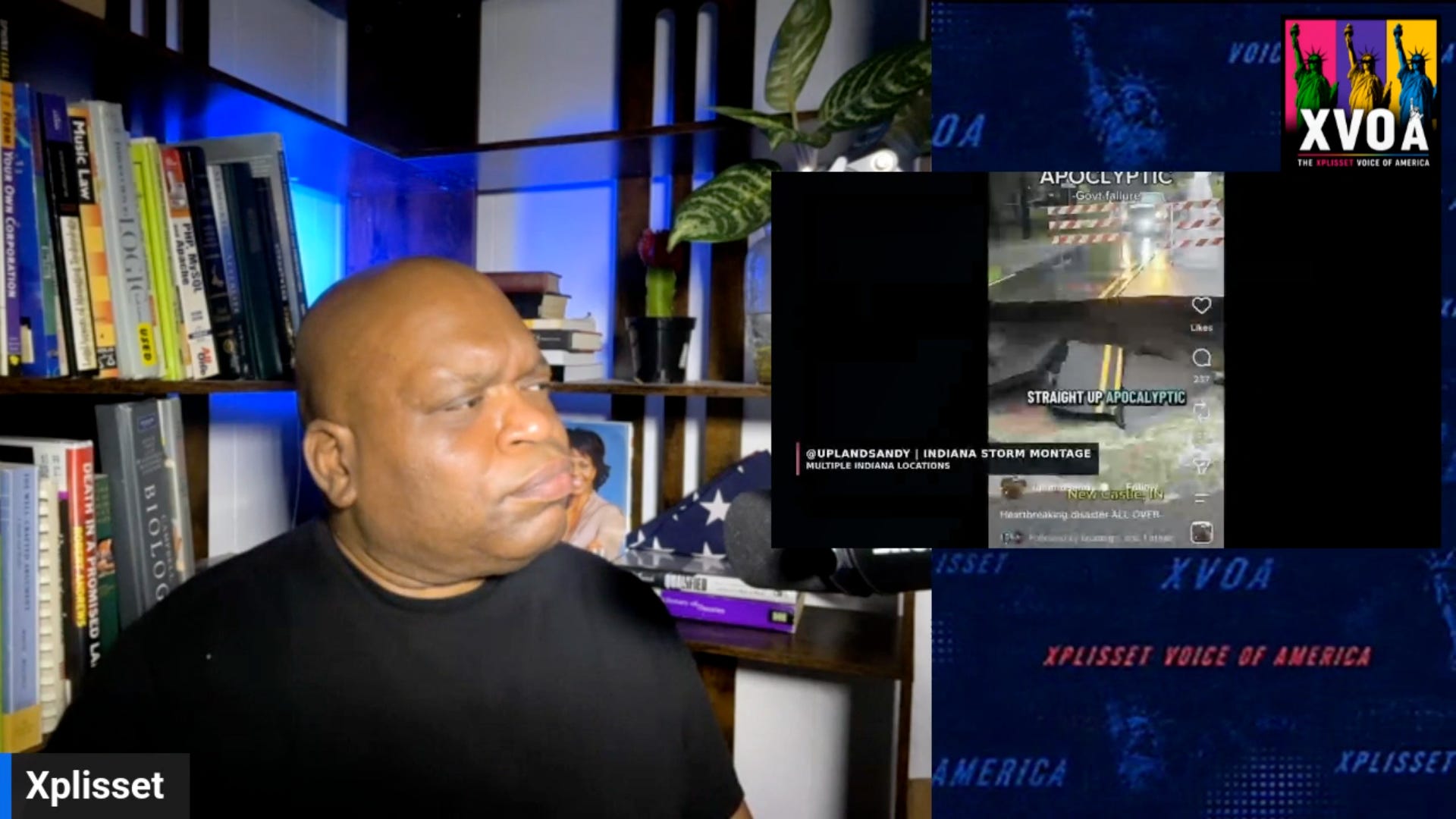
One of the clips that set this discussion in motion opens with the line, “Straight-up apocalyptic scenes are coming out of Indiana right now.” Apocalyptic sounds dramatic, but the older meaning of apocalypse is an uncovering. Something hidden gets exposed.
The storm ripped that cover away. NiSource executive Melody Birmingham told the Associated Press that roughly 300 utility poles and 44 transmission poles in Gary needed repair or replacement. She described work that ordinarily takes weeks or months being compressed into days and weeks. [3]
That matters because skepticism about equity should not become denial about engineering. Whole systems had to be rebuilt. The storm intensified as it moved into northwest Indiana, and Illinois-to-Indiana comparisons are not perfectly symmetrical. Any fair account has to begin there.
It cannot end there.
By NIPSCO’s 9 p.m. Central update on August 25, the company said it had restored 374,400 of 374,500 event outages. It listed 834 customers without power overall, approximately 100 of them connected to the August 11 storm and subsequent storms, while warning that “substantially complete” restoration in Gary, Portage and Lake Station did not mean every individual property was back online. [4]
The numbers show enormous work accomplished. They also show how long the last people waited.
The Official Answer and the Missing Data
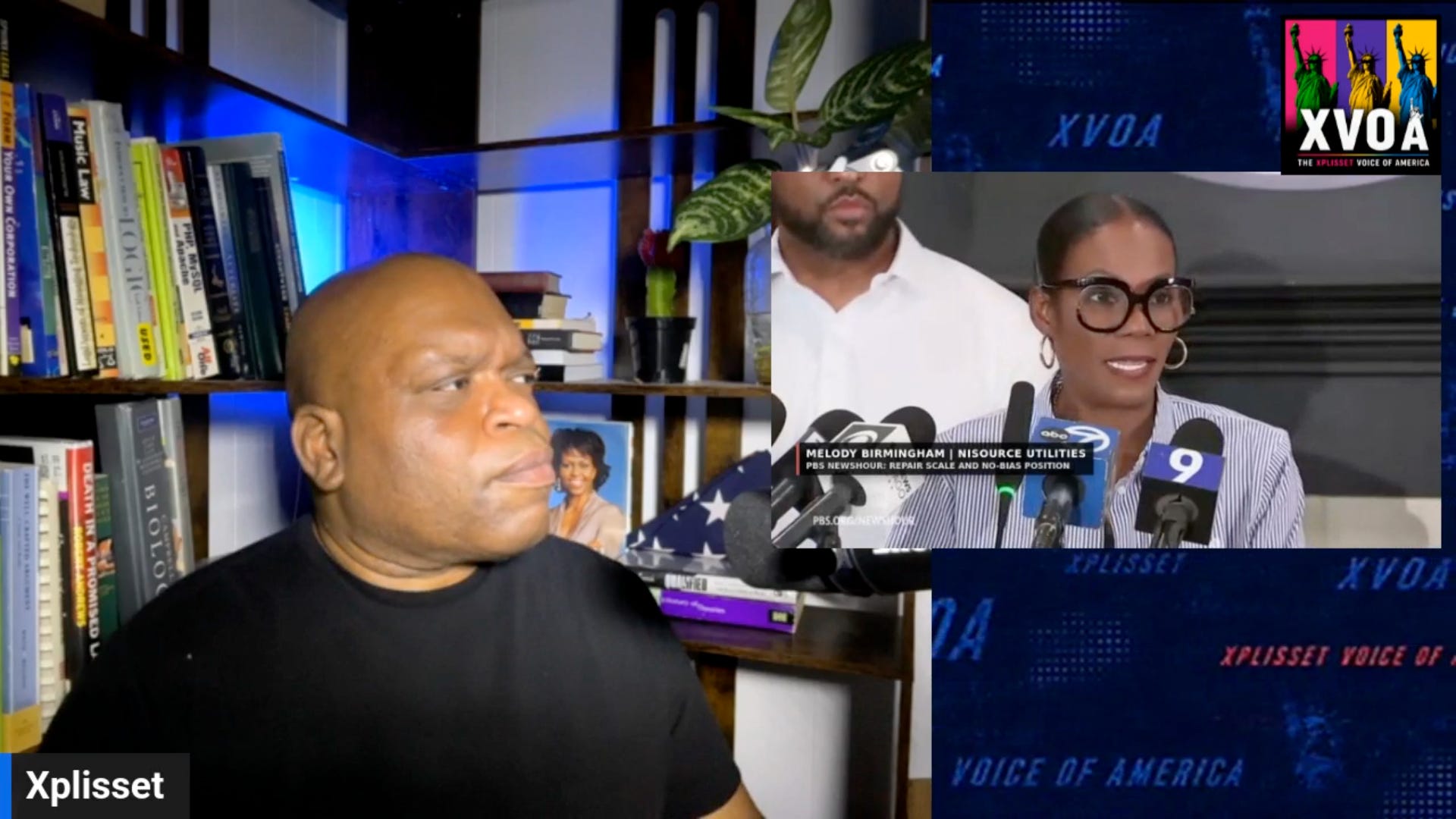
PBS reported the company’s position clearly: race and socioeconomic status were not affecting the pace of restoration, and affluent communities had also lost power. [5] That is NIPSCO’s explanation, and it should be represented accurately. The company says geography and system damage, not the demographics of the people in the dark, determined the schedule.
A woman from the region described an early restoration list that, in her account, included predominantly white communities while omitting Gary, Hammond and East Chicago. Her observation does not prove motive. A screenshot cannot show the complete operational picture, and Gary’s severe physical damage is independently documented.
The company’s denial does not erase what residents saw, either. “Affluent people lost power too” establishes that the storm was broad. It does not answer whether the burden was equal, whether estimates were revised at the same speed, or whether every community received the same quality of information.
This is where the argument should move from public relations to evidence. Release the damage assessments by area. Release crew assignments, original restoration estimates, every revision and actual restoration times by municipality and neighborhood. Explain the priority rules in language ordinary customers can test against the record.
If the explanation is sound, the data should be able to carry it.
“Survival Mode” Is Not an Inconvenience
In the resident footage, one woman said communities of color feel left behind and are tired of living in “survival mode.” Another Gary resident described an elderly neighbor who had nowhere to go, while he could at least leave for his mother’s home in Illinois. [6]
There is the class divide in one block. Both people lose power. One has an exit.
Twenty years working as a patrol officer has taught me that the same emergency can be survivable for one family and catastrophic for the family next door. The difference is often resources, not toughness: whether you can replace a refrigerator full of food, miss a shift without losing the job, put gas in the car, protect refrigerated medicine and keep the oldest person in your family safe inside a house without power.
Those are class questions, and in America class has color. Gary’s racial and poverty statistics do not automatically prove that somebody in a control room discriminated against the city. They do prove that a long outage lands on a population with less room to absorb it. Equal wind does not create equal exposure, equal choices or equal recovery.
Once normal life collapses into finding the next charge, meal, cool room or safe place to sleep, the nervous system changes its job and starts scanning for the next failure. The questions crowd in: how long the food will last, where the phone can be charged, whether the house is safe tonight and what happens if nobody comes tomorrow. As predictability disappears, control and then trust begin to go with it. That is what residents mean by survival mode, and it is far beyond a temporary inconvenience.
Why the Footage Carries a Katrina Feeling
Gary is not Hurricane Katrina. The scale of death and destruction is not comparable, and pretending otherwise would weaken the point.
The comparison is psychological. Katrina left many Black Americans with a public memory of disaster colliding with institutional abandonment while the country watched people wait and quietly decided how much waiting was acceptable. That memory does not require two events to be identical. It activates when Black residents describe being trapped, unheard and last in line while officials insist the process is neutral.
This is also why I call Gary a climate-justice warning without claiming an attribution study has proved that climate change caused this specific derecho. The justice problem is visible without overstating the science: severe weather strikes old and exposed infrastructure, and income then determines who can cool the house, preserve medicine, replace groceries, move children, miss work and buy a room somewhere else.
Climate crisis is not only a graph about future temperature. For poor communities, it arrives through the electric bill, the spoiled insulin, the landlord who will not repair the wiring, the employer who still expects you at work and the emergency plan that assumes everybody owns a car.
The Lawsuit Changes the Question
A lawsuit seeking class certification now alleges that NIPSCO failed to manage hazardous vegetation and adequately inspect poles and lines before the storm. The complaint argues that downed trees and vegetation were central causes of the prolonged outages. [7] NIPSCO strongly disputes that characterization and says its vegetation-management spending has more than doubled since 2016. [8]
That lawsuit is an allegation, not a verdict. Increased spending is also not, by itself, proof that the work was adequate. Both claims have to be tested against maintenance records, inspection schedules, known hazard reports, contractor performance and the actual condition of the system before August 11.
The legal fight changes the public question. It is no longer only, “Why did restoration take so long?” It is also, “How much of the damage was preventable before the storm arrived?”
The statewide stakes are still being counted. Early estimates placed residential property damage from the storms and flooding between roughly $550 million and more than $5 billion across at least 22,164 parcels, with some counties still missing from the estimate. [9] That is a preliminary statewide range, not a settled Gary loss figure. It is still enough to bury the idea that this was a small local inconvenience.
Covered, but Not Centered
Gary was not literally invisible. PBS, CBS, the Associated Press, the Washington Post, NewsNation and other outlets covered the outage. The sharper charge is that coverage is not the same as sustained attention. A story can make national news and still remain at the edge of the national imagination.
One independent 22-minute video about Gary drew roughly 17,000 views when many other uploads on that channel were sitting in the hundreds or low thousands. We cannot know why every person clicked. But the jump suggests an appetite for a story the regular news cycle was not staying with long enough.
People recognize the fear underneath it: the basic systems around them may be less permanent than they look. America protects itself from that fear by turning Gary into an exception. Their infrastructure. Their poverty. Their city government. Their problem. Put the weakness over there, attach it to people the country already neglects, and your own street can keep feeling safe.
That is projection. It is also a dangerous lie.
The machinery is portable. Aging infrastructure, extreme weather, fragile supply chains, underinsured households, inflexible jobs and expensive escape routes exist far beyond Gary. The next city may have a larger media market and more affluent suburbs. The underlying filter will be the same: who has the money to create distance from failure, and who has nowhere to go?
Look Around Your Neighborhood
Most of us do not think about electricity until it disappears. We touch a switch and expect the room to answer. We charge the phone, protect the food, cool the house and keep medicine at the proper temperature without thinking of any of it as privilege.
Gary’s lights returning does not rewind spoiled groceries, missed wages, damaged homes, fear or broken trust. Restoration ends one phase of the emergency. Recovery begins under the light it brings back.
So look around your own neighborhood and answer one question honestly: How many days could your household function without electricity before inconvenience became an emergency?
Gary, Indiana, went dark, and the warning is not that the city is uniquely broken. The warning is how recognizable its vulnerabilities are: this is you sooner than you think.
Support XVOA
Let me be blunt. XVOA is a one-man operation. This is not a side hobby I squeeze in after the real work. This is the work, and I have dedicated my life to building a Black-led intelligence desk that stays after the national cameras leave.
Across the field is a right-wing media machine backed by wealthy donors, corporate money, paid staff and massive distribution. XVOA has independence, experience and readers who refuse to let that machinery own the field. If you read XVOA free, become a paid subscriber.
Your subscription buys the hours required to read filings, test official claims and keep reporting after everybody else moves on.
Already paid? You are holding this line. If a subscription is not the right fit, use Buy Me a Coffee.
Sources
National Weather Service Chicago: August 11, 2026 derecho — Official event summary documenting the 99-mile-per-hour Gary gust, widespread destructive winds and confirmed tornadoes in the Chicago forecast area.
U.S. Census Bureau QuickFacts: Gary, Indiana — Current population, race, poverty and household-income estimates for the city.
Associated Press: Indiana power outages after the storm — Reporting on the system damage, pole replacements, restoration work and NIPSCO’s explanation of its priorities.
NIPSCO: Storm restoration update — The utility’s latest outage totals, restoration estimates, emergency status and cautions about individual properties.
PBS NewsHour: Indiana residents frustrated amid 10-day power outage — Video report and transcript containing the company’s no-bias position and residents’ accounts of the extended outage.
NewsNation: Gary residents prepare NIPSCO lawsuit — Resident testimony about unequal burden, the inability to leave and the push for legal accountability.
First amended complaint in the NIPSCO proposed class action — The plaintiffs’ allegations concerning vegetation management, equipment inspection, prolonged outages and requested class certification.
CBS News: Frustration mounts after deadly Indiana storms — Reporting on the proposed class action, its vegetation-management allegations and NIPSCO’s response.
Indiana Public Media/Indiana Capital Chronicle: Preliminary damage estimate — Reporting on the preliminary statewide residential-property damage range and its incomplete scope.


