

Harold Michael Harvey was eleven years old, crying in somebody else’s living room, when Martin Luther King Jr. came through the television and interrupted his whole understanding of what America might become.
Harold had planned to be at Boy Scout camp, not watching the March on Washington. When that trip fell apart, he, his brother, his cousin and a friend pitched a tent in the friend’s backyard. A childish fight over a toy sent Harold into the house with Mrs. Lester, who sat him on her lap and tried to quiet him. King’s voice filled the room, and the crying and consoling stopped as they listened.
Sixty-three years later, Harold joined me to consider another March on Washington, this one organized under the banner Defend the Vote. Our conversation kept returning to a question larger than whether the speeches sounded good: could remembrance be converted into power?
That is a hard question because America is very comfortable with the dream once the dreamer is dead. It can quote King, photograph the Lincoln Memorial and praise the courage of people who already paid the bill. A living movement presents a different problem. A living movement needs a demand, a mechanism and somebody prepared to use leverage.
TLDR
The 1963 march was not a pageant. More than 250,000 people came to Washington for jobs, freedom and federal action, and march leaders carried specific demands into a meeting with President John F. Kennedy.[1]
Harold’s memory begins before the monument became safe. He remembers hearing King at eleven, entering a white junior high school two years later and carrying a lifelong “yearning to be free” into journalism, law and public service.
The 2026 crowd returned with an urgent voting-rights charge. Thousands gathered at the Lincoln Memorial amid new threats to Black political representation and federal voting protections.[2]
Hakeem Jeffries named the right bill. He called for passage of the John Robert Lewis Voting Rights Advancement Act, legislation designed to restore and update protections weakened by court decisions.[3]
Naming the bill was not the same as explaining how to pass it. Neither Jeffries’s prepared remarks nor the closing electoral appeal supplied a deadline, a pressure campaign, a legislative route or a consequence for obstruction.[4]
Restack this report, share it, and send it to one person who has heard enough commemorative language and wants to examine the machinery. The value here is not another replay of a famous day. It is the standard Harold’s testimony gives us for judging what leaders do with its inheritance.
March on Washington 2026: Watch by Chapter
1 | WHEN HISTORY ENTERED THE ROOM
0:00 — CBS 1963: Did the March Move Congress?
0:36 — A Living March Arrives With Demands
1:45 — Harold Michael Harvey Remembers Hearing King at Eleven
7:17 — Integrating Lanier Junior High in 1965
13:00 — “I Always Had a Yearning to Be Free”
13:44 — The Promissory Note America Prefers to Forget
2 | THE CRAFT OF RESISTANCE
16:47 — Harold’s Path Through Black Journalism
20:25 — Freaknik Lawyer and the Craft of Resistance
3 | WHAT RETURNED TO WASHINGTON
24:58 — From Memory to the 2026 March on Washington
25:22 — WUSA9 Reports From the Lincoln Memorial
26:24 — Harold Reads the Crowd’s Yearning to Be Free
27:26 — From Public Accommodations to Voting Rights
4 | LEADERSHIP UNDER EXAMINATION
34:44 — Hakeem Jeffries Names the National Emergency
35:53 — Diagnosis Is Not a Leadership Plan
39:24 — Jeffries Invokes a Moral Army
41:09 — The Bill Is Named. Where Is the Leverage?
5 | THE CLOSING TEST
43:16 — “Win Back the House” as the Plan
43:41 — Is Jeffries Cosplaying Leadership?
44:24 — Remembrance and Response Are Not the Same
The Boy Who Stopped Crying
Harold’s recollection of August 28, 1963, does not begin with a marble monument or a textbook quotation. It begins with waffles, eggs, milk, a backyard tent and a scuffle over a toy. That ordinary setting gives the memory its force because history reached him before it had been polished into history.
When King finished speaking, Harold remembered looking up at Mrs. Lester and feeling that “something had shifted.” For eleven years, he said, the facts around him had taught him that Black people might never be treated as first-class citizens. The speech altered what the child thought was possible, even as the segregated world outside the room remained intact.
Then came another lesson. On September 15, 1963, the Ku Klux Klan bombing of Birmingham’s Sixteenth Street Baptist Church killed four Black girls and injured others. Harold heard the news while preparing for Sunday school. The sequence stayed with him: a national promise at the Lincoln Memorial, then racial terror directed at children in a church.
That sequence matters because it keeps nostalgia from lying. The movement did not travel from King’s speech to legislative victory on applause alone. The Civil Rights Act became law in 1964. In 1965, peaceful voting-rights marchers were beaten on the Edmund Pettus Bridge in Selma, and the Voting Rights Act was signed five months later.[5] Moral clarity mattered. So did organization, confrontation, sacrifice and the creation of a political cost that Washington could no longer evade.
Harold entered that history personally. In 1965, he was among the Black students who integrated the public schools of Bibb County, Georgia. Asked whether King’s speech caused him to walk into Lanier Junior High School for Boys, he resisted the clean version of the story.
“I always had a yearning to be free,” he told me. “I always had a yearning to do what white folks told me I could never do.”
That correction is important. King did not manufacture Black people’s desire for freedom. Harold said King articulated a yearning already alive in the community and gave it national force. A leader’s work is not to invent the people’s need, then pose as its owner. The work is to name it, organize it and help turn it into action.
The Part of the Dream America Misplaces
Harold also returned us to the opening movement of King’s address, the part that public memory often leaves behind when it races toward the children holding hands. King stood before the Lincoln Memorial and described the Constitution and Declaration of Independence as a promissory note. America had defaulted on that note for its Black citizens, he said, and the marchers had come to cash the check.[6]
King’s metaphor transformed patriotism into an account payable. The country had written down the obligation in its founding documents, withheld the proceeds and then acted surprised when Black citizens arrived to collect. Harold hears in those lines a material claim about repair, restitution and the conditions required for actual freedom.
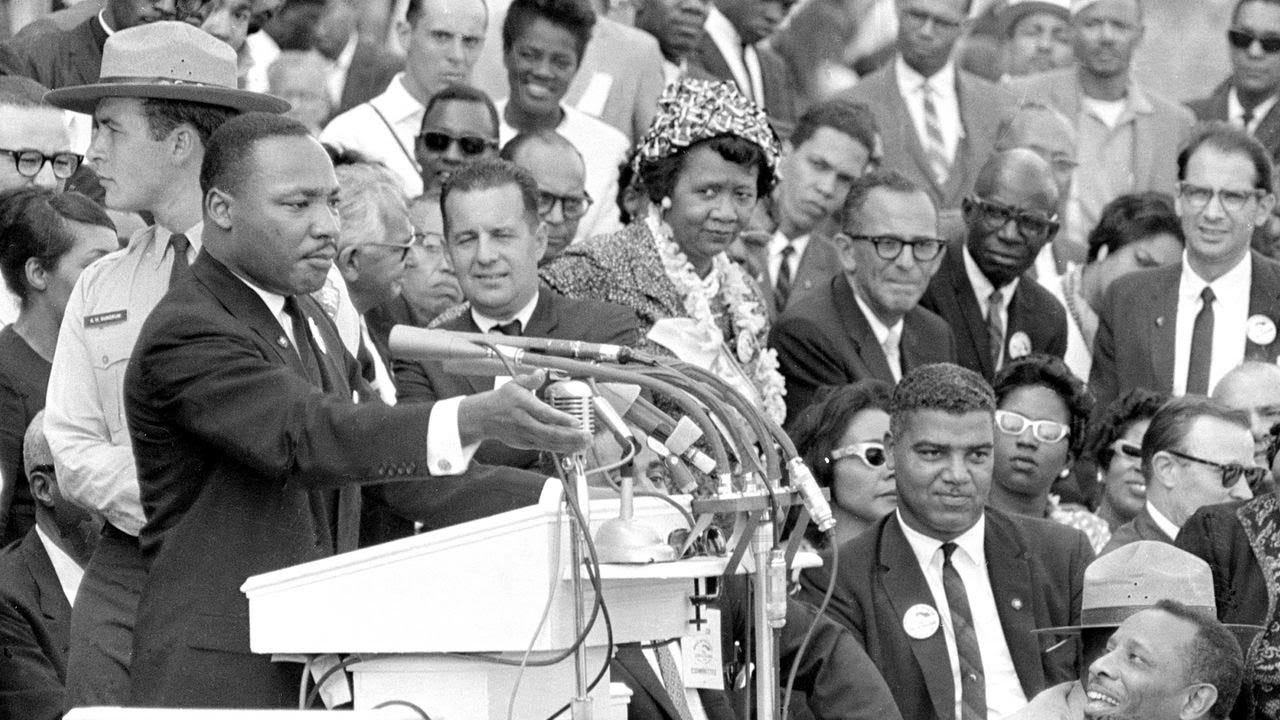
Mahalia Jackson’s famous call, “Tell them about the dream, Martin,” helped push King into the improvised passage the nation remembers best. The dream was not false, and Harold was not dismissing it. He was warning that America prefers the portion that asks it to imagine racial harmony over the portion that presents the unpaid bill. The dream can be commemorated without surrendering power, while the promissory note requires an accounting.
That tension followed us into the 2026 march. The official event brought the National Action Network, the Drum Major Institute and a coalition of more than ninety organizations back to the Lincoln Memorial on the sixty-third anniversary of the original gathering.[2] A local WUSA9 report showed thousands assembled near the memorial and interviewed participants who described gerrymandering, the erosion of political power and the obligations they carried from earlier generations.[7]
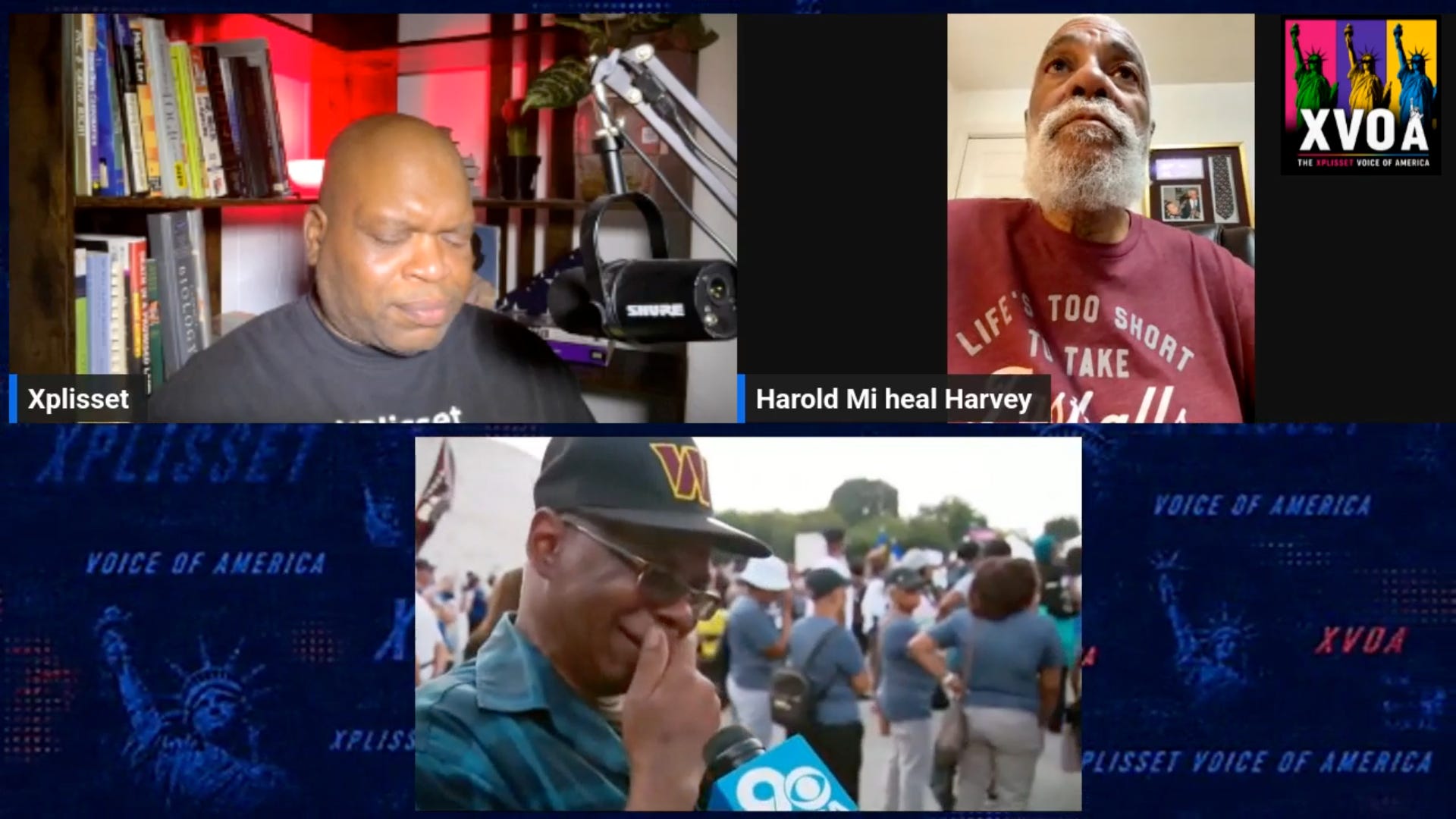
One Washington resident, Ralph Tobin, had attended the 1963 march as a two-year-old with his father. He returned carrying that family legacy and wept as he spoke. Harold said the report captured the crowd’s “yearning to be free.” What had changed was the immediate battleground. Public accommodations and jobs were central demands in 1963. In 2026, the march placed voting rights and Black political representation at the center.
A Bill Was Named. The Leverage Was Not.
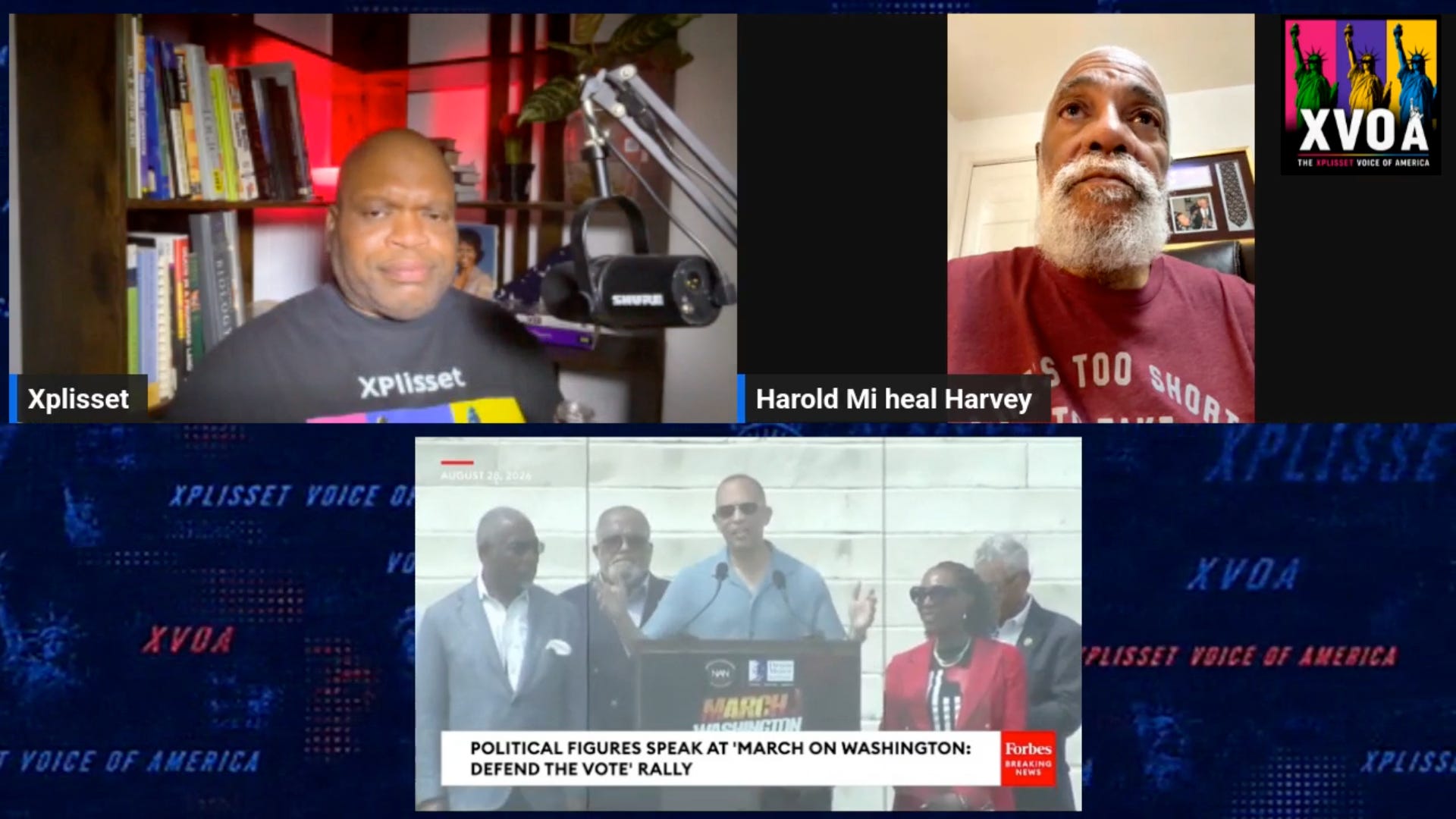
House Democratic leader Hakeem Jeffries gave the day one of its clearest inventories of the emergency. He cited a reckless war, an out-of-control Supreme Court, rising Black unemployment, falling Black homeownership and an assault on Black political representation. Those were substantive charges, not empty scene-setting.
Jeffries then invoked a long moral army: Frederick Douglass, Sojourner Truth, Jackie Robinson, Rosa Parks, Martin Luther King Jr., Muhammad Ali, Fannie Lou Hamer, Adam Clayton Powell Jr., Shirley Chisholm and John Lewis. He said it was time to get into “good trouble,” and he eventually attached that tradition to a specific legislative objective: passage of the John Robert Lewis Voting Rights Advancement Act.[4]
The bill matters. House Democrats introduced H.R. 14 in 2025, and Senate Democrats reintroduced companion legislation later that year. Its core provisions would restore a form of federal preclearance for jurisdictions with records of voting-rights violations, create review rules for certain election changes and strengthen protections against discriminatory practices.[3] After the Supreme Court’s April 2026 decision in Louisiana v. Callais further narrowed the use of Section 2 of the Voting Rights Act in redistricting, restoring federal protection is not a ceremonial concern.[8]
I did not dismiss Jeffries for naming the bill. The harder inquiry was operational: how did Democratic leaders intend to move it, what leverage would they use, what deadline applied and what were they prepared to risk if Republicans blocked it? The audience also deserved to know what citizens were being asked to do besides show up, stand up and vote Democratic in November.
Those questions were not answered in the speech. Jeffries closed by urging the crowd to keep speaking up and help Democrats win control of the House on November 3. That is an electoral objective, but it is not a complete legislative strategy. Winning the House would not by itself produce a Senate majority willing to move the bill, a presidential signature, a preclearance formula that survives judicial review or a plan for countering state action before the next Congress convenes.
Harold heard the same absence. King, in his telling, began with America’s debt and then joined moral vision to a movement capable of creating consequences. Jeffries correctly described the crisis and named a remedy. What the audience did not receive was the machinery connecting one to the other.
This is where commemoration can become camouflage even when every speaker is sincere. The names of dead freedom fighters confer moral authority on a stage. They do not automatically confer strategic authority on the people using them. If a leader summons Douglass, Hamer, Chisholm and Lewis, the fair question is what that leader is pledging that is commensurate with the inheritance.
Harold’s Standard
Harold’s life supplies a demanding answer. The child who heard King went on to help integrate a white school. The college columnist became a managing editor at a Black newspaper and won recognition for documenting the burning of a school that had educated generations of Black residents. He later practiced law and represented young people arrested during Freaknik, work he describes in his memoir Freaknik Lawyer: A Memoir on the Craft of Resistance.[9]
None of those episodes is reducible to inspiration. They required a person to enter an institution, identify who was being failed and accept the cost of acting. That is the craft Harold keeps returning to. Freedom is a yearning, but resistance is work.
The 2026 march should be judged by that standard, not by whether it reproduced the emotional atmosphere of 1963. Thousands of people showed up, civil-rights organizations assembled a national coalition, participants named a real danger and Jeffries put a real bill into the public record. Those are not trivial accomplishments.
But the missing questions remain. Which districts and communities face the most immediate harm after Callais? What federal, state and local litigation is already underway? What is the whip count for H.R. 14 and its Senate companion? What must happen before November, and what changes if Democrats win only one chamber? Which organizations are coordinating voter protection, registration, legal defense and direct pressure? A march becomes political force when people leave knowing where to apply themselves next.
In Conclusion
What is proven is that the March on Washington of 2026 placed voting rights before the country, drew thousands to the Lincoln Memorial and gave the John Robert Lewis Voting Rights Advancement Act a prominent national platform. What is also proven is that Jeffries’s published remarks did not provide a detailed route for moving that legislation or an immediate action plan beyond public engagement and winning the House.
What Harold’s testimony strongly suggests is that the distance between memory and power has always been filled by organized pressure. The 1963 march helped move the country because it belonged to a larger campaign with demands, institutions, local organizers and consequences. The speech became immortal, but the movement did the work.
That is the standard to carry forward. Do not ask only whether a leader can name the crisis, quote the ancestors or identify a bill. Ask who has the votes, who holds the lever, what the deadline is, what obstruction will cost and what the people are being organized to do tomorrow morning.
A dream can orient a movement. It cannot substitute for a plan.
Support XVOA
XVOA does this work in public because the evidence should not disappear behind a payment screen. If you want a capable Black-led intelligence desk to keep examining the space between political language and political machinery, become a paid subscriber.
Paid subscribers can also use Put XVOA On It to nominate a story or institution for editorial consideration. The reporting stays public and the conclusions remain independent.
Current paid supporters, thank you for financing the desk. Readers who do not want another recurring commitment, or paid members who want to add direct support, can use Buy Me a Coffee.
Like, comment, share and Restack this report so the questions travel farther than the ceremony.
Sources
National Archives: Official Program for the March on Washington. Documents the 1963 March on Washington for Jobs and Freedom, its scale, program and political demands.
Reuters: Thousands march in Washington as leaders warn of voting and civil-rights rollbacks. Reports the scale, organizers, speakers and voting-rights purpose of the 2026 march.
Senator Dick Durbin: John R. Lewis Voting Rights Advancement Act reintroduced. Describes the legislation’s reintroduction and principal protections.
House Democratic Leader Hakeem Jeffries: Remarks at the 2026 March on Washington. Provides the official text and video of Jeffries’s speech.
U.S. Department of Justice: History of Federal Voting Rights Laws. Establishes the Voting Rights Act’s passage, enforcement structure and historical context.
Martin Luther King Jr. Research and Education Institute: “I Have a Dream”. Supplies the speech history and King’s promissory-note argument.
WUSA9: Sixty-three years after the 1963 March, thousands gather to defend the vote. Reports from the Lincoln Memorial and records participants’ accounts, including Ralph Tobin’s.
U.S. Supreme Court: Louisiana v. Callais. Provides the Court’s April 29, 2026 ruling on Section 2 of the Voting Rights Act and race-conscious redistricting.
Harold Michael Harvey: About. Provides background on Harvey’s journalism, legal work, writing and civil-rights history.


