

Thank you learnercurious1, David Gardiner, Mary E, Lisa Dekker, Donna Everett, and many others for tuning into my live video! Join me for my next live video in the app.

The full video is attached to this post for readers who want the broadcast version. For everybody who hates video on Substack, don’t worry, here is the argument right here in print.
TLDR
Jasmine Crockett exposed the first move of power: refuse to name white supremacy, then act confused when someone asks the obvious.
The so-called anti-weaponization fund shows how January 6 grievance is being turned into a possible public payout system while Black reparations remain mocked, delayed, and dismissed.
South Carolina’s redistricting fight is not just about Jim Clyburn’s career. It is about whether Black voters can still convert ballots into power.
Colbert, college sports, Georgia water, and Lupita Nyong’o all point to the same question: who gets representation, who gets erased, and who keeps pulling up the bridge?
If this helped you see the machinery clearer, restack it and send it to one person who still thinks the news is just information. Support XVOA with a paid subscription:
If a paid subscription is too much right now then buy me coffee is the backstop.
The Question They Would Not Answer
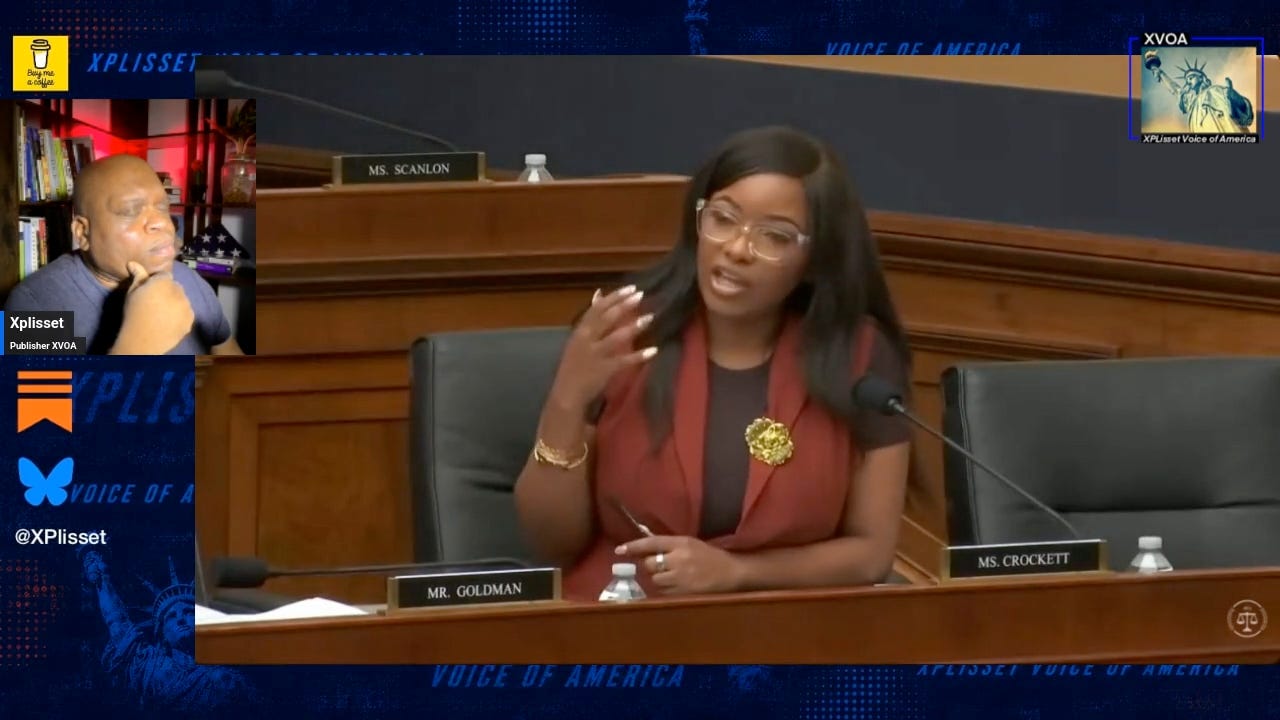
Jasmine Crockett asked a simple question.
Are the Proud Boys a white supremacist organization?
That should not require a symposium. That should not require a footnote parade. That should not require a witness to reach for the nearest book like a man grabbing a curtain during a bad magic trick.
But that is exactly where the machinery started showing itself.
One witness gave the classic institutional dodge: it depends on how you define it. Another acted like he could not know because he was not on their mailing list. Crockett heard the absurdity and did what good cross-examination does. She turned the dodge into a mirror.
That is why her moment mattered. It was not just a hearing clip. It was a demonstration of how power protects itself. Before white supremacy can be excused, funded, normalized, or folded back into polite society, it first has to be made blurry.
If the Proud Boys are “complicated,” then accountability becomes complicated. If Neo-Nazis require interpretive dance before we call them white supremacists, then the whole country is being invited into a lie.
Crockett cut through it. Neo-Nazis have Nazis in the name. Proud Boys and Neo-Nazis were part of the January 6 landscape. This was not hard. The difficulty was the tactic.
Playing dumb is not neutrality. It is protection.
From White Grievance to Public Money
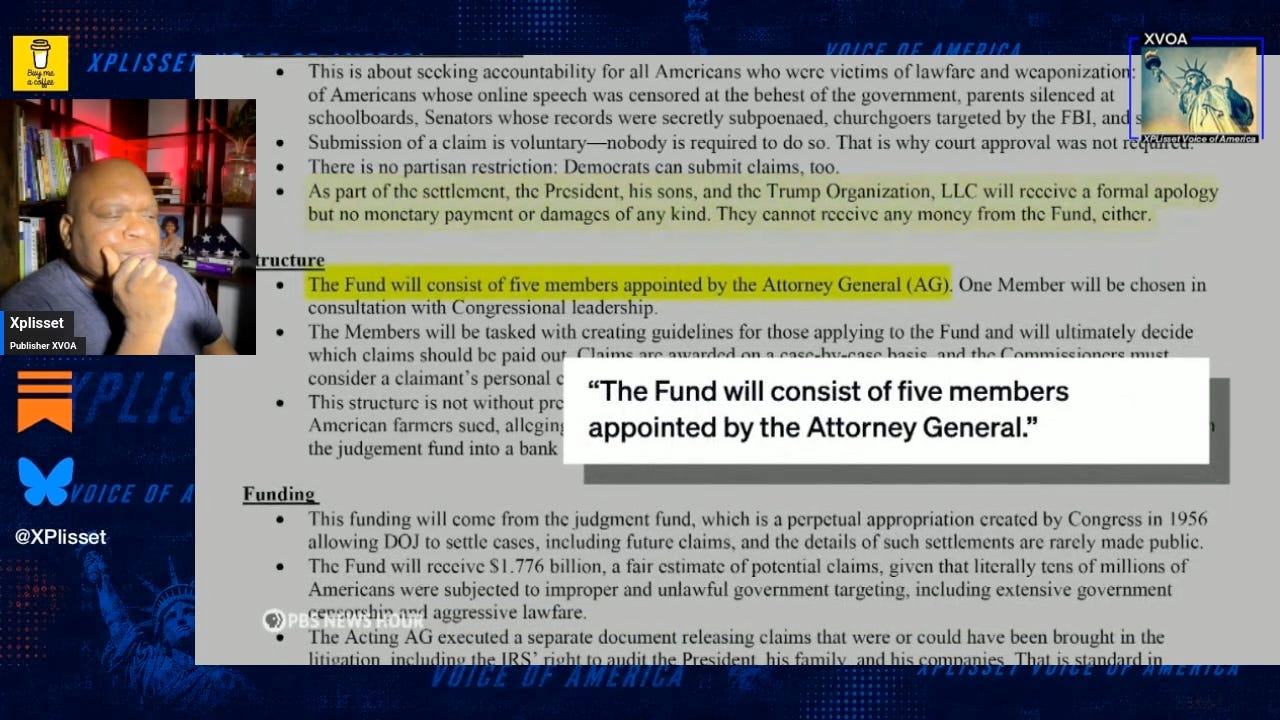
Crockett’s larger charge was not simply that Republicans were refusing to name white supremacy. It was that this refusal lives beside a larger project: the rehabilitation of January 6 defendants and the conversion of political grievance into money.
That is where the so-called anti-weaponization fund comes in.
The same country that has debated Black reparations for generations suddenly finds its imagination when the alleged injury belongs to the Trump movement. Black people can be told to get over enslavement, Jim Crow, redlining, stolen labor, racial terror, unequal schools, housing theft, and the long afterlife of state violence. But when January 6 defendants and Trump-aligned grievance enter the room, suddenly the checkbook gets warm.
That is not fiscal conservatism.
That is racial accounting.
According to the reporting discussed in the broadcast, even some Senate Republicans started choking on the proposal. Acting Attorney General Todd Blanche reportedly came to Capitol Hill to sell the idea. It did not work. Republicans left town without passing the bill.
That sentence matters because the grift had gotten too visible. The proposed fund raised obvious questions about who would decide who had been politically targeted, whether people convicted of January 6-related crimes could benefit, and why public money might be used to soothe the wounded pride of people who already went through the criminal process.
I have been in courtrooms throughout my career as a police officer. I have watched how the system works when the cameras are gone and the paperwork matters. Pleas matter. Convictions matter. Judges matter. Records matter.
Accountability does not become persecution because the defendant gets a better political narrative later.
The arsonist is not only filing a smoke damage claim. Now he wants direct deposit.
The Map Is a Knife With a Legend on It
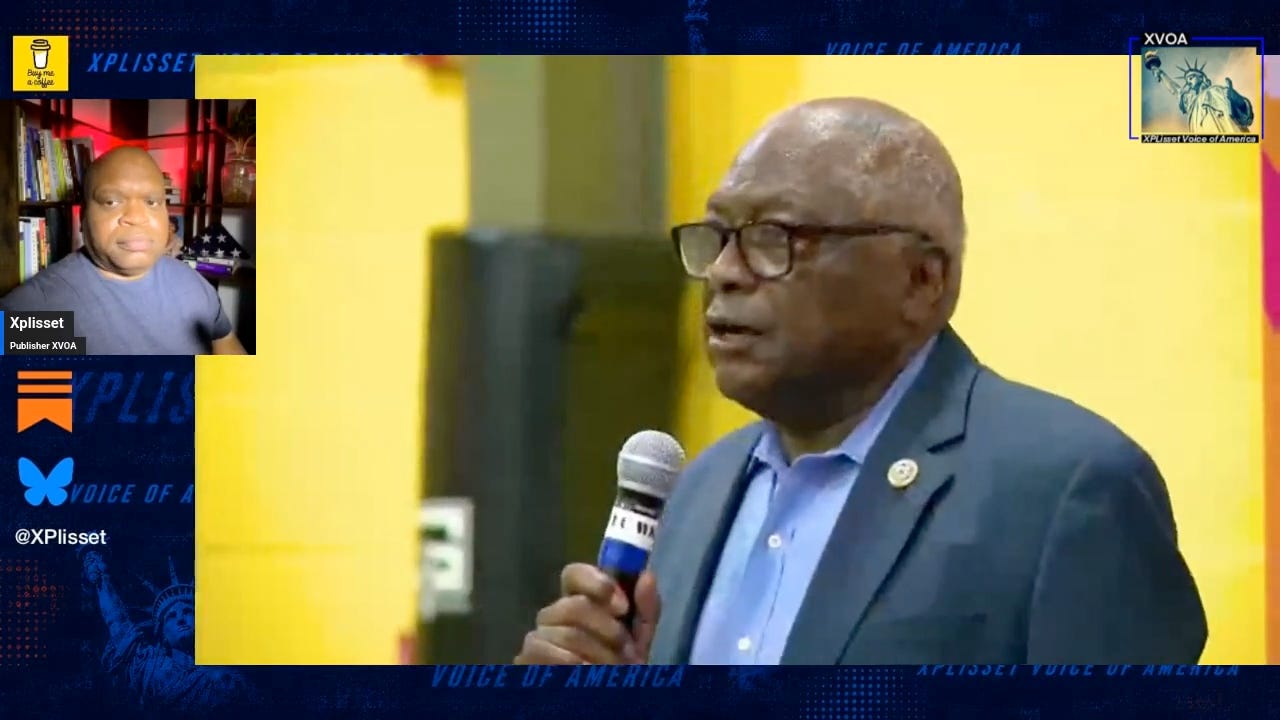
From Washington, the bridge leads to South Carolina.
The state House passed a redistricting measure that would effectively oust Representative Jim Clyburn and give South Carolina seven solid Republican districts. Early voting was already near. Local voices warned that voters could end up not knowing who was on their ballots and that communities were being split.
This is where the language gets cute.
They call it redistricting. They call it compliance. They call it map-making. But a map is not neutral when the outcome is designed before the voters speak.
The issue is not only Jim Clyburn. Black politicians can be criticized. Black elected officials can get too comfortable. Black communities are right to demand material results, not just symbolic representation.
But do not let frustration with a politician blind you to the structure being attacked.
A congressional district is not just a job for one man. It is a route through which voters convert numbers into power. When that route is split, cracked, packed, carved, or diluted, people may still possess the physical ability to vote while losing the practical ability to elect representation of their choice.
That distinction matters.
A ballot without power is just paperwork with a flag on it.
You Do Not Need to Censor the Comedian If You Can Scare the Boss
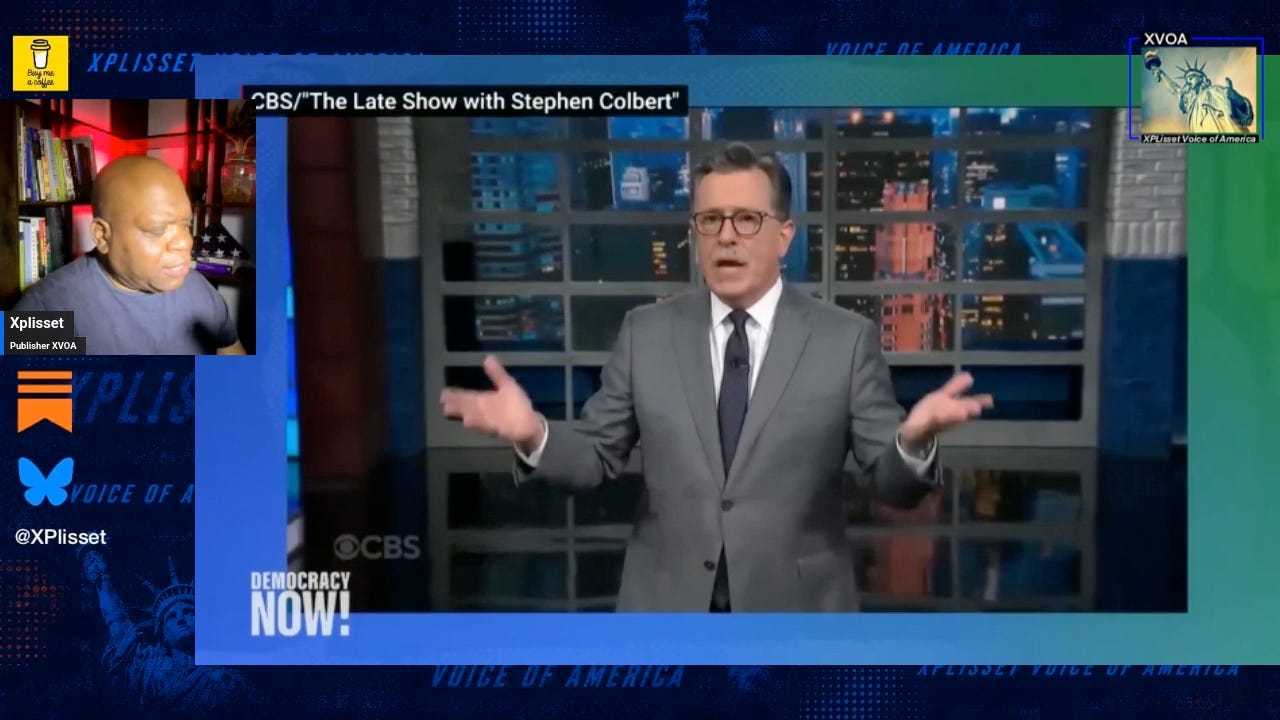
The bridge is not only a voting bridge. It is also a microphone.
Stephen Colbert’s exit from CBS is easy to reduce to nostalgia, but nostalgia is too small for the machinery underneath. The issue is not whether every Colbert joke was sharp. Network talk shows had already started feeling safe, corporate, and over-lawyered. That is the point. Maybe Colbert was not the problem. Maybe the cage was the problem.
The Democracy Now segment connected Colbert’s cancellation to Paramount, Trump’s lawsuit settlement, the Skydance merger, FCC approval, and a broader pattern of media pressure. David Sirota named the mechanism clearly: the Trump administration weaponizing merger power.
That is the sentence.
You do not need to censor the comedian if you can scare the boss.
That is how self-censorship becomes culture. The joke does not get written. The question does not get asked. The producer says, maybe not for this show. The leash works best when the dog starts calling it discipline.
Legacy media may deserve to die if it cannot breathe without corporate permission. But Colbert should not have to be buried with it.
The future of dissent will not be protected by corporations that need permission slips from the people being mocked.
You Cannot Sell the Jersey and Ignore the Voter
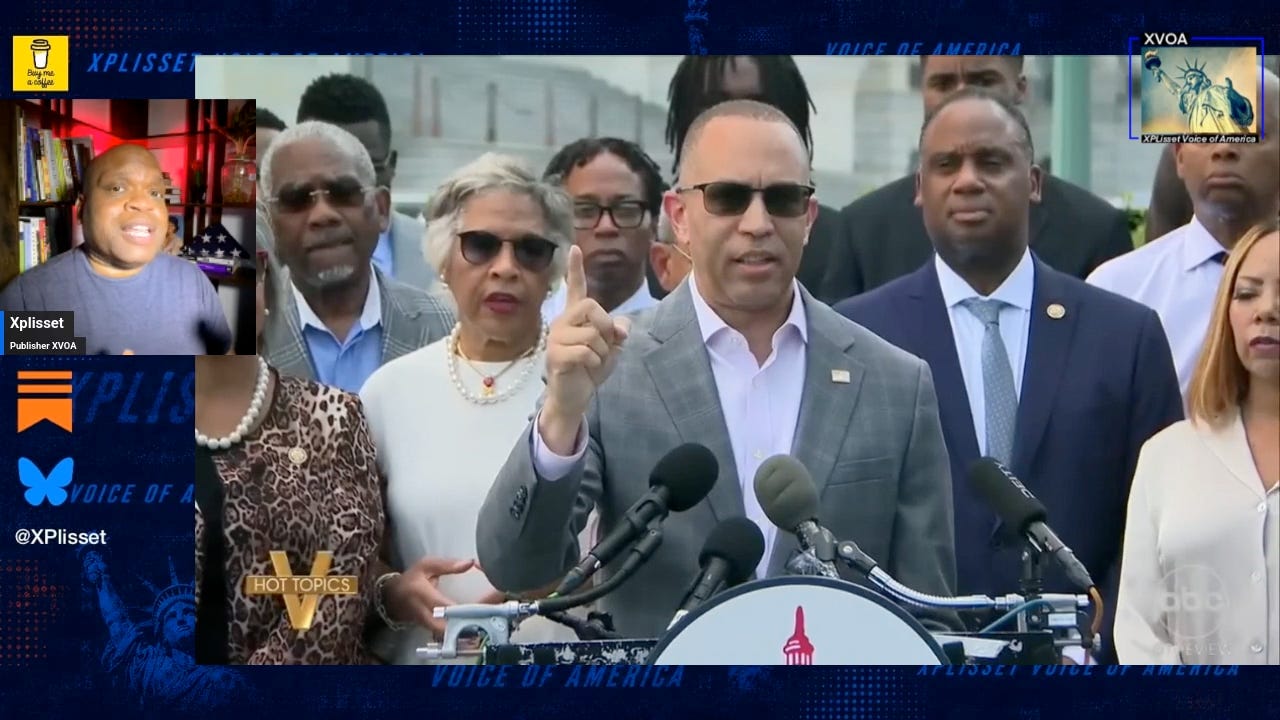
Then comes the sports money.
The NAACP’s Out of Bounds campaign has urged Black athletes to think carefully about committing to sports programs in states attacking Black political representation. That is a hard ask. The criticism is not fake. A 17-year-old with a scholarship offer should not be forced to carry democracy alone.
Everybody loves a brave young person until that young person has to pay tuition.
But the other side of the ledger is just as real. College sports programs in the South profit massively from Black labor, Black talent, Black culture, Black bodies, and Black audience energy. If those institutions can recruit Black athletes, sell Black excellence, and fill stadiums with Black talent, they do not get to stay silent while Black voting power is carved up.
You cannot sell the jersey and ignore the voter.
The burden cannot fall only on young athletes. Alumni, fans, coaches, boosters, broadcasters, professional athletes, elected officials, and universities all need to be part of the pressure. Do not ask the child with a scholarship offer to be braver than the grown person with tenure, money, and a microphone.
Personal Access Is Not Collective Power
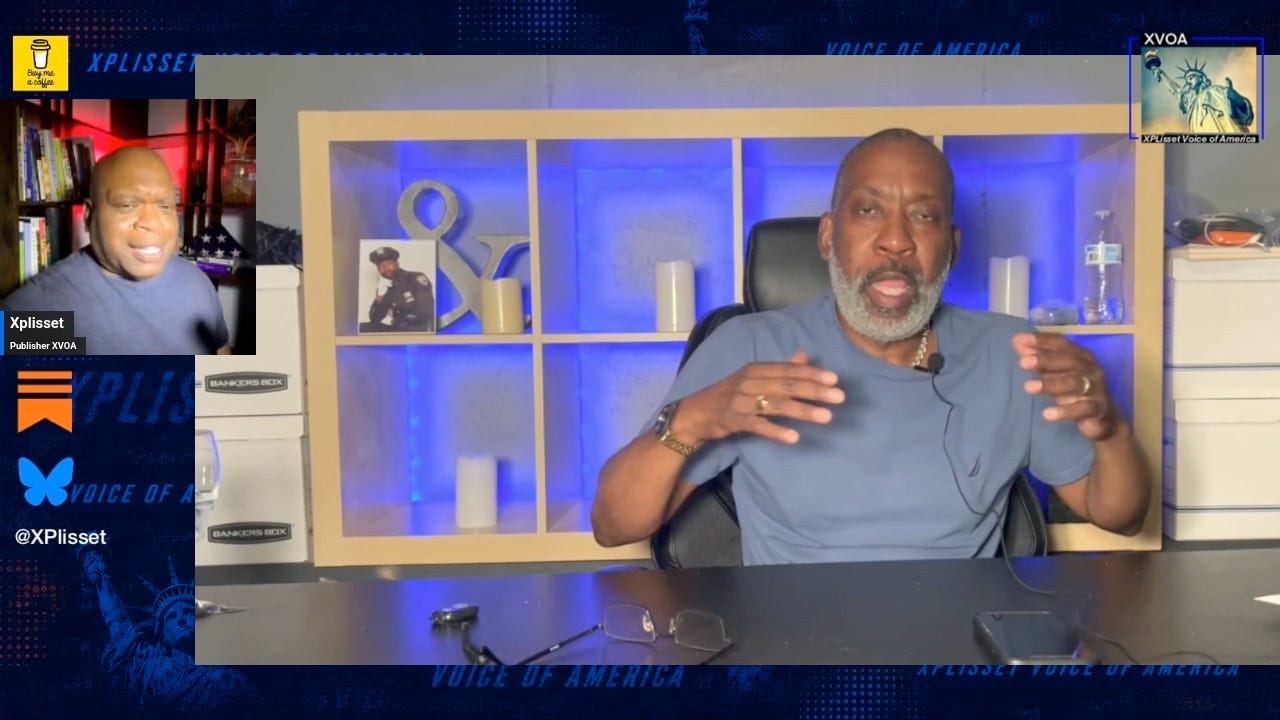
One of the clips I reacted to came from a fellow Black former officer arguing that Black Americans will not protest redistricting because Black politicians have failed them.
There was some real frustration buried in that argument. Black voters are tired of being summoned every election like emergency personnel and then sent home with a sticker. Many Black communities have been asked to show up again and again while housing, health care, education, wages, and safety remain broken.
That frustration deserves respect.
But the conclusion was dangerous.
He argued that redistricting does not take away his right to vote. He can still register. He can still cast a ballot. So what is the problem?
This is where the badge can blind a man. Personal access is not the same as collective power. The fact that you can vote does not mean your community’s vote has not been diluted. The fact that you personally can navigate a system does not mean elderly voters, poor voters, rural voters, name-change voters, displaced voters, or document-poor voters can do the same.
And you cannot talk about Black family structure, crime, schools, and poverty without talking about deindustrialization, mass incarceration, wage collapse, housing policy, public health, and the disappearance of the blue-collar jobs that helped build the Black working and middle class.
If your whole sociology fits on a bumper sticker, you are not diagnosing the wound. You are decorating it.
Black politicians should be held accountable. Absolutely. But do not let disappointment with Black leadership turn into surrender to people actively trying to erase Black political power.
You can be mad at Clyburn and still not hand your voting power to the people trying to erase the district.
The Water Glass Is Politics Too
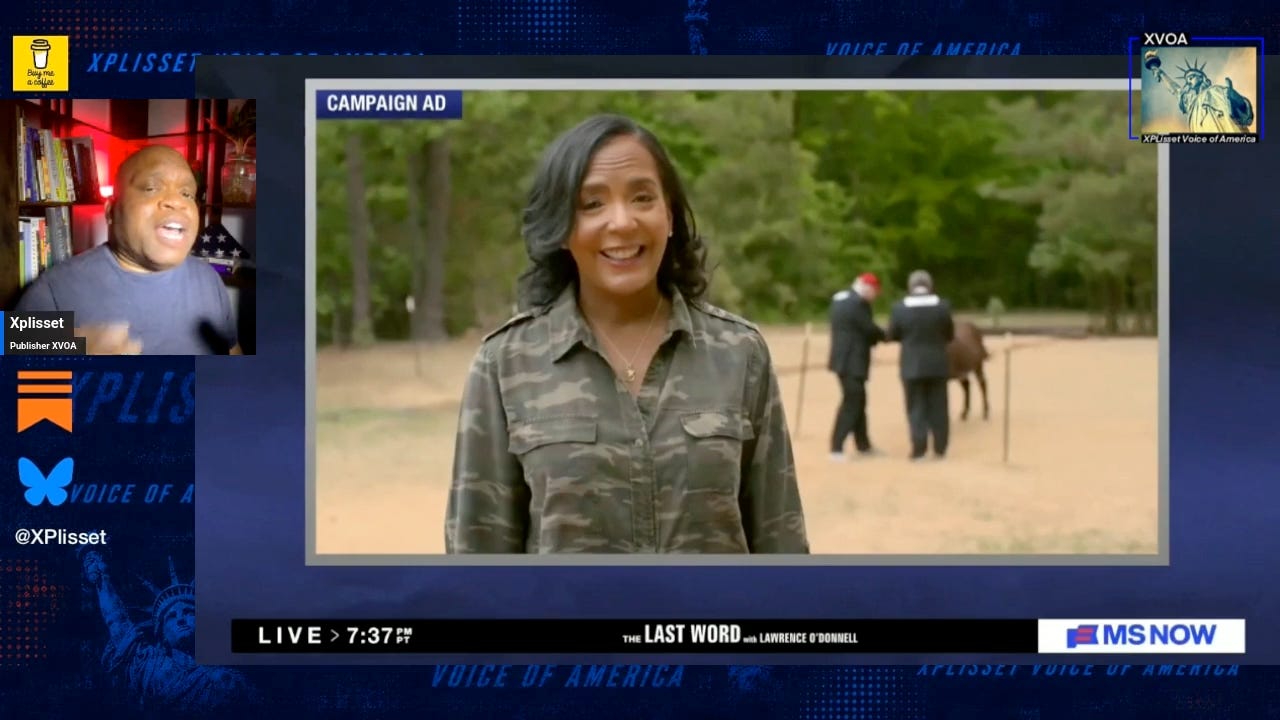
Keisha Lance Bottoms brought the conversation back to the kitchen table.
Georgia is not just a Trump loyalty contest. It is groceries, housing, ACA subsidies, Medicaid expansion, rural hospital closures, utilities, data centers, and water.
That matters because power is most visible when you follow who gets the incentive and who gets the dirty water.
Bottoms talked about Georgia being one of the states that has not expanded Medicaid and about rural hospitals closing. That is not an abstract policy disagreement. That is geography deciding whether you live close enough to emergency care.
A closed hospital is a political decision with a body count.
Then came the data-center question. The promise is innovation. The language is the future. The sales pitch is economic development. But communities are asking why their water looks wrong, why utility costs are rising, and whether billions in incentives are actually worth the sacrifice.
They call it the cloud until your water turns brown.
This is where XVOA lives. Not only the palace fight. The water glass. The hospital sign. The bill on the table.
Lupita and the Gatekeeping of Myth
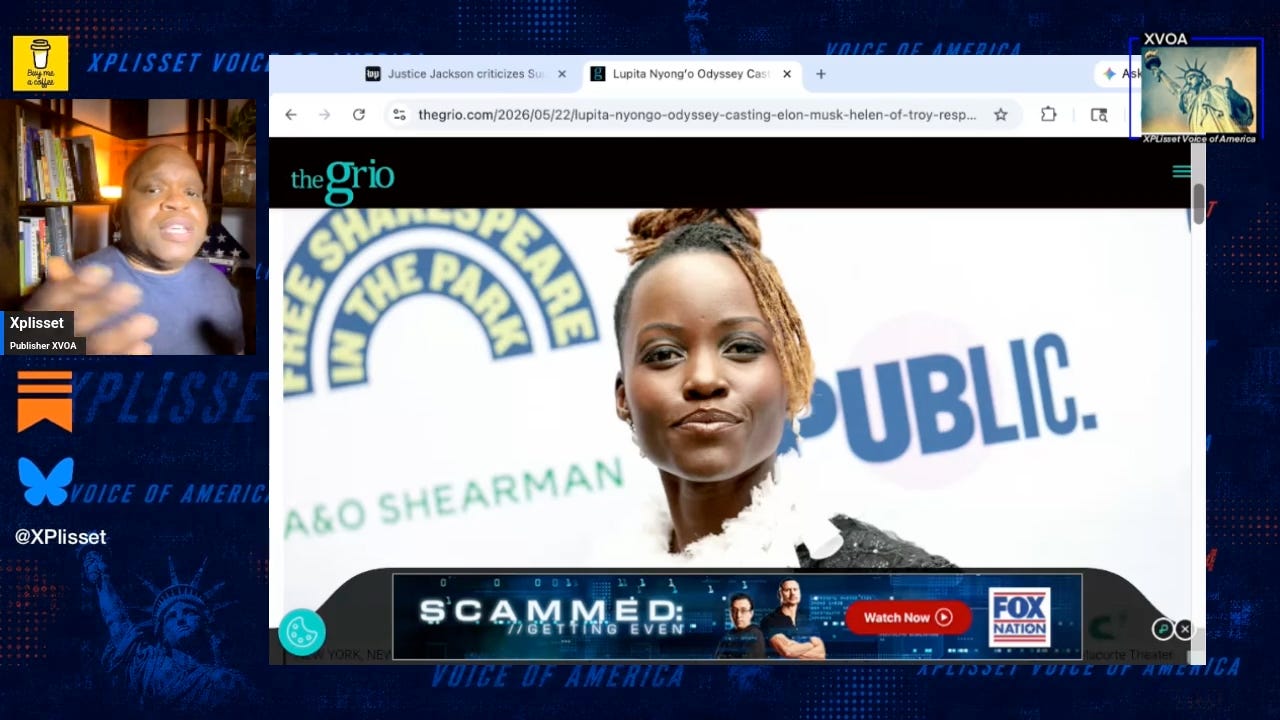
The broadcast ends with Lupita Nyong’o for a reason.
After a whole afternoon of people trying to control maps, media, institutions, memory, money, and representation, we get to culture. Lupita is playing Helen of Troy in Christopher Nolan’s The Odyssey, and some people lost their minds because a Black woman was cast as a figure mythologized as the world’s most beautiful woman.
Lupita’s answer was better than a defense.
“You can’t perform beauty,” she told Elle.
That sentence belongs in the archive.
Beauty is not just symmetry and approval. Beauty is presence, mystery, interior life, force, contradiction, and the thing the camera cannot fully own.
She also reminded critics that The Odyssey is a mythological story. Thank you. Folks can accept gods, sea monsters, curses, magic, and impossible voyages, but a Black woman as beauty is where realism suddenly matters.
Please.
The demand for “accuracy” often appears exactly when whiteness feels its symbolic ownership slipping.
Then Lupita said the line that lands the whole thing: “I can’t spend my time thinking about all the people who still don’t love me.”
That is not arrogance. That is energy management. You cannot build a life around convincing people who need your exclusion to feel normal.
She does not owe them a defense. She owes the work her full power.
Today started with maps and ended with myth.
Same fight.
Who gets placed inside the story?
Who gets removed from the map?
Who gets the microphone?
Who gets called beautiful?
Who gets told to wait outside while power decides what is legitimate?
The bridge they keep pulling up is not only political. It is cultural, aesthetic, psychological, and spiritual.
That is the bridge today.
Who built it?
Who gets to cross it?
Who keeps pulling it up?
And who keeps calling that normal?
Support XVOA
If this work matters to you, support Xplisset Voice of America with a paid subscription.
If you cannot subscribe, buy me a coffee instead.
It is not just information.
It is power talking in public.
Don’t Do It.
Sources and Clips Discussed
Rep. Jasmine Crockett hearing clip on Proud Boys, Neo-Nazis, white supremacy, and January 6 defendants
Used as the opening clip and central frame for the post.PBS NewsHour clip on Senate Republicans breaking with Trump over the anti-weaponization fund
Used for the public-money and grievance-fund section.WCNC Charlotte report on South Carolina redistricting and Jim Clyburn’s seat
Used for the South Carolina map section.Democracy Now segment on Stephen Colbert, CBS, Trump, regulatory power, and media consolidation
Used for the media-capture section.The View discussion of the NAACP Out of Bounds sports boycott campaign
Used for the college-sports and Black athlete burden section.On The Stoop, “Why Black Americans Won’t Protest This Time”
Used for the rebuttal on voting power, police identity, and historical memory.Keisha Lance Bottoms interview on Georgia costs, Medicaid, data centers, and water
Used for the Georgia cost-of-living and infrastructure section.TheGrio, “‘You can’t perform beauty’: Lupita Nyong’o addresses criticism over playing Helen of Troy”
Used for the closing section on beauty, mythology, and representation.


