
Thank you David Gardiner, Merry Ms Michelle, TM, LPC, Gilda Johnson, and many others for tuning into my live video! Join me for my next live video in the app.
Opening Note to Readers
This is the reader’s cut of the XVOA livestream on Major Jason Watson, cleaned up for people who want the argument, the context, and the receipts without watching the full video. It is not a raw transcript. It is the edited record of what happened, why the rank mattered, why the oath was the center, and why the silence around the story became part of the story.
For those who wish to check it out, here are the video chapters.
Video Chapters
0:00 Introduction: Eddie Glaude Jr. on America’s 250th Anniversary
1:52 “I Do Not Love America”: Glaude Explains His Controversial Opening
3:34 Decoding the Book Title: How Race Shadows America’s Anniversaries
4:35 1776’s Dark Contradiction: Freedom and Slavery Born Together
5:44 Trump Removes Philadelphia’s Slavery Exhibit Ahead of July 4th
9:34 Reconstruction, the 14th Amendment & America’s “Second Lost Cause”
14:00 Moses Gordon: The Man Who Had Freedom Stolen Twice
15:42 Active Duty Air Force Major Calls for Trump’s Impeachment (Full Speech)
24:33 America 250: Don Lemon Reports Live from Washington D.C.
25:21 Major Watson Risks Everything — Why He Will Be Court-Martialed
28:16 Major Jason Watson’s Full Impeachment Speech (Video Replay)
37:01 Reaction: Why This Speech Moved Everyone to Tears
I know what a uniform does to a room.
Before a man says a word, people start assigning him meaning: discipline, order, command, obedience, authority. That is why Major Jason Watson’s arrest did not hit me like a protest clip. It hit me like a warning from inside the institution.
I am a veteran. I am a retired Black cop. I know the difference between somebody chasing attention and somebody walking toward consequence. Major Watson did not look like a man trying to go viral. He looked like a man who had reached the place where silence had become more expensive than the punishment.
That is the part Washington keeps trying to shrink. A man in uniform did not simply stand with a sign. He forced the country to look at the words it loves during ceremonies and abandons when they become inconvenient.
Right on the heels of a holiday weekend built around America celebrating itself, an active-duty Air Force major stood in uniform on the steps of the U.S. Capitol and made the oath impossible to ignore. He was not shouting into a void. He was speaking into a silence, and that silence, from Congress and from much of the domestic political media, may be the most revealing part of the story.
Major Jason Watson did something that cannot be honestly reduced to a viral clip or a disciplinary footnote. He stood in uniform, held a sign calling for the impeachment, conviction, and removal of Donald Trump and JD Vance, invoked the oath he first swore more than 20 years ago, and was arrested. The question is not merely what rule he may have violated. The question is why someone at his rank would decide the oath required him to risk everything in public.
TLDR
• What happened: Major Jason Watson, an active-duty U.S. Air Force officer, stood on the Capitol steps in uniform, called for the impeachment and removal of Donald Trump and JD Vance, and was arrested.
• Why it matters: A major is not a random protester. Rank changes the meaning of the act because rank carries knowledge of discipline, lawful orders, career consequence, and institutional risk.
• What this is not: This is not a call for military freelancing or indiscipline. The military runs on discipline, lawful orders, and chain of command. That is exactly why this story matters.
• What got buried: Reuters and The Guardian covered the story. Smaller creators covered it. But much of the domestic political media treated it like a side item instead of an institutional alarm.
• The XVOA read: The story was not one man with a sign. It was the oath, the rank, Congress, and the silence around all of it.
• What to watch: Whether Congress absorbs the constitutional pressure, or whether one officer gets turned into a discipline story so Washington can avoid the larger warning.
Restack this and share it. Send it to one person who needs to read it, especially the man who thinks this story is about somebody else and not the machinery standing right in front of them.
If this work is worth keeping alive, become a paid subscriber:
Or, at the very least, buy the desk a coffee:
The Story Washington Treated Like a Side Item
The facts alone should have made this a major domestic political story. An active-duty Air Force major stood on the Capitol steps in uniform, called for the impeachment and removal of the president and vice president, and was arrested. The Air Force has said it will investigate.
The story did receive coverage, but the timing and pattern of that coverage matter. In the first window when it should have broken through, just a couple of days before July 4th, Reuters had it, The Guardian picked it up, and smaller creators and independent media were already treating it like something serious.
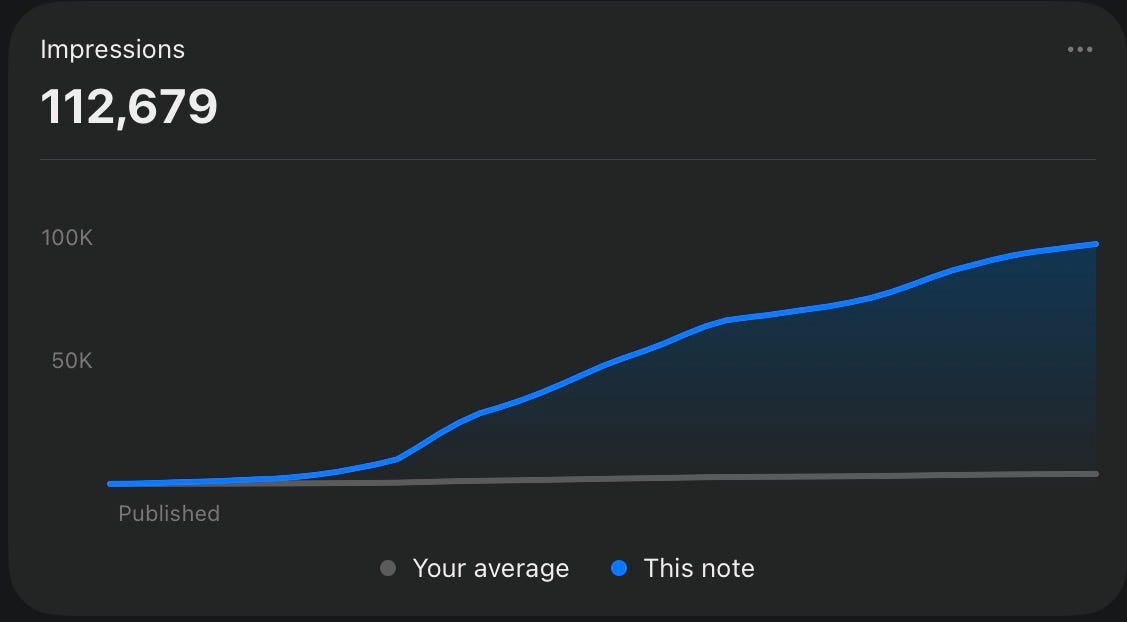
My Substack Note took off because readers understood immediately that this was not just another protest clip. Yet during that specific pre-July 4th stretch, as the country was preparing to celebrate itself and the Capitol press corps was sitting within sight of the scene, much of the domestic political media did not treat an active-duty Air Force major’s arrest as the institutional alarm it clearly was.
That silence is not proof of a secret memo. It does not have to be. Power often works through habit, access, caution, and professional self-preservation before it ever needs a direct order. When an active-duty officer publicly challenges the president and vice president in uniform, the press should not need permission to recognize the institutional stakes.
Why the Rank Matters

Rank changes everything. A major is not a random private blowing off steam or a civilian protester trying to get a clip online. A major is a commissioned officer deep enough inside the military to understand command, consequence, lawful orders, discipline, and the Uniform Code of Military Justice. By the time someone reaches that level, the uniform speaks before the mouth does.
That is why the simplest version of this story is the weakest one. Yes, people can ask what rule Watson broke. Yes, people can ask whether he should face military discipline. Those are fair questions. But if the conversation stops there, the story gets shrunk into a personnel issue, and the political system avoids the larger question.
The larger question is what makes an officer at that level decide the oath requires a public cost. Watson did not present himself as a celebrity, a partisan influencer, or a man looking for easy attention. He described himself as “just a nobody,” then said what mattered more than who he was “is what I have to say and the price I’m willing to pay to say it.” That is the sentence that changes the frame. A stunt wants attention without cost. Watson appeared to understand the cost and walked toward it anyway.
The Oath Was the Center
Watson’s speech began with the oath, and that is the part people should not rush past. He did not open with a party label. He did not open with a brand. He framed his statement around the obligation to support and defend the Constitution against all enemies, foreign and domestic. In his telling, the oath was not ceremony. It was the whole case.
That matters because the oath is easy when it costs nothing. It is easy at ceremonies, promotions, graduations, and retirement plaques. It becomes much harder when someone claims the people holding the highest offices in government are violating the constitutional order the oath is supposed to defend.
Watson accused Trump and Vance of multiple constitutional violations and repeatedly called for them to be impeached, convicted, and removed. People can agree or disagree with the substance of his claims. They can argue over military rules and whether consequences are appropriate. But they cannot honestly say the act was small. A uniformed officer publicly invoking the oath against the president and vice president is not a minor story in a country that still claims to take civilian government, military discipline, and constitutional accountability seriously.
Why I Opened the Livestream With Eddie Glaude
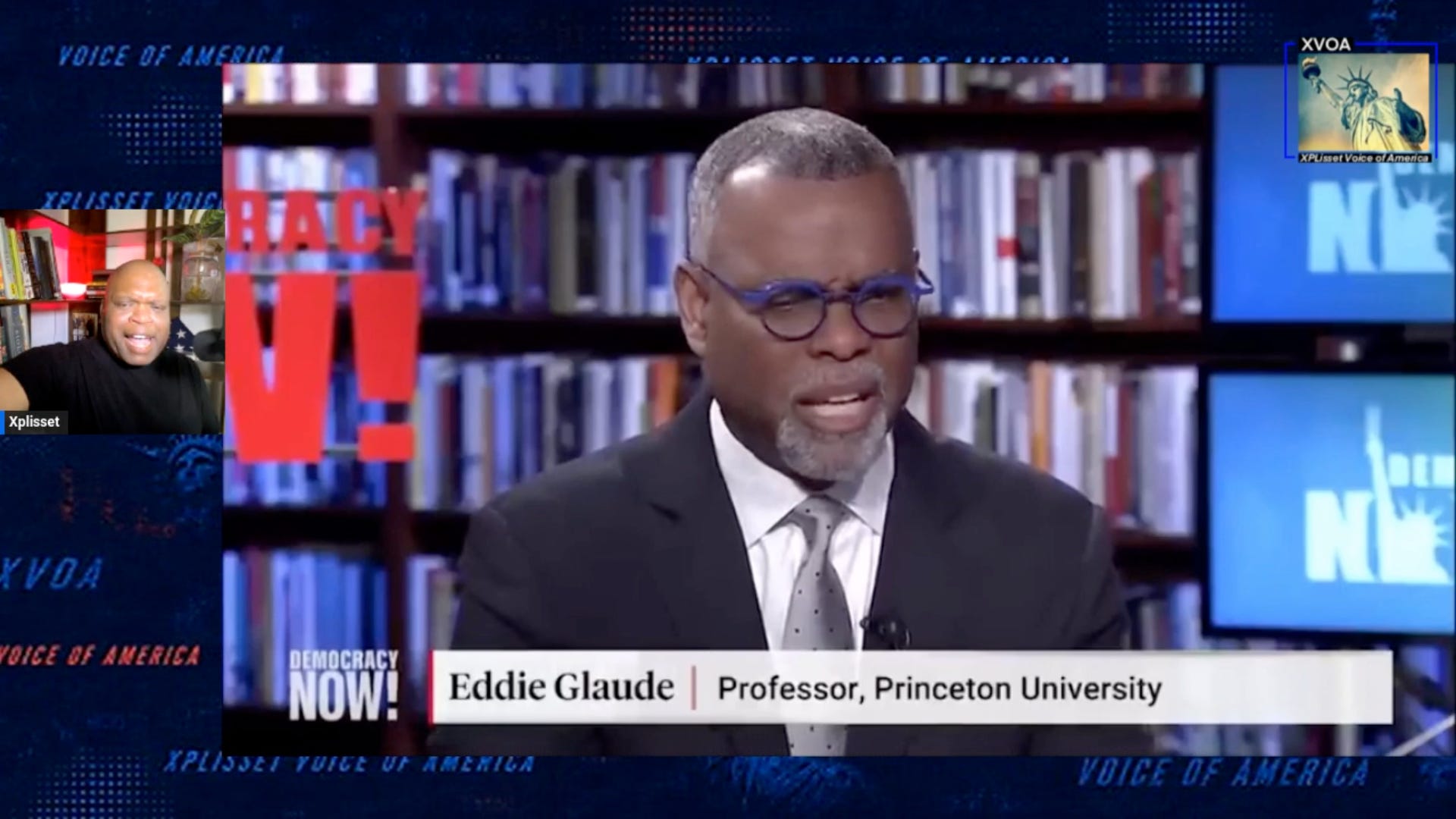
In the livestream, I opened with Eddie Glaude discussing America’s 250th anniversary because the Watson story does not exist outside history. The oath belongs to a country that has always fought over who gets included inside its promises. America loves to celebrate itself, but it often resists telling the truth about the people crushed under its mythology.
Glaude opens his new book with the hard line that he does not love America and never has. I do not land exactly there. As a Black man and a veteran, my relationship to the country is more complicated. I can love America, but it is not simple love. It is wounded love. It is the kind of love that sees the beauty and the harm at the same time.
That is why Glaude and Watson belong in the same conversation. Glaude is talking about a country that refuses to face its history honestly. Watson is talking about a government he believes has violated the constitutional order he swore to defend. One man names the wound. The other makes the oath visible inside the wound.
The Witness Account
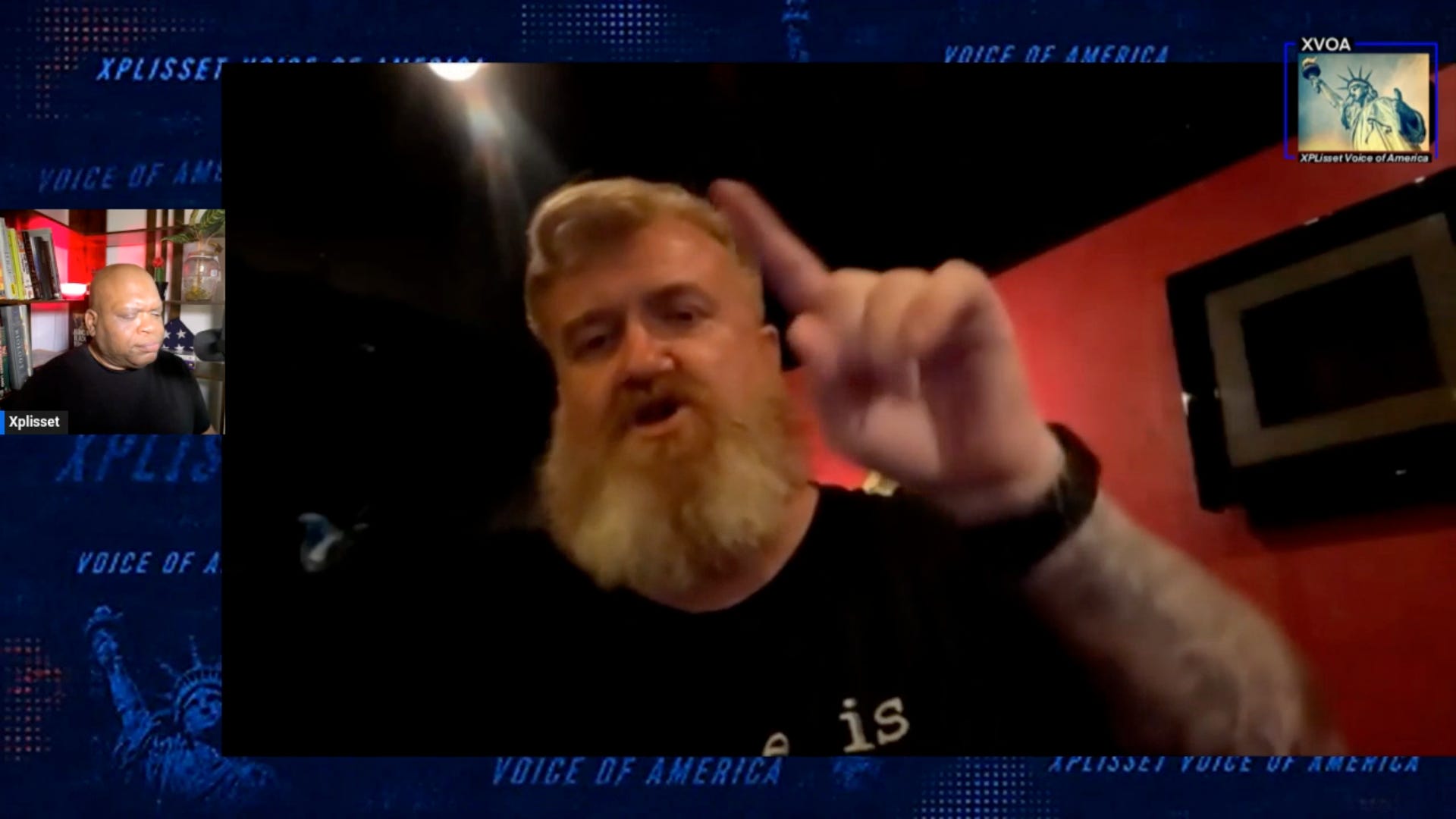
The livestream also used Jolly Good Ginger’s account from The Don Lemon Show because he helped explain what civilians may miss. Jolly Good Ginger is a veteran, creator, and political commentator who said he was present, spoke with Watson before the speech, and understood the military risk involved. According to his account, he asked Watson the question somebody had to ask: are you sure?
That matters because it suggests the act was not impulsive. This was not a man snapping in the moment. People around him understood the gravity. Watson understood the gravity. Jolly’s account framed the decision as deliberate and costly, not casual performance.
For civilians, a protest often reads as speech. For veterans, an active-duty officer in uniform calling for the impeachment of the commander in chief reads differently. It means career risk, UCMJ exposure, pension consequences, family consequences, and the possibility of being made an example. That does not place Watson above discipline. It means discipline is part of what he appears to have risked.
The Silence Is Part of the Story
The media question is unavoidable. Reuters covered the story. The Guardian covered it in live coverage. Smaller creators covered it. Yet major domestic political media did not immediately treat Watson’s arrest as a national institutional alarm.
The contrast is hard to ignore. Washington media can turn minor spectacle into wall-to-wall content when it fits the day’s rhythm. A man climbs a building, a politician says something foolish, a hearing produces a viral clip, and the whole machine knows what to do. But an active-duty Air Force major in uniform is arrested at the Capitol after calling for impeachment, and the story somehow struggles to break through.
Again, this does not require a cartoon conspiracy. It requires a sober look at access journalism and institutional caution. The Pentagon press environment under Pete Hegseth has already involved major access fights, credential disputes, press restrictions, and litigation. That context matters when the story involves an officer publicly challenging the president and vice president.
Access can become a leash. Reporters closest to power can become the most cautious about framing stories that threaten that access. Whether by fear, habit, caution, or institutional reflex, the result is the same: the public discovers a serious constitutional story through international wire coverage, live blogs, small creators, and Substack Notes before much of the domestic political press treats it as urgent.
Congress Is the Missing Actor
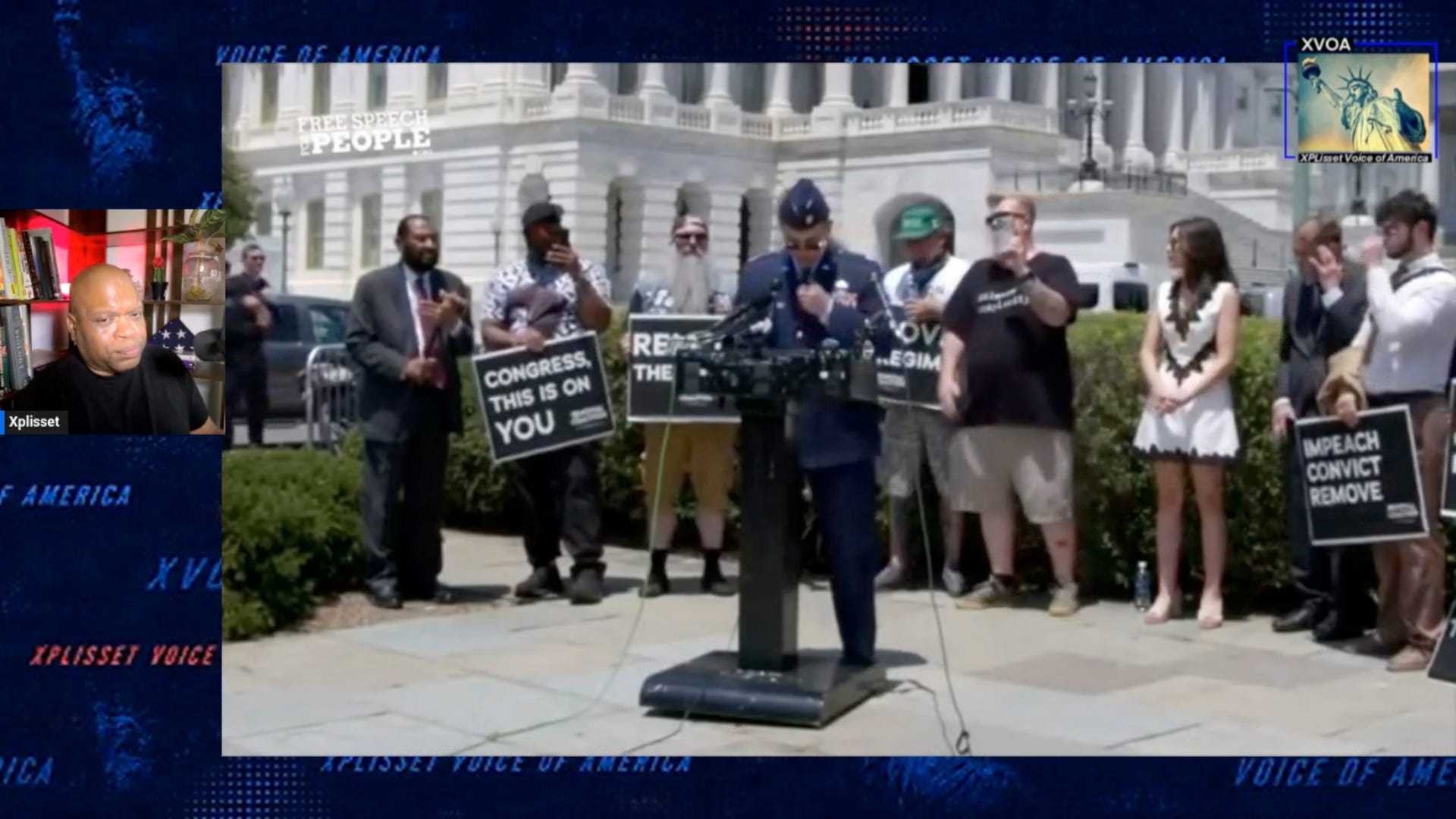
The military is not supposed to solve political crises Congress refuses to confront. Watson’s speech repeatedly pointed back to impeachment as the constitutional process. That matters because he was not calling for a military remedy. He was calling for Congress to act.
That is the part Washington should not be allowed to dodge. If a service member is reaching the point where oath, conscience, and command collide in public, Congress has already failed to absorb the pressure. One officer should not have to stand alone on the Capitol steps to say the constitutional machinery is failing.
This is why the story cannot end with whether Watson broke a rule. The rule matters. The arrest matters. The investigation matters. But those are not the only questions. The larger question is why the constitutional branch with impeachment power has allowed the pressure to move downward until one major decided to carry it upward in public.
Moral Injury and the Uniform
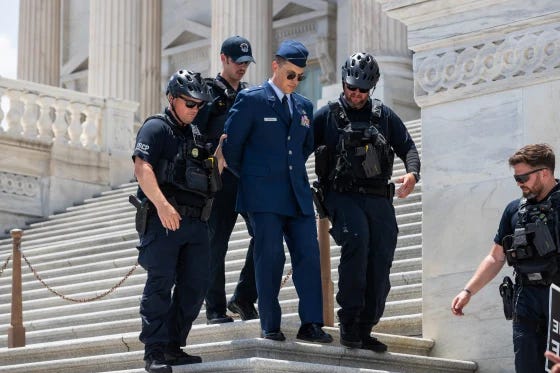
The response to my original Note was immediate because people recognized moral injury even before they named it. Veterans, military family members, and civilians understood that Watson’s act was not merely a political statement. It touched something deeper about oath, conscience, and institutional loyalty.
Moral injury happens when conscience and institution pull in opposite directions. It is not the same as disagreement. It is the wound that opens when a person believes the institution they serve is asking them to stand beside something their oath cannot absorb.
That does not automatically make Watson right in every claim he made. It does make the act serious. A country that still understands the meaning of the oath should be able to hold two thoughts at once: military discipline matters, and a commissioned officer risking everything to invoke the Constitution is a warning sign.
Closing Argument
Major Jason Watson said he was nobody. History does not always accept that answer. Sometimes the person who says he is nobody becomes the person who reveals what everyone else was refusing to say.
Do not misinterpret this as a call for military freelancing. Do not read into this as a call for service members to replace Congress. I assure you this is not a rejection of lawful orders or military discipline. The military runs on discipline and lawful orders, and that is precisely why this story matters.
At the center of this story is the oath. Not party. Not personality. Not spectacle. The oath says support and defend the Constitution against all enemies, foreign and domestic. That line is easy when it costs nothing. It is harder when the cost shows up.
Watson made the cost visible. Congress should not be able to look away. The media should not be able to look away. The public should not be asked to scroll past before it has even been told what happened.
The floor is creaking. The question is whether Washington hears it, or whether it waits for the collapse and pretends nobody warned them.
Don’t Do It.
Support XVOA
XVOA is an independent Black-led intelligence desk reading American power from the underside of history. If this piece gave you language for what you were already seeing, help keep the desk on the floor.
Paid subscriptions buy the time, research, source rooms, and production work this kind of coverage requires. The daily operating floor is simple: $50 a day keeps the pain away.
Buy Me a Coffee is the backup for readers who pass on subscribing but still want to support the work.
Sources
1. Reuters: Air Force to investigate officer who called for Trump impeachment: Reporting on the Air Force investigation into Major Jason Watson after he called for Trump and Vance’s impeachment.
2. The Guardian: US Air Force promises to investigate active-duty officer who called for Trump’s removal outside Congress: Reporting on Watson’s Capitol-step protest, the Air Force statement, and the issue of demonstrating on Capitol steps.
3. Free Speech For People / Removal Coalition: Active duty Air Force Major calls for Trump’s/Vance’s IMPEACHMENT + REMOVAL from office: Video of Major Jason Watson’s public statement calling for impeachment, conviction, and removal.
4. Democracy Now!: “America, U.S.A.”: Eddie Glaude on the 250th Anniv., Race & “Madness at the Heart of the Country”: Historical frame used in the livestream for America’s 250th anniversary, race, memory, and national mythology.
5. The Don Lemon Show: Jolly Good Ginger on Major Jason Watson and the cost of speaking out: Segment used for the veteran witness account and the risk of speaking out while in uniform.