
Thank you Chris Resists, Cary Grace ∆, Kathleen Talafuse, David Gardiner, Strongertogether, and many others for tuning into my live video! Join me for my next live video in the app.
A Note to Readers
This Reader’s Cut is the edited written record of the first section of the XVOA livestream. The video carries the eyewitness testimony, reporting, and full source interviews. This article slows the argument down and examines the machinery behind the shootings: arrest quotas, mistaken targets, unmarked vehicles, detained witnesses, missing body cameras, evidence controlled by the agency under investigation, and a policy reversal that arrived after two men were dead.
I spent twenty years as a patrol officer before retiring. I also served in the Army. That experience does not give me automatic answers about encounters I did not witness. It does tell me what questions responsible investigators must ask, why witnesses and evidence must be preserved, and why “officer safety” cannot become a phrase that closes the case before the public sees the facts.
TLDR
ICE agents killed two fathers during vehicle-enforcement operations within one week. Lorenzo Salgado Araujo was killed in Houston. Joan Sebastián Durán Guerrero was killed in Biddeford, Maine.
Neither man was reportedly the intended target. Federal officials later acknowledged that both operations were directed at other people.
The official accounts remain disputed. ICE said the drivers created threats with their vehicles. Witnesses in Houston gave accounts that sharply contradicted the agency’s version, while publicly available video has not captured the decisive moment of either shooting.
The agency controlled the scene, much of the evidence, and the surviving Houston witnesses. The three men inside Lorenzo’s van were detained by ICE while local investigators sought access and an independent inquiry.
The agents reportedly lacked body cameras. Congress and DHS funded enforcement power without ensuring that encounters this dangerous would be recorded.
ICE suspended most vehicle stops after the shootings. The suspension changes the tactic. It does not explain why either man was killed or establish whether the agents followed existing policy.
Restack this report before the government’s first account hardens into the permanent one. Send it to someone who understands that accountability begins with preserving the witnesses, evidence, and names the system would rather control.
Paid subscriptions keep XVOA following the machinery after the national cameras leave.
Buy Me a Coffee remains the backup for readers who cannot commit to a subscription but want to help meet the daily production costs.
Video Chapters
0:00 ICE Killed Two Fathers Driving to Work
1:03 Houston: The Killing of Lorenzo Salgado Araujo
3:39 He Was Targeted by Mistake
6:01 The John Doe Erasure: His Family Couldn’t Find Him
8:01 How the Machinery Erases a Victim
9:30 Who Controls the Evidence?
15:21 Witnesses Detained and Pressured to Self-Deport
17:00 LULAC: This Is a National Pattern
20:57 Maine: The Killing of Joan Sebastián Durán Guerrero
22:50 Witnesses Describe His Final Moments
26:00 Work Authorization Did Not Protect Him
27:05 Biddeford Remembers: Protest on the KKK Bridge
29:09 Susan Collins, Janet Mills and the Accountability Gap
32:45 The Maine Senate Race and the Push to Abolish ICE
36:19 Operation Catch of the Day: How the Dragnet Expanded
39:22 “ICE Never Left Maine”
41:42 ICE Suspends Vehicle Stops After Two Killings
44:11 What ICE Agents Are Supposed to Do
46:00 Final Analysis: When Arrest Quotas Replace Accountability
Two Fathers Left Home for Work
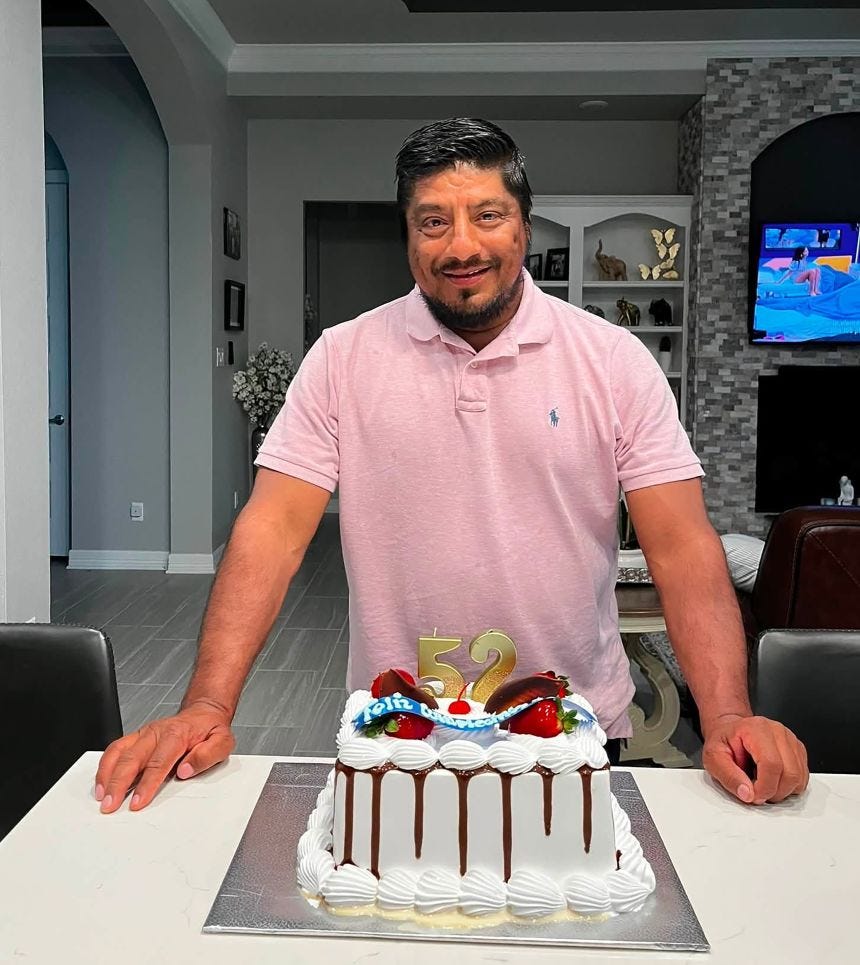
Lorenzo Salgado Araujo began July 7 the way working people begin ordinary days. He left home early, got into his work van, and headed toward a construction job with his brother and two employees.
ICE agents pursued the van through Houston’s Magnolia Park neighborhood in unmarked vehicles. The agency later acknowledged that Lorenzo was not the person its operation was intended to find. ICE said he rammed an agency vehicle and attempted to drive toward an officer. The three men inside the van dispute that account. Available surveillance footage does not show the complete encounter or the exact moment the agent fired.
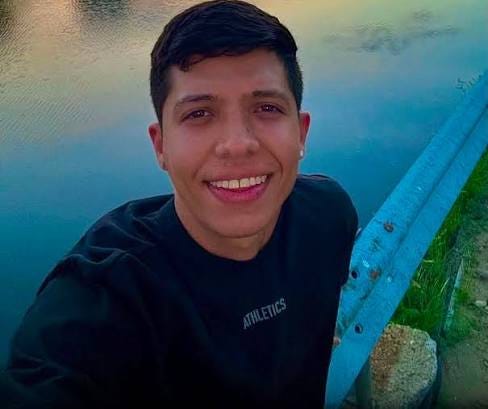
One week later, Joan Sebastián Durán Guerrero left for work in Biddeford, Maine. He was twenty-six years old, Colombian, married, and the father of a three-year-old daughter. ICE agents were surveilling a residence connected to someone facing removal. Joan drove away, agents attempted to stop him, and an officer fired through the windshield.
Federal officials later confirmed that Joan was not the subject of the warrant. Advocates said he had work authorization and a Social Security number. His legal status should never have determined whether he survived the encounter. Those details still matter because the government routinely uses immigration status to determine how much sympathy a dead person is permitted to receive. Even that rhetorical defense collapsed here.
Two men left home to support their families.
Two operations found the wrong men.
Two vehicles became scenes of lethal federal force.
The pattern begins with mistaken identity and ends with government certainty.
Houston: The Witnesses Belong to the Case
Three men were inside Lorenzo’s van when the shooting occurred: his brother and two coworkers. They survived the encounter. ICE detained all three.
That creates a conflict the country should recognize immediately. The federal enforcement system connected to the shooting gained physical control over the people most capable of challenging its account.
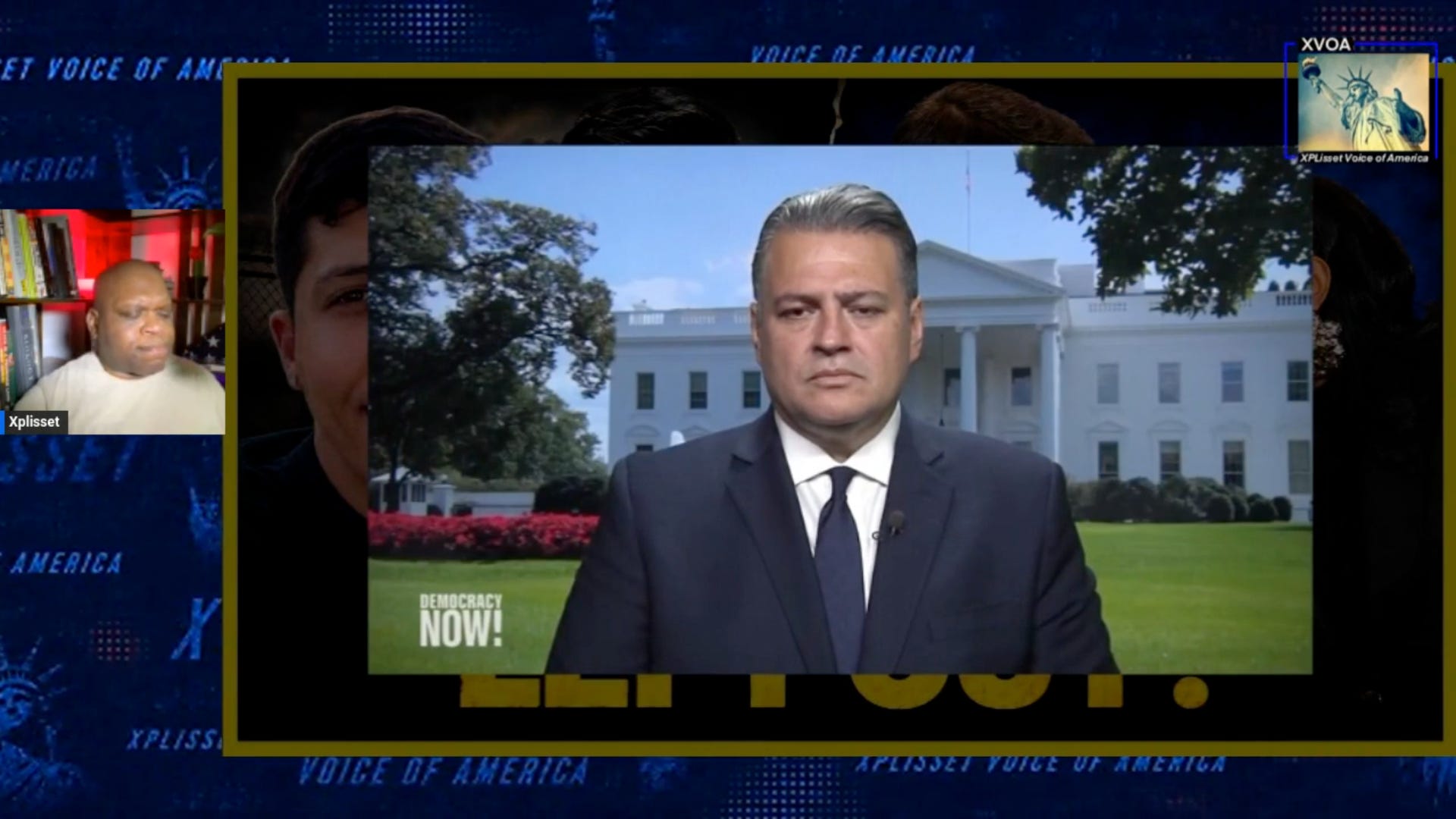
LULAC CEO Juan Proaño said the men were pressured to sign self-deportation papers. Their attorneys and local officials argued that removing them would jeopardize the investigation. The Harris County district attorney later began seeking U visas to keep the three material witnesses in the United States while his office investigates the shooting. [1][7]
These men are evidence-bearing witnesses before they are immigration cases. Their testimony must be recorded, their access to counsel protected, and local investigators permitted to interview them without federal pressure hanging over every answer. Their immigration proceedings should remain separate from any effort to obtain testimony about the shooting.
A deported witness becomes harder to reach, harder to protect, and easier to discredit. An agency implicated in a shooting should not possess unilateral power to remove witnesses from the country before an independent investigation is complete. That principle would apply in any criminal investigation involving a government agency, regardless of the witnesses’ immigration status.
The John Doe Erasure
According to Lorenzo’s family and advocates, agents removed identifying material from him before he arrived at the hospital. The hospital received him as a John Doe, and his family spent hours trying to locate him because no patient appeared under his name. His death was not officially connected to the family until later. [1][10]
Bureaucratic language can make this sequence sound procedural. For the family, it meant that a husband and father disappeared inside the system after leaving home for work. The same operation that pursued him controlled the scene, his possessions, and much of the information needed to locate him.
The erasure became physical because the paperwork no longer connected the wounded man to the person his family was searching for. An investigation must establish who removed his identification, why it was removed, how the decision affected his medical admission, and whether the delay prevented his family from reaching him sooner. Those questions belong inside the use-of-force investigation because the machinery continues operating after the gun is fired.Who Controls the Evidence?
The Houston shooting generated several investigations involving the FBI, the Department of Homeland Security inspector general, the Harris County district attorney, and Houston authorities. Multiple announcements can create the appearance of accountability. The practical power of any investigation depends on access to the scene, witnesses, vehicles, communications, and physical evidence.
Local investigators were not immediately brought into the scene the way they ordinarily would be after an officer-involved shooting. Harris County District Attorney Sean Teare said his office did not initially receive the agents’ names and faced delays entering the scene. Experts warned that late access could compromise surveillance footage, physical evidence, shell casings, and the ability to reconstruct what happened. [9]
Federal jurisdiction became a wall around the evidence. The van matters, along with the bullet trajectory, the agents’ locations, damage to every vehicle, radio traffic, commands given before the shooting, and the time between the gunfire and medical treatment. The identities of the agents and the testimony of the surviving witnesses matter just as much.
Evidence belongs to the case. It does not belong to the agency being investigated. An investigation without access becomes a promise waiting for permission from the institution whose conduct is under review.
No Body Cameras, No Neutral Record
The ICE agents involved in Houston reportedly had no body-worn cameras, and their vehicles reportedly lacked dashboard cameras. Representative Sylvia Garcia said DHS had previously received money designated for expanding body-camera use and rejected the agency’s attempt to blame funding disruptions. The agents in Maine also reportedly lacked body-camera footage. [5][8]
That absence matters because both shootings turn on claims about movement, perception, identification, commands, and imminent danger. Investigators need to determine whether the agents identified themselves, whether the drivers could see badges or marked vehicles, what commands were given, where the agents were standing, and whether anyone was directly in the vehicle’s path. They must also establish whether the officers’ positioning created the danger they later cited as justification for firing.
The government is asking the public to accept official answers without producing a neutral recording of either encounter. Congress funded an expanded enforcement machine, DHS expanded operations, and political leadership demanded higher arrest totals. The safeguards remained optional while the force became mandatory.
Maine: “I Tried to Stop”
Witnesses in Biddeford described hearing gunfire and seeing Joan bleeding after agents pulled him from the vehicle. One witness reported hearing him say, “I tried to stop.” Neighbors also described his wife collapsing near the scene and his young daughter crying after losing her father. [2][11]
The ordinary details make the loss impossible to abstract. His daughter was reportedly dressed in pajamas and carrying a backpack while adults around her realized that her father was gone. Those details establish the human consequences of a federal operation more clearly than any agency statement.
DHS said an officer fired because of concerns for public safety. The agency has not publicly released video establishing that Joan presented an imminent threat, and Senator Angus King’s office said federal officials confirmed he was not the intended target. “Public safety” therefore requires an evidence-based explanation addressing the agents’ positions, identification, commands, alternatives, and decision to use lethal force. [2][4]
A phrase cannot carry the entire weight of a dead father. Investigators must determine how firing through the windshield made the public safer and why lethal force was used against a man the government was not seeking.The Bridge Remembered the Klan
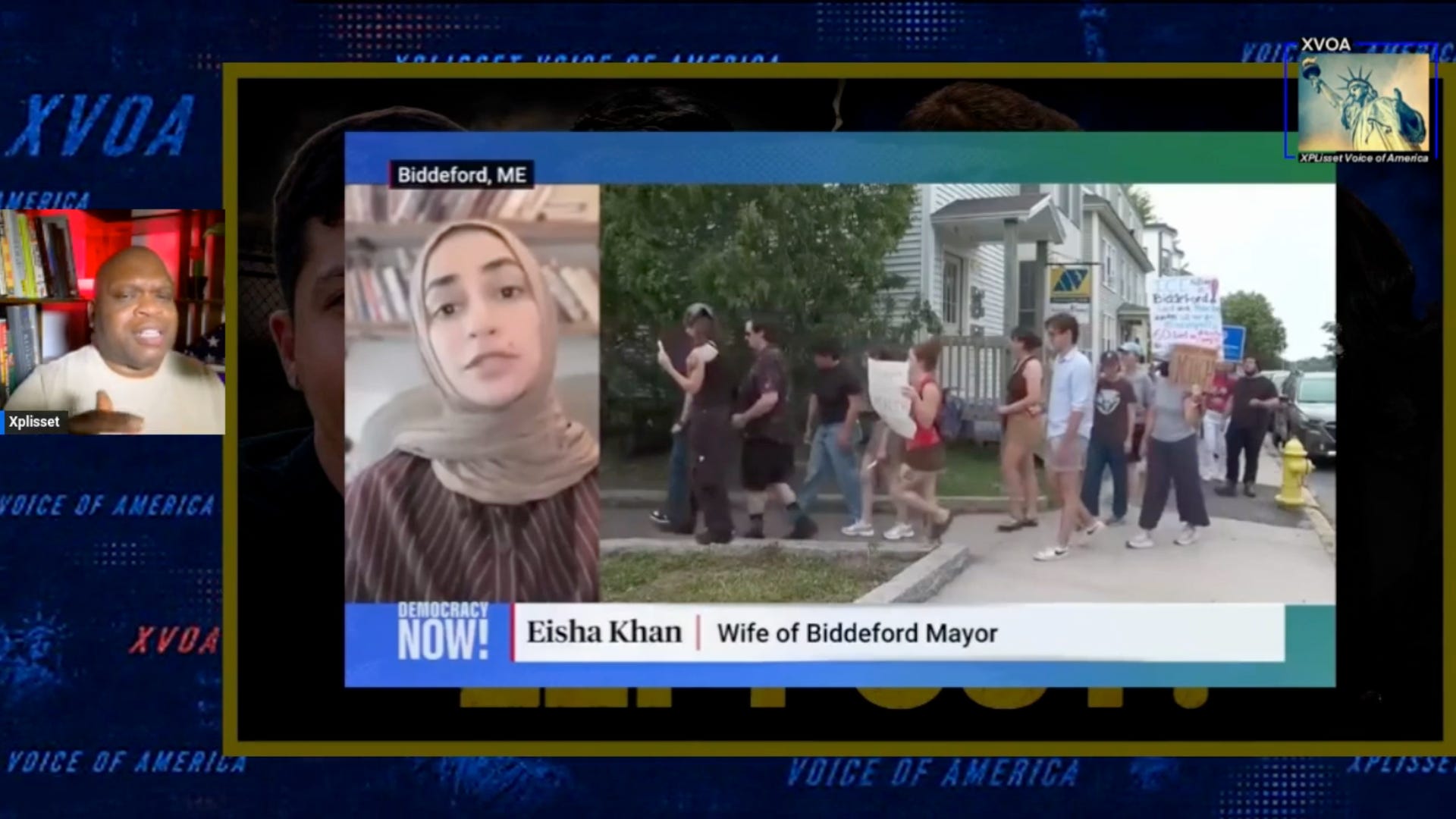
Biddeford residents gathered on a bridge linking their community with Saco after Joan’s killing. During the Democracy Now interview, Eisha Khan described the bridge’s history. Nearly a century earlier, local residents gathered there as the Ku Klux Klan attempted to march toward Biddeford, and Catholic and Franco-American neighbors stood together against organized persecution. [2]
The community returned to the same location after Joan was killed. The historical parallel does not make the two events identical. It shows how collective memory gives communities a framework for recognizing intimidation, targeting, and state-sanctioned fear before institutions agree on the language.
The bridge carries a record of what official language tries to disguise. Power moves through uniforms, warrants, patrols, laws, processions, and claims of public order. Communities with experience surviving organized persecution often recognize the machinery early because memory teaches them what isolation, classification, and intimidation look like in practice.The Quota Became the Mission
The shootings occurred during an enormous expansion of immigration enforcement. The administration demanded arrest totals reaching approximately two thousand people a day, and ICE reported ten thousand arrests during one five-day period. In Maine, Operation Catch of the Day detained roughly two hundred people during an earlier surge, while reporting discussed in the livestream indicated that only a small fraction were the specific targets of warrants. [2][3]
That is what happens when leadership turns arrests into a production number. Agents enter communities seeking volume, the definition of a target expands, and mistaken identities become predictable rather than exceptional. Vehicle stops become shortcuts because procedural safeguards begin to look like obstacles slowing the daily total.
Confirming identity, coordinating with local authorities, using marked vehicles, giving clear commands, and attempting de-escalation all require time. A quota rewards speed and treats caution as inefficiency. Families absorb the consequences when performance is measured by the number of people processed rather than the accuracy and legality of each encounter.
The killings in Houston and Maine cannot be explained solely by arrest quotas. The quota environment does help explain why risky operations multiply, why supervisors tolerate speed over verification, and why the wrong person can become acceptable collateral inside a system organized around daily numbers.
They Suspended the Tactic
After the two shootings, the Trump administration directed ICE to suspend most vehicle stops used for immigration enforcement. Exceptions reportedly remain for criminal warrants and some joint operations. The policy change matters because it shows that senior officials identified enough danger or liability in the tactic to intervene. [3][4][5]
The suspension also creates a new set of questions. Investigators need to know which policies governed the Houston and Maine operations, whether the agents followed them, whether supervisors had received prior warnings, and how many similar vehicle stops produced shootings, crashes, injuries, mistaken targets, or complaints. The government must also explain why the tactic remained in use after the Houston killing and what changed after Maine.
A suspension is an institutional response and an implicit acknowledgment that the tactic required intervention. It does not establish criminal or civil responsibility for either shooting. It also does not restore what the families lost.
Lorenzo’s family cannot suspend the morning he left for work. Joan’s daughter cannot pause the moment her father disappeared from her life. The government can revise procedure tomorrow while the families remain trapped inside the consequences of yesterday.
After the Broadcast: Houston Moves to Protect the Witnesses
Since the livestream was recorded, Harris County District Attorney Sean Teare has moved to seek U visas for the three men detained after witnessing Lorenzo’s shooting. Teare described them as material witnesses whose presence is essential to the criminal investigation. Their continued detention by ICE places the investigation inside a structural contradiction because the agency connected to the shooting still controls the liberty of the people whose testimony may expose wrongdoing. [7]
Houston officials have also sought greater outside involvement as pressure grows for an investigation independent of federal agencies. Local authorities began requesting Texas Rangers participation after public criticism of the city’s delayed response. Those developments show what sustained public pressure can produce: witness protection, evidence preservation, clearer jurisdiction, and outside scrutiny of an agency that might otherwise investigate itself. [9]
The public must keep watching because procedural movement is not the same as accountability. The witnesses remain essential, the physical evidence remains decisive, and the official explanations remain subject to independent verification.
The Tactic Changed. The Machinery Remains.
The country is being asked to view these shootings as separate tragedies in Houston and Maine, involving different agents, cities, and official explanations. The machinery connecting them is visible: aggressive arrest quotas, vehicle stops, unmarked enforcement, mistaken targets, missing body cameras, federal control of evidence, witnesses held in immigration detention, and policy reform arriving only after death.
Lorenzo Salgado Araujo and Joan Sebastián Durán Guerrero were fathers whose lives were consumed by a system built to produce numbers faster than accountability. Describing them as administrative errors would reduce two human beings to mistakes inside a process. Their deaths require independent investigations capable of testing the government’s account against physical evidence and witness testimony.
The suspension of vehicle stops may prevent another family from receiving the same phone call. Full accountability requires the government to release the evidence, protect the witnesses, identify the agents, reconstruct both shootings independently, explain the absence of body cameras, audit similar encounters, and end arrest quotas that convert human beings into production goals.
Congress must stop funding force first and asking questions after the funeral. A government powerful enough to stop a vehicle, fire a weapon, detain the witnesses, and control the evidence is powerful enough to record what it does and answer for the consequences.
Support XVOA
XVOA follows the machinery after the moment stops trending. Paid readers make that independence possible by giving this desk the time to preserve testimony, compare official accounts, and track what happens after an agency promises to investigate itself.
Become a paid subscriber to keep this work moving.
For readers who cannot commit to a subscription, Buy Me a Coffee remains the backstop supporting the daily production floor. Fifty dollars a day for operating costs keeps the pain away.
Sources
Democracy Now!, “They Were Hunting for Latinos: ICE Killing of Lorenzo Salgado Araujo in Houston”
Democracy Now!, “ICE Kills 26-Year-Old Joan Sebastián Durán Guerrero in Biddeford, Maine”
MS NOW, “BREAKING: ICE Suspends Vehicle Stops for U.S. Immigration Enforcement, Reuters Reports”
Reuters, “ICE Suspends Traffic Stops in Wake of Maine Fatal Shooting, Border Czar Says”
Houston Chronicle, “Lorenzo Salgado Araujo’s Family Says They Are Unable to Claim His Body”
The Guardian, “ICE Identifies Johan Sebastián Durán Guerrero as Man Agents Fatally Shot in Maine”