
The video above contains the complete XVOA livestream, including the source footage and my real-time analysis. What follows is the reader’s edition: the argument, evidence and unresolved questions reorganized into a documentary record for people who would rather read than watch the full broadcast.
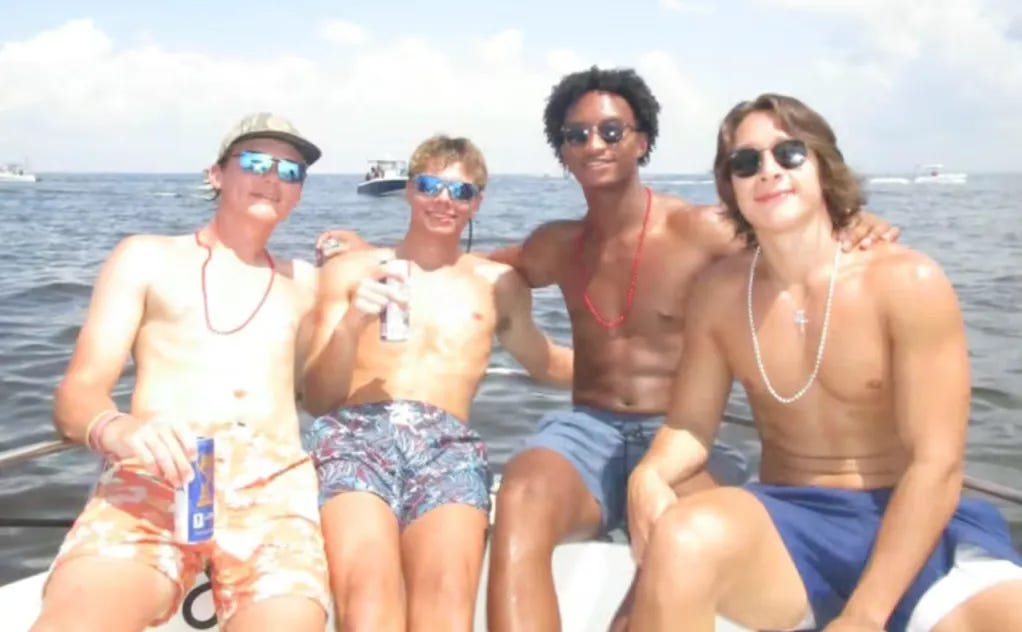
Nolan Wells was 18 years old when he disappeared during a July 4 trip to Horn Island, Mississippi. His body was recovered near the island on July 6. Authorities have investigated drowning as a possibility, while the publicly available record still lacks a final official determination of cause and manner of death.[2][3]
That absence of a final answer created an information vacuum. Photographs, social-media posts and a grainy beach video rushed in to fill it. Some of that material may eventually help investigators. Some of it has already been interpreted far beyond what anyone has authenticated.
The most important correction now comes from Tracestin Shepherd, a close friend of Nolan’s. Shepherd told Rolling Stone that the person yelling in the so-called “last known video” was him. He also said Nolan was outside the frame.[1]
That changes the public evidence board.
I spent 20 years working as a patrol officer. That experience taught me to separate an investigative lead from admissible evidence, possession from theft, suspicion from probable cause, and a compelling theory from a provable case. The questions surrounding Nolan’s death deserve urgency. They also deserve discipline.
Video Chapters
0:00 — The “Last Known Video” of Nolan Wells Is Under Review
2:01 — Why My 20 Years in County Patrol Matter
4:18 — The Alleged Nolan Wells Pool-Party Photograph
7:34 — Verdict: The Photograph Is a Lead, Not Evidence
8:48 — The “Last Known Video” May Not Show Nolan Wells
9:03 — Tracestin Shepherd Reconstructs the Altercation
15:55 — “Get Me Off This Boat” — Shepherd Identifies His Voice
23:39 — Was Nolan Wells Even in the Frame?
31:41 — What the Viral Video Actually Establishes
32:43 — Former Judge Carlos Moore Calls for Warrants
40:33 — Moore’s Telephone-Theft Theory Falls Apart
56:42 — Nolan Wells’s Parents Speak to MS NOW
57:28 — Autopsy: No Signs of Trauma
60:51 — Why Nolan’s Family Distrusts the Early Theory
70:18 — Clearing Unverified Evidence From the Board
TLDR: The Evidence Board
The pool-party photograph: Its original file, date, location, photographer and metadata remain unverified.[7]
The viral beach video: Shepherd says Nolan was outside the frame.[1]
The yelling voice: Shepherd identifies the voice as his own.[1]
The words being yelled: Shepherd says he yelled, “Get me off this fucking boat.”[1]
The phone theory: The public video no longer establishes that Nolan was demanding the return of his telephone.
The autopsy: MS NOW reported that the county coroner’s autopsy showed no signs of trauma.[5]
The larger case: Nolan’s final movements, the handling of his phone and keys, and the complete forensic findings still require credible answers.[2][4]
Correcting the beach-video narrative does not close this case. It removes a potentially false premise from the investigation.
If this evidence board helped clarify what is known, what remains unverified and what still demands investigation, please restack this report and send it to someone following the Nolan Wells case. That simple act helps credible analysis travel farther than speculation.
XVOA exists because readers choose to support independent Black-led reporting. Thank you to every current paid subscriber making this work possible. If you value this kind of careful analysis, consider becoming a paid subscriber.
For those who cannot commit to a subscription, Buy Me a Coffee helps XVOA meet its daily production floor.
The Pool Photograph Has No Clock Attached
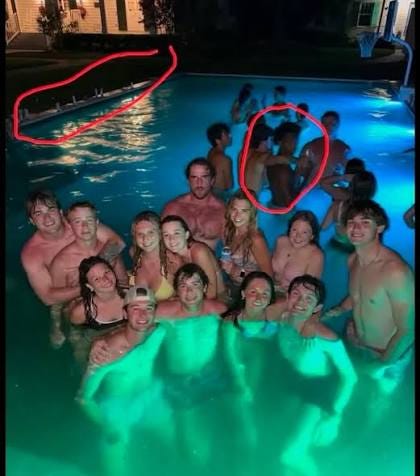
The photograph circulated online as proof that Nolan attended a pool party in Jackson County before 1 a.m. on July 5. The copy examined during the livestream shows a group of young people gathered in a swimming pool at night. Red markings point toward one person in the water and toward an object or area beside the pool.[7]
The markings make a claim. They do not authenticate the image.
The version available to us provides no original metadata, photographer, verifiable location, capture time or unbroken chain back to the device that created it. A visual resemblance can suggest a person’s identity. It cannot establish identity by itself, especially when the face is small, partly obscured and surrounded by artificial light and water distortion.
The fact that the image was reportedly reposted by Ben Crump and later removed deserves attention. It does not supply the missing provenance. Deletion can result from authentication concerns, copyright questions, privacy concerns, legal advice or a routine change in communications strategy. Without an explanation from Crump, the removal supports caution rather than a conclusion.
There is a straightforward path to authentication:
Obtain the original image file.
Identify the person who took it.
Establish the address or location.
Examine the embedded metadata.
Interview people visible in the photograph.
Compare clothing, physical characteristics and the surrounding timeline with independently verified material.
Until that work is completed, the photograph can help generate questions. It cannot anchor Nolan’s final timeline. It could have been taken that weekend. It could have been taken earlier. The visible image alone cannot tell us which.
The Rolling Stone Report Changes the Meaning of the Beach Video
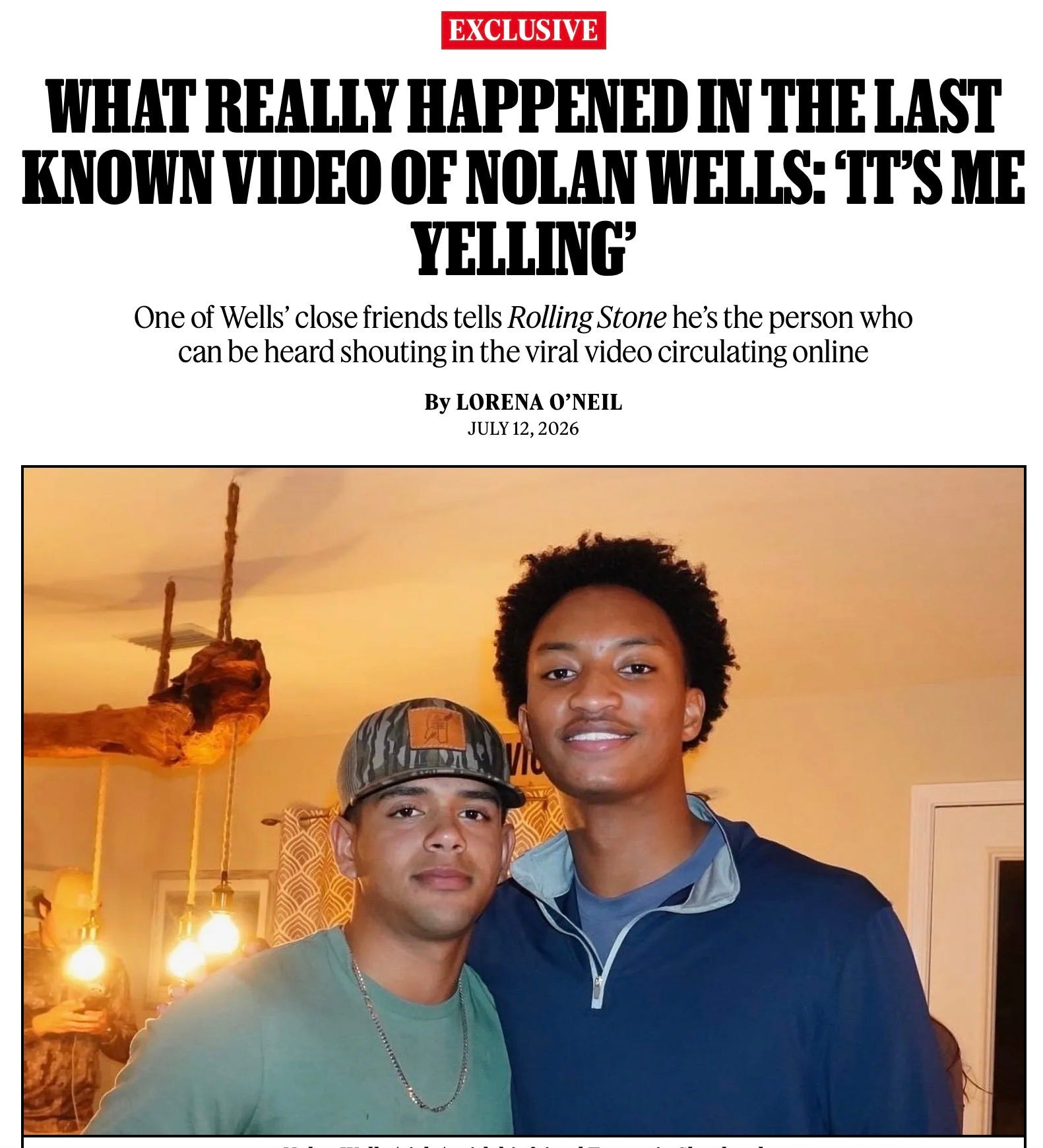
The viral beach recording acquired enormous power because people believed it captured Nolan shortly before his disappearance. Online annotations identified a person on shore as Nolan. Listeners interpreted a voice as Nolan demanding his phone. Crump repeated that interpretation at a press conference, saying Nolan could be heard asking for his phone.[1]
Rolling Stone then interviewed the man who says the voice belonged to him.
According to Tracestin Shepherd, he and his girlfriend were waist-deep in the water near Horn Island when another young man criticized their conversation. Shepherd said the exchange became physical. His uncle told him to leave the water and get onto the family boat. Once aboard, Shepherd wanted to return to the fight while friends back on shore defended him. An adult on a nearby boat began recording around that time.[1]
Shepherd’s identification is direct:
“Get me off this fucking boat.”[1]
He says those were his words. He says the anger heard in the recording concerned his attempt to return to an earlier fight. His girlfriend, uncle and a family friend reportedly corroborated that account. The family friend told Rolling Stone that Shepherd was screaming directly in the friend’s face.[1]
Another friend, Jayvon Williams, had already told TMZ that the audio sounded like a different friend involved in another altercation. Shepherd later confirmed that Williams was referring to him. His summary was equally direct: “Those were not Nolan’s words, they were mine.”[1]
That is consequential evidence. It is still a witness account, and investigators should test it against the original recording, statements from everyone nearby, the recording device’s position and any other footage. Yet it carries far more evidentiary weight than anonymous annotations placed over a compressed social-media clip.
Was Nolan Even in the Frame?
Shepherd also disputes the visual identification.
Social-media users focused on a young man wearing blue swim trunks because Nolan had reportedly worn blue trunks that day. Shepherd says the person identified online was too short to be Nolan, whom he described as approximately six feet two inches tall. According to Shepherd, Nolan was nearby in the water and outside the camera’s frame.[1]
That claim creates a second authentication problem. Clothing color can narrow a search. It cannot complete an identification. Perspective, distance, image compression and body position can all distort apparent height. A defensible identification would compare the best available copy of the original recording with known images, body proportions, witnesses and other contemporaneous footage.
The public clip currently establishes several limited facts: people were gathered near the shore; an agitated exchange was underway; someone close enough to the recording device could be heard yelling; and adults appeared to be attempting to control the situation.
The clip, standing alone, does not establish:
Nolan’s presence inside the frame.
Nolan’s identity as the yelling speaker.
Nolan demanding his phone.
Who possessed his phone at that moment.
An unlawful taking of the phone.
A connection between that altercation and Nolan’s death.
The video may document a real altercation while documenting the wrong person’s altercation. That distinction is the center of this story.
The Phone Still Matters but For Different Reasons
Removing the disputed audio interpretation from the evidence board does not make Nolan’s telephone irrelevant. The phone remains one of the most important sources of potential evidence.
Nolan’s family has said the device was recovered after its location was tracked to the home of a friend. His mother has also described apparent discrepancies involving Life360, Snapchat activity and the absence of the kind of posts Nolan usually made while having fun. The sheriff confirmed that investigators wanted the phone, while the family pursued an independent forensic examination.[4]
Those circumstances create legitimate investigative questions:
Who physically possessed the phone after Nolan was last seen?
How and when did that person obtain it?
Did Nolan hand it over voluntarily?
Was the phone carried away accidentally with other belongings?
Was any content deleted, altered or remotely removed?
What do the device logs, cloud records, location history and provider records show?
The answers must come from forensic extraction, platform records and sworn witness statements. A disputed voice on a grainy recording cannot carry that burden.
Carlos Moore’s Theft Theory Loses Its Public Foundation
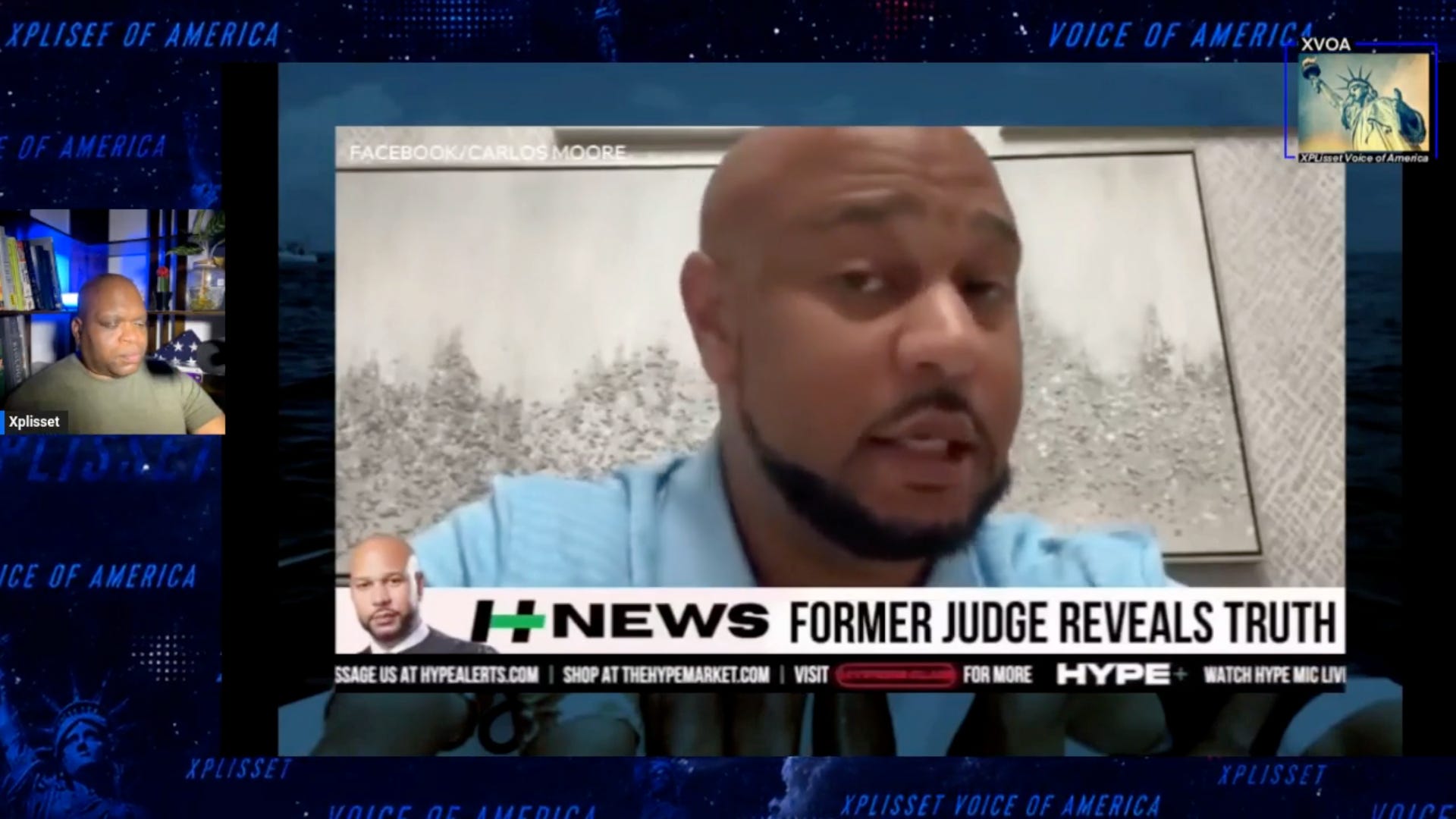
Former Mississippi judge and current attorney Carlos Moore made a forceful case for urgent warrants. In the portion of his commentary reviewed during the livestream, Moore said the family tracked Nolan’s phone to a friend’s home, questioned reported social-media deletions and argued that law enforcement should have moved quickly to preserve digital evidence.[6]
That urgency is understandable. Digital evidence can disappear through routine retention limits, account changes, device resets or deliberate destruction. Search warrants and preservation requests can secure material before it is lost. The public also may have no visibility into sealed warrants that investigators have already obtained.
Moore’s argument becomes vulnerable when he moves from preserving evidence to arresting someone for theft. He relied on the proposition that Nolan could be heard demanding his phone and that someone therefore possessed it without permission. Moore said that, if the claim were submitted to him in affidavit form, he would have signed an arrest warrant for theft.[6]
The Rolling Stone account removes the video from that chain of reasoning. Shepherd says the voice was his and the words concerned getting off the boat. If that is correct, the recording supplies no demand from Nolan, no refusal to return his phone and no audible proof of an unlawful taking.[1]
Possession and theft are separate propositions. A person can possess someone else’s property through permission, mistake, safekeeping, shared transport or an unlawful taking. Investigators need evidence of how possession began, what the possessor knew and what happened when the owner or family sought its return.
Moore also predicted that a thorough investigation would lead to one or more murder arrests.[6] His experience gives him a meaningful perspective on judicial procedure. The available public record still lacks the complete autopsy, toxicology, digital forensics and sworn witness file required to support that prediction.
Here is the balanced conclusion: Moore is strongest when he demands preservation of evidence and weakest when he converts disputed public claims into arrest-level conclusions.
Search Warrants and Arrest Warrants Perform Different Jobs
This important distinction matters.
A search warrant allows investigators to seek specified evidence from a defined place, device or account after presenting probable cause to believe evidence will be found there. An arrest warrant requires probable cause connecting a particular person to a particular crime.
The same suspicious circumstance can justify deeper investigation while remaining insufficient for an arrest. A phone found at someone’s home may support questions, interviews and forensic work. An arrest for theft requires evidence supporting the elements of theft. A murder arrest requires a much larger bridge: cause and manner of death, connection to a suspect, corroborated conduct, reliable witnesses and physical or digital evidence.
Probable cause is practical and evidence-based. It is not a vote taken on social media.
That is why correcting the voice identification matters so much. It removes a public claim that had been used to bridge possession, theft, confrontation and murder. Investigators may possess other evidence capable of building those bridges. The public has not seen it.
Nolan’s Parents Are Asking for the Investigation Their Son Deserves
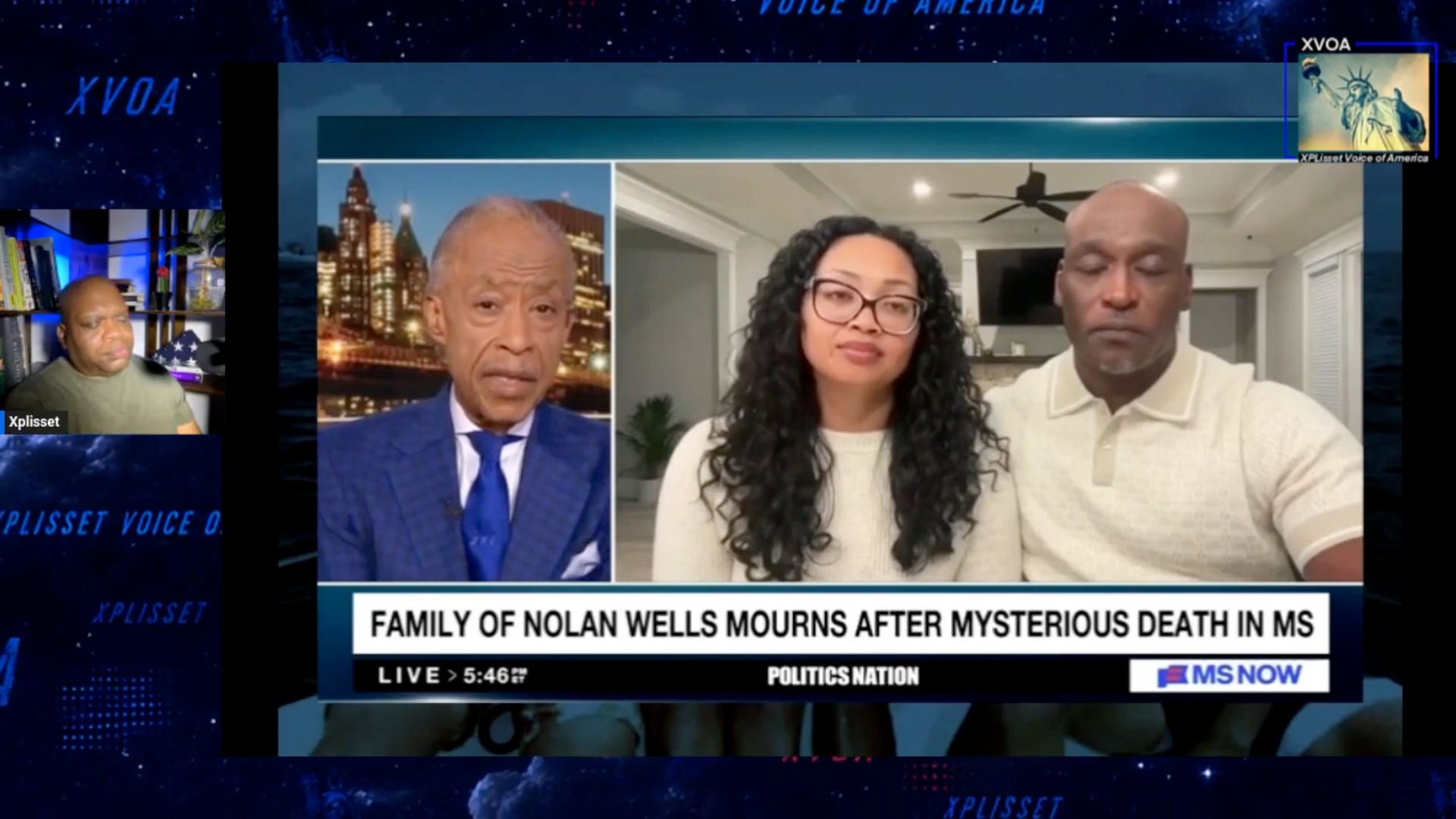
Christine and Elmore Wonsley told MS NOW that they want a thorough, honest investigation and a clear account of what happened to their son. Christine explained that early public statements about the likely explanation for Nolan’s death came before the family believed a full investigation had occurred. Elmore said he feared where the investigation might stand without Ben Crump and the support team surrounding the family.[5]
Their concern is understandable. Black families have a long historical basis for questioning whether institutions will bring equal urgency, transparency and care to the death of a Black child. Public scrutiny can force neglected evidence into view. It can also generate false identifications and threats when speculation outruns verification.
MS NOW reported that the county coroner’s autopsy showed no signs of trauma.[5] That is an important finding, and it does not settle cause or manner of death. Drowning, toxicological factors, medical events and environmental exposure can occur without obvious external trauma. The complete autopsy and toxicology findings remain essential. The family has also pursued an independent autopsy.[4]
Christine described Nolan as joyful, faithful and able to fill a room with his personality. She also described the pain of watching strangers turn the family’s loss into a joke. The family’s request is simple: tell them what happened to their son.[5]
The family should never have to choose between a rushed conclusion and an internet prosecution. They deserve a credible investigation.
What Investigators Still Need to Establish
Clearing away the disputed voice leaves a substantial list of unanswered questions:
When and where was the pool photograph taken?
Who possesses the original photograph and its metadata?
Where exactly was Nolan when the beach video was recorded?
Who last saw Nolan alive, at what time and under what circumstances?
Why did Nolan remain on Horn Island when the group he arrived with departed?
Who possessed Nolan’s phone and keys, and how did that possession begin?
What do the complete device extraction, cloud records and location data establish?
What did each witness say in the first interview, before the case became national news?
Do later accounts remain consistent with those initial statements?
What do the official and independent autopsies and toxicology results establish?
How does the physical evidence fit the final verified timeline?
Reuters reported that Nolan traveled to Horn Island with friends, his body was recovered on the island’s northwestern end, and investigators had not ruled out every possibility as the family called for answers.[2] The Guardian likewise reported that no official cause of death had been announced in the immediate aftermath of his recovery.[3]
Those are the stakes. The case requires authenticated images, verified voices, preserved digital records, contemporaneous witness statements and complete forensic findings.
Clearing the Board Is Part of Finding the Truth
The pool photograph remains unverified. The viral recording may capture Shepherd’s altercation rather than Nolan’s. The voice interpreted as Nolan demanding his telephone has now been claimed by another person who supplied a different set of words and a different context.[1]
Each correction changes the public narrative. None of them explains how Nolan Wells died.
That is precisely why the corrections matter.
A contaminated evidence board can send the public, the press and even experienced commentators racing toward the wrong theory. Removing a misidentified voice does not betray Nolan’s family. It protects their search for answers from a claim that may collapse under basic authentication.
Nolan’s family deserves conclusions built from evidence that can withstand scrutiny. They deserve to know where he was, who saw him, what happened to his belongings, what the digital trail shows and what the forensic examinations establish.
Justice begins with getting the evidence right.
Support XVOA
This work exists because current paying subscribers decided that independent Black-led analysis deserves material support. Thank you. You are making every investigation, livestream and reader’s edition possible.
If you have been reading XVOA for free and waiting for the right moment to become a paid subscriber, this is the moment. Paid subscriptions are the foundation that allows this desk to keep researching, producing and following stories after the national spotlight moves elsewhere.
You can also subscribe for free and stay connected to the reporting. If a paid subscription is out of reach—or you want to provide immediate one-time support—Buy Me a Coffee is the backstop that helps XVOA reach its daily production floor.
Fifty dollars a day keeps the pain away. That’s just 10 people leaving 5 dollars apiece.
Sources
[1] Rolling Stone, “What Really Happened in the Last Known Video of Nolan Wells,” July 2026.
[2] Reuters, “Family Demands Answers in Death of Young Black Man in Mississippi,” July 10, 2026.
[3] The Guardian, “Body of Missing 18-Year-Old Nolan Wells Found on Mississippi Island,” July 7, 2026.
[4] People, “What Happened to Nolan Wells? What We Know About the Mississippi Teen’s Death and the Investigation Into His Final Moments,” July 2026.
[5] MS NOW, “Nolan Wells Death Sparks Protests, Calls for Independent Investigation,” video interview with Christine and Elmore Wonsley, July 2026.
[6] HP News, “Former Mississippi Judge ‘Exposes’ Nolan Wells Case, Calls Out Who Should Be Arrested,” featuring Carlos Moore, July 2026.
[7] Alleged pool-party photograph circulated online and reviewed during the XVOA broadcast. The reviewed copy did not include an original file, verifiable metadata, identified photographer or authenticated date and location.